The Engineering Logic of Precision Pricing and Rapid Response
Sales quoting in complex manufacturing enterprises often becomes a frustrating process. A customer proposes a customized requirement, and the sales representative cannot immediately confirm feasibility, instead turning to the engineering department for consultation. The engineering team evaluates and provides a configuration proposal, the sales representative calculates the price based on this, and then finance reviews the profit margin. The customer may raise objections to the price, and the sales representative goes back internally for adjustments. After several rounds, days or even weeks have passed, and the customer may have already turned to a competitor.
The Configure Price Quote system was born precisely to address this dilemma. It integrates product configuration, pricing logic, and quote generation into a unified sales tool, enabling sales representatives to complete the entire process from requirement confirmation to quote output in real time during customer conversations. Intelligent CPQ goes a step further, embedding technical constraints, cost structures, and market strategies into the configuration logic, ensuring that every quote both responds quickly to customer needs and aligns with enterprise profit objectives.
The core proposition of CPQ intelligence is not to replace the judgment of sales personnel but to transform product complexity into configuration flexibility on the sales side, allowing every transaction to be built on a solid foundation of technical and commercial logic.
The Complexity of Configuration
The Hidden Cost of Constraints
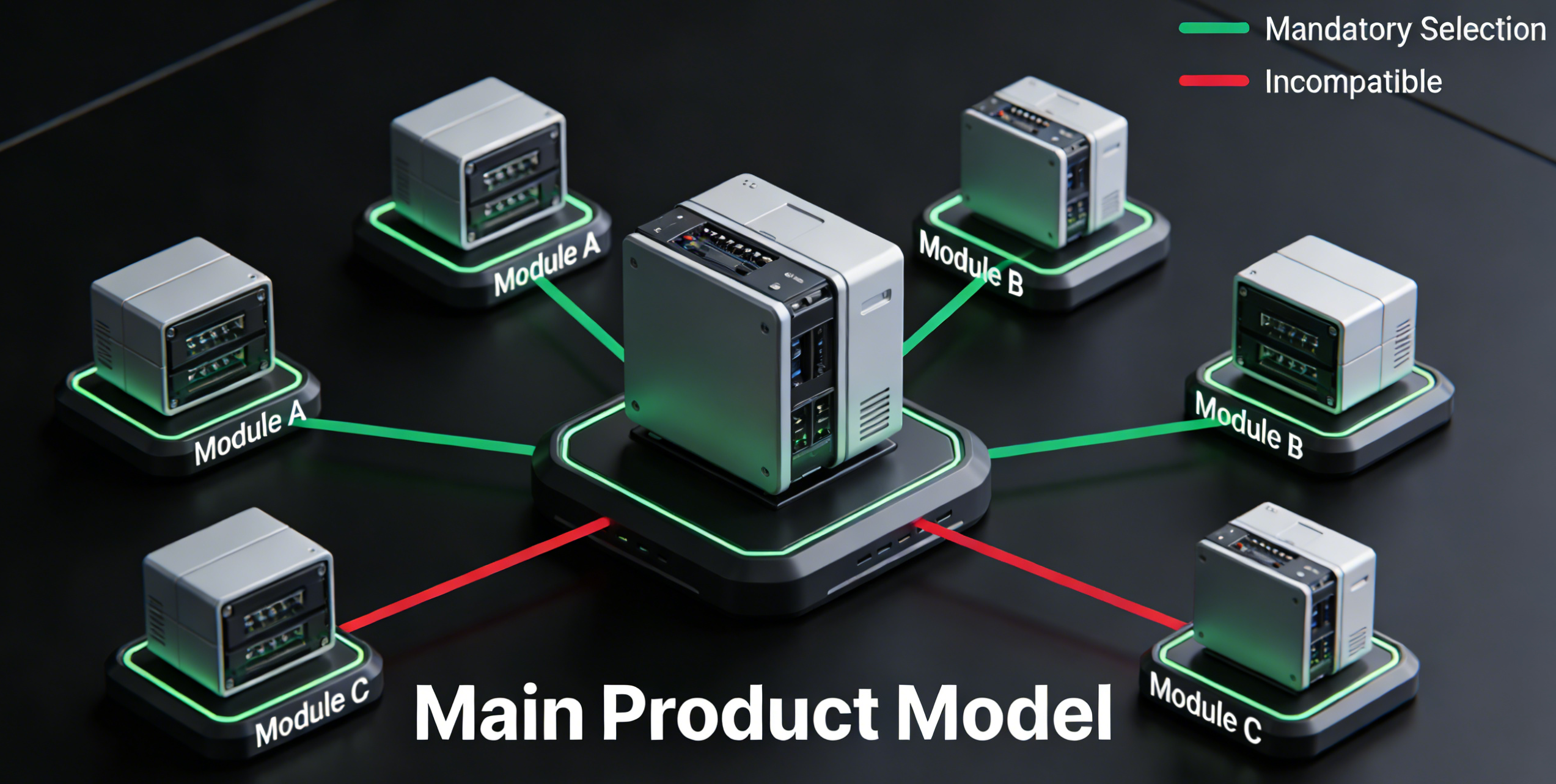
For manufacturing enterprises, product configuration has never been a simple matter of selecting options. A single piece of equipment may have hundreds of optional modules, with technical constraints between each module. Selecting module A requires selecting module B as well, and choosing option C makes option D unavailable. These constraint relationships are often buried deep within engineering drawings and technical documentation, inaccessible to sales representatives, who must rely on engineers to verify them one by one.
Time Loss from Cross Department Coordination
When a customer proposes a customized requirement, the delay caused by this complexity becomes most evident. The sales representative needs to complete a technical inquiry form, wait for engineering to assess feasibility, and then wait for costing to calculate the price. If the customer changes their mind midway, the entire process starts over. The sales cycle is stretched indefinitely, and customer experience deteriorates continuously.
Systematizing Configuration Rules
Intelligent CPQ extracts product configuration rules from engineering documents and transforms them into an executable logical model. When sales representatives configure a product, the system validates constraint relationships in real time. When a module is selected, the system automatically recommends associated modules and disables unavailable options. The feasibility of the configuration is confirmed instantly with a click, eliminating the need for engineering intervention. Customers know on the spot which configurations are possible, which are not, and the functional differences between different configuration options.
The Logic of Pricing
The Complexity of Pricing Factors
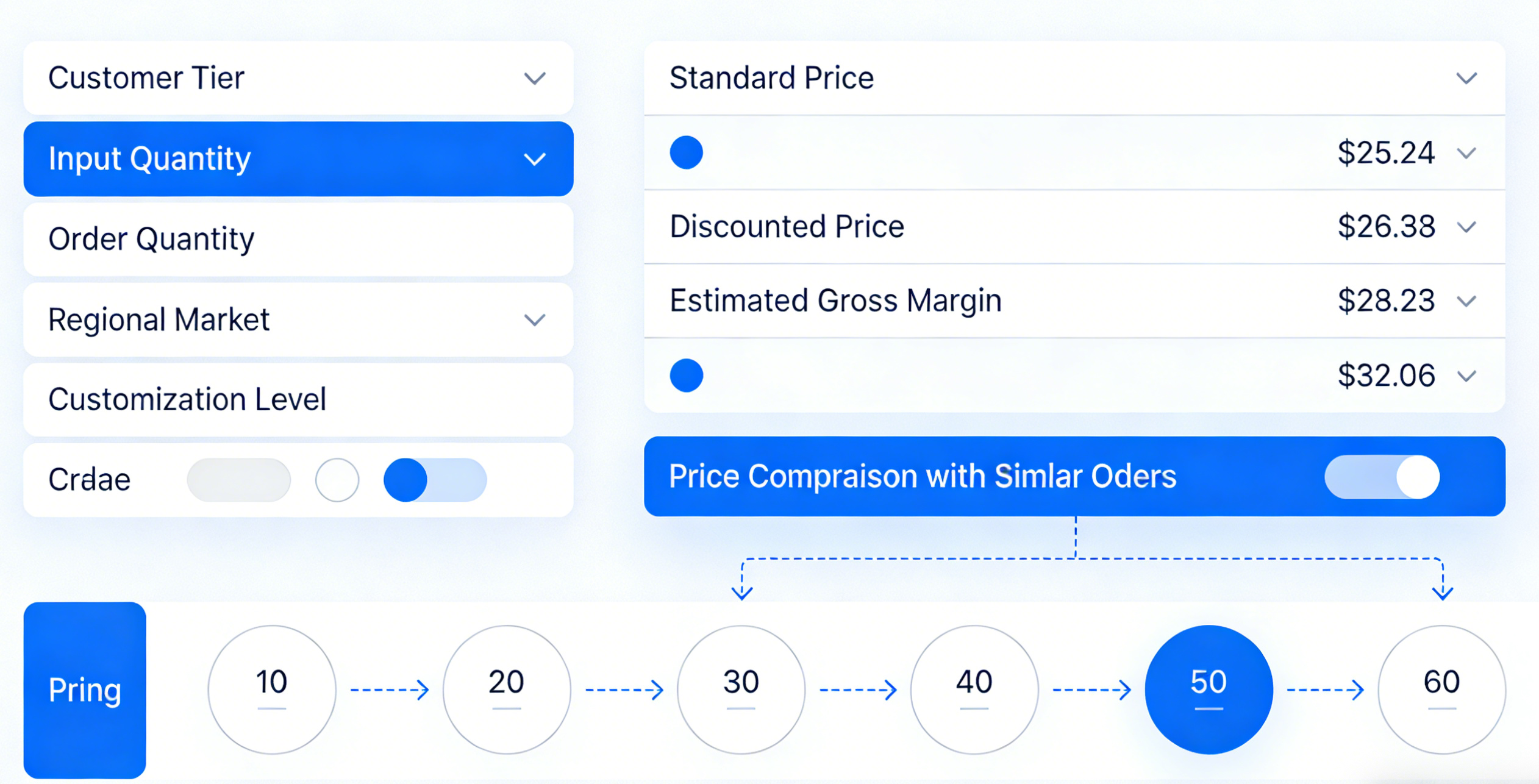
Pricing is the most subtle and error prone part of the quoting process. The same product sold to different customers, in different quantities, in different regions, may have completely different prices. How discount permissions are allocated, how promotions are stacked, how non standard customization is priced, relying on manual judgment for these issues makes it difficult to maintain consistency and leads to profit leakage.
Limitations of Traditional Pricing
Under traditional pricing models, sales representatives need to memorize price lists, discount rules, and approval authority, or rely on sales managers to approve each order. Price lists often run dozens of pages, discount rules are scattered across different documents, and approval processes vary by order amount and discount level. Sales representatives spend far more time on price inquiries and waiting for approvals than on actual customer communication.
Dynamic Pricing Engine
Intelligent CPQ transforms pricing logic from static tables into a dynamic engine. Prices are no longer fixed numbers but are calculated in real time from multi dimensional parameters. Customer tier, order size, historical transactions, competitive landscape, regional market, and other factors all participate in pricing, with each quote reflecting current business strategy. Discounts no longer rely on personal judgment but are automatically calculated by the system based on rules. Discounts exceeding authorized limits automatically trigger approval workflows, and once approved, can be executed without repeated communication.
The Efficiency of Quoting
The Value of Output Format
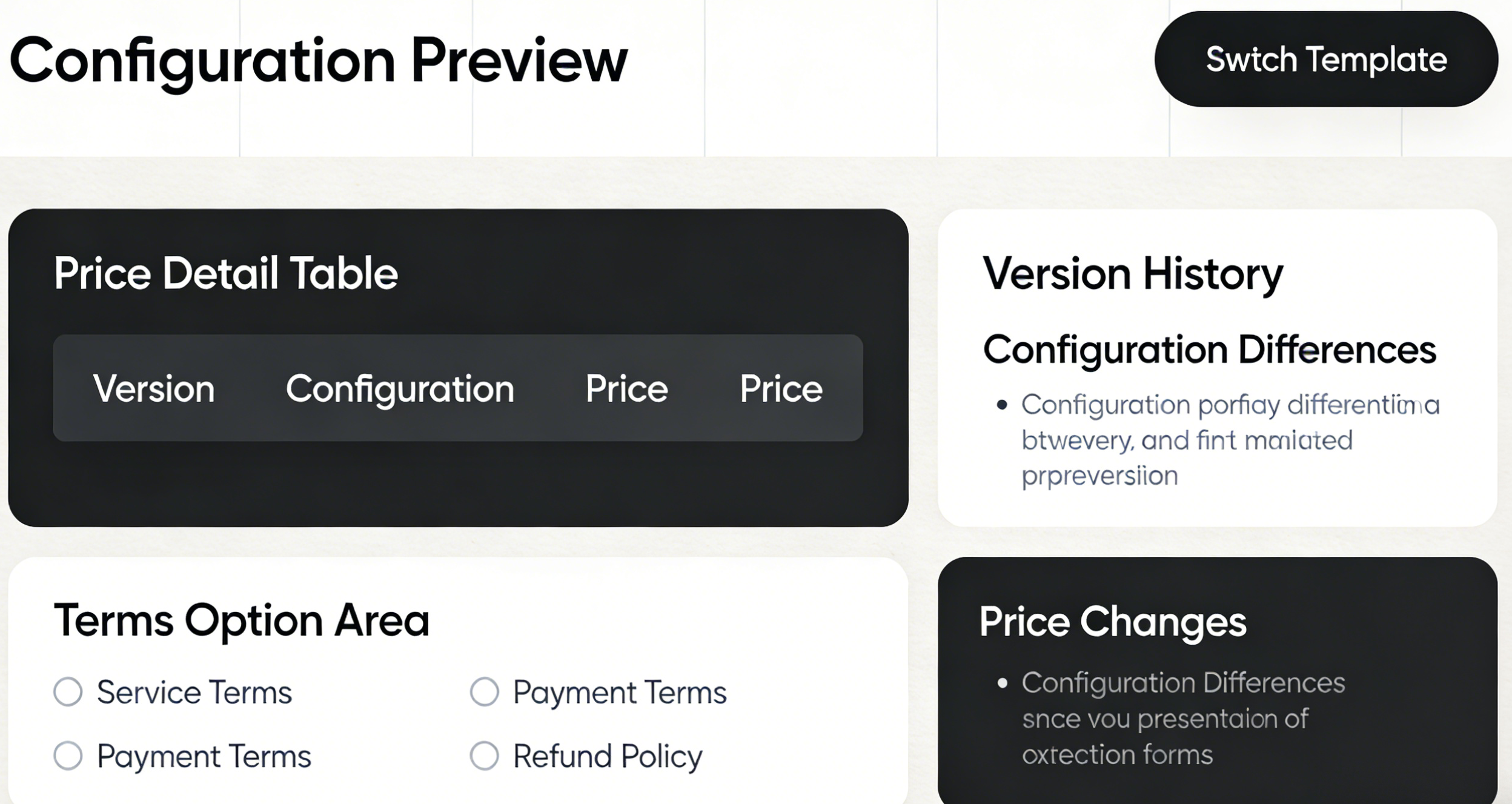
The final output format of a quote also affects customer experience and internal efficiency. A professional quote needs to include not only pricing information but also configuration lists, technical specifications, delivery terms, payment conditions, after sales service, and more. Under traditional approaches, sales representatives need to export information from multiple systems and manually assemble it into a quote document. Missing information, inconsistent formatting, and data errors occur frequently.
The Challenge of Change Management
Once a quote is sent to a customer, change management becomes equally challenging. The customer may request configuration adjustments, quantity changes, or delivery date modifications. Each change requires repeating the technical confirmation and pricing calculation process, and the differences between the new and old quotes are difficult to trace.
Unifying Generation and Change Management
Intelligent CPQ seamlessly connects quote generation with configuration and pricing. Once the configuration and price are determined, the system automatically generates a complete quote document, with all information coming from a unified data source, ensuring consistency and accuracy. Quote templates can be customized by customer type and business scenario, meeting different customer preferences while maintaining brand image consistency.
Change management is similarly simplified. When a customer proposes a change request, the sales representative adjusts the configuration parameters in the system, and the system automatically recalculates the price and generates a new quote. Old and new versions are automatically saved, with differences highlighted, facilitating internal review and customer communication. The quoting process is no longer a linear back and forth but a traceable, comparable closed loop.
From Quote to Order
Information Gaps and Redundant Work
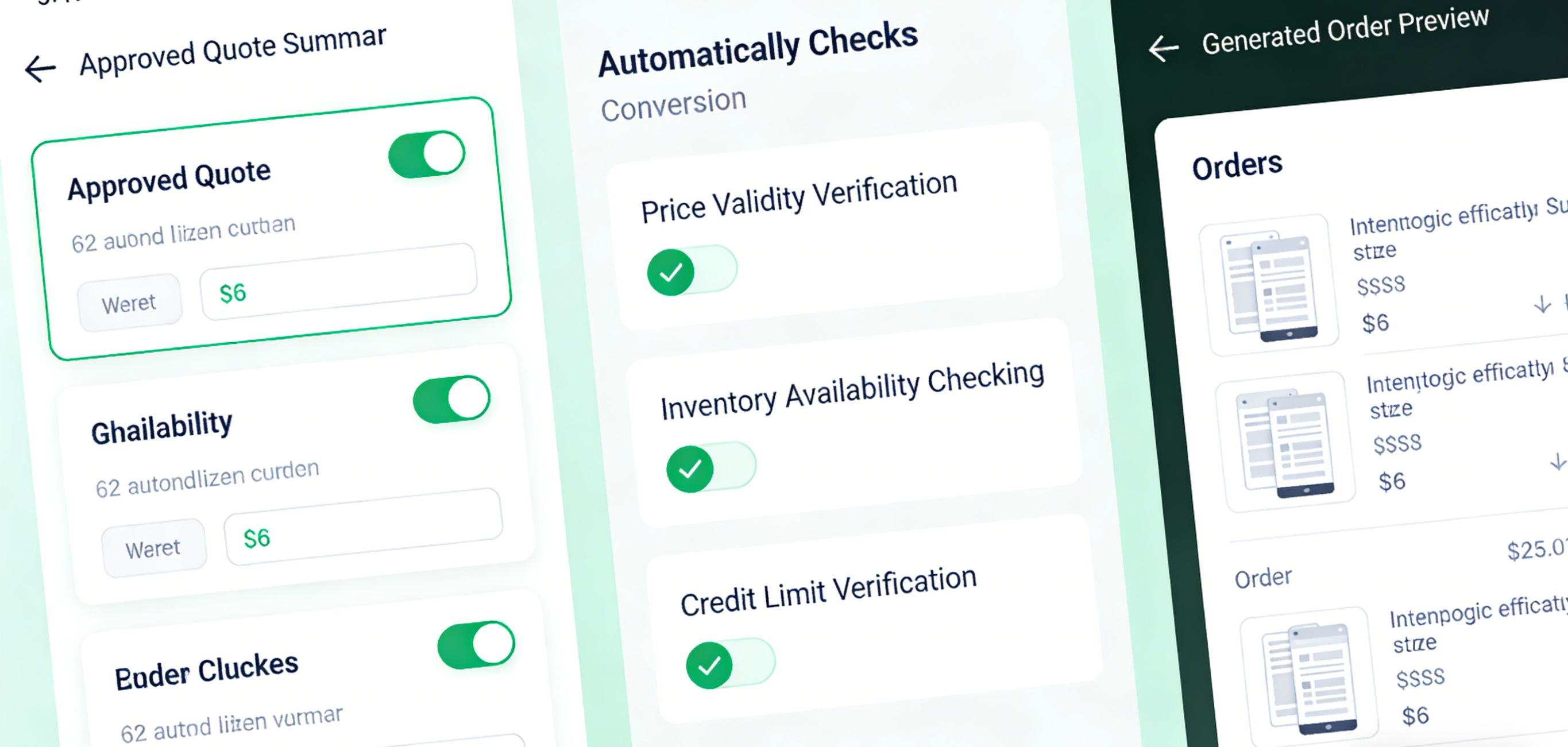
The endpoint of a quote is the order, but under traditional models, the transition from quote to order often involves re entering and verifying information. The sales representative manually enters information from the quote into the order system, creating redundant work and opportunities for error. Order processors need to verify whether the quote was approved, whether the price is still valid, and whether the configuration matches the quote.
One Click Conversion and Data Integration
Intelligent CPQ connects the quote and order systems. Once a quote is confirmed by the customer, it can be converted to an order with one click. All configuration information, pricing information, and term information are passed directly to the order system without re entry. Order processors see not only the order data but also the configuration logic and approval records behind the quote, significantly improving review efficiency.
Extending Organizational Value
This integration brings not only efficiency improvements but also data consistency assurance. Information flows through a single platform from configuration to quote to order, eliminating data discrepancies caused by switching between systems. Finance can accurately trace the source and pricing basis of every order, while engineering can clearly understand customer configuration preferences and market trends.
Value Anchors
Enterprises that have deployed intelligent CPQ report quantifiable improvements in sales and operational efficiency.
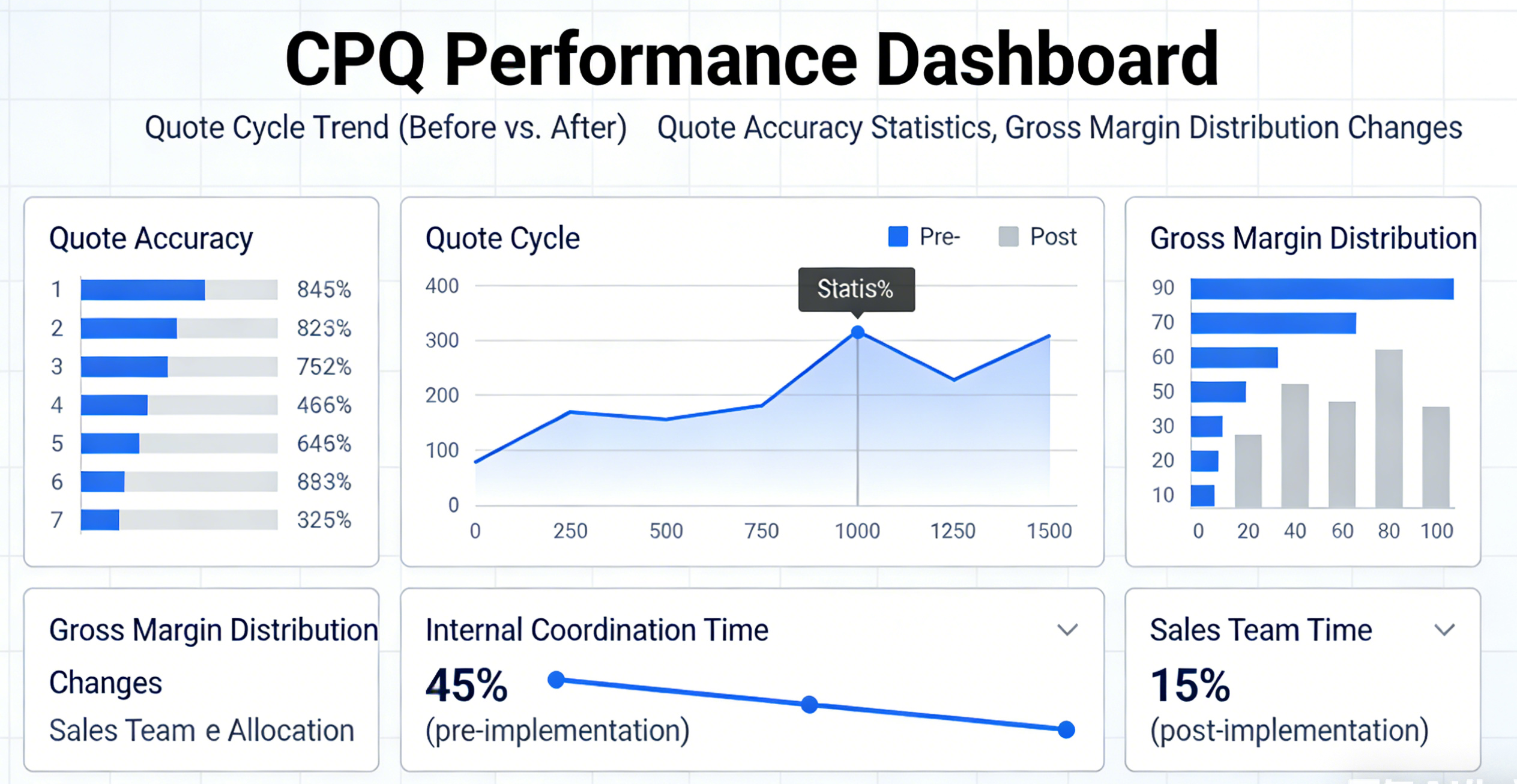
Quote cycle time is reduced from days to hours. Sales representatives no longer need to communicate repeatedly across departments; configuration feasibility and pricing can be confirmed during conversations, significantly reducing customer wait times.
Quote accuracy approaches one hundred percent. Configuration constraints are automatically validated by the system, and pricing logic is uniformly executed by the engine, essentially eliminating quote errors caused by human mistakes.
Sales gross margin increases by 2 to 5 percentage points. Consistent execution of pricing rules reduces excessive discounting, while dynamic pricing capabilities enable precise pricing based on different customer segments and value contributions.
Sales team efficiency improves by more than 30%. Sales representatives shift their time from internal coordination to customer communication, with the number of opportunities handled per person increasing significantly.
The Next Step in Intelligent Configuration
The evolution direction of Configure Price Quote systems is not about teaching machines to quote but about helping enterprises learn to respond faster to the market.
Once configuration rules, pricing logic, and approval processes are systematized, what the sales team gains is time, time no longer consumed by internal coordination, time truly dedicated to understanding customer needs. What the engineering team gains is focus, no longer burdened by repetitive technical inquiries, but concentrating on product innovation and configuration optimization. What the finance team gains is transparency, the pricing basis and profit contribution of every transaction are clearly traceable, no longer surprising discoveries at month end.
The deeper value lies in organizational learning. When every quote, every closed deal, and every lost opportunity is recorded and analyzed by the system, enterprises gain a data foundation for continuously optimizing product strategy and pricing strategy. Which configuration combinations are most popular in the market, which pricing strategies work best for different customer segments, which product margins are being eroded, the answers to these questions become data conclusions rather than experience based guesses.
The true significance of CPQ lies not in how intelligent it is in itself, but in how agile it makes an enterprise sales capability. In an environment where customers expect immediate responses and market competition intensifies daily, agility itself is the hardest competitive edge.