The Data Driven Transformation of Customer Engagement
Sales teams live in a world of fragmented information. Customer emails scattered across inboxes, meeting notes stored in personal folders, contract details buried in spreadsheets, and interaction histories locked inside the minds of account managers. When a customer calls with a question, the sales representative scrambles to piece together the relevant information. When a key account manager leaves the company, months of relationship context walk out the door with them.
Customer Relationship Management systems were designed to solve this fragmentation by centralizing customer data. Yet traditional CRM has largely remained a passive repository, a place where salespeople record what they have done rather than a tool that helps them understand what they should do next. Artificial intelligence is now transforming CRM from a recording system into an active intelligence platform.
The core proposition of intelligent CRM is not to automate the salesperson out of the process but to equip them with the insights needed to engage customers more effectively, turning every interaction into a data informed opportunity.
The Fragmentation Problem
Customer information today is scattered across an increasingly complex landscape. Email threads contain pricing discussions and feature requests. Calendar invites hold meeting notes and follow up commitments. Support tickets reveal recurring issues and customer frustrations. Social media interactions capture sentiment and competitive references. Each of these sources holds valuable intelligence, yet they remain disconnected from the salesperson view.
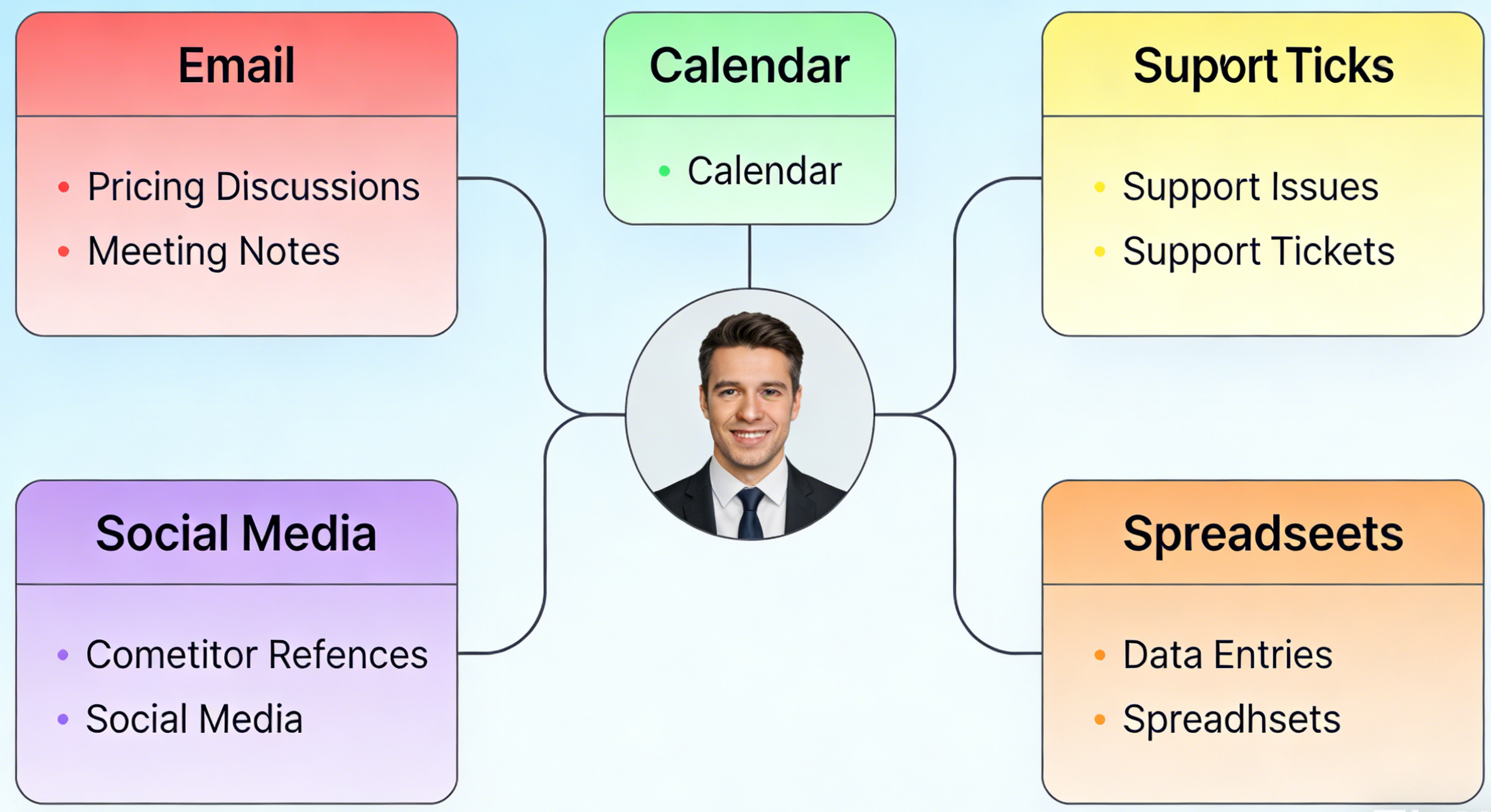
When a sales representative prepares for a customer meeting, they must manually gather information from these disparate sources. The process is time consuming and incomplete. Critical context is often missed. A customer complaint that surfaced on social media goes unnoticed. A technical question asked in an email never gets addressed in the next conversation. The sales representative operates with partial visibility, and the customer experiences the friction of repeating information across interactions.
Intelligent CRM addresses this fragmentation by unifying customer data into a single, coherent view. Every interaction, whether email, meeting, support ticket, or social mention, is automatically captured and linked to the customer record. The sales representative no longer needs to hunt for information. The information comes to them, organized and contextualized.
Beyond Contact Management
Traditional CRM excels at contact management. Names, titles, phone numbers, and email addresses are stored in structured fields. Account hierarchies are mapped. Deal stages are tracked. Yet this information, while necessary, provides limited insight into the dynamics of the customer relationship.
Sales representatives need to know not just who the contacts are but how they interact. Which executives are aligned with which decision criteria. Which champions are actively advocating internally. Which stakeholders have been silent for months. Which communications have generated positive responses and which have been ignored.
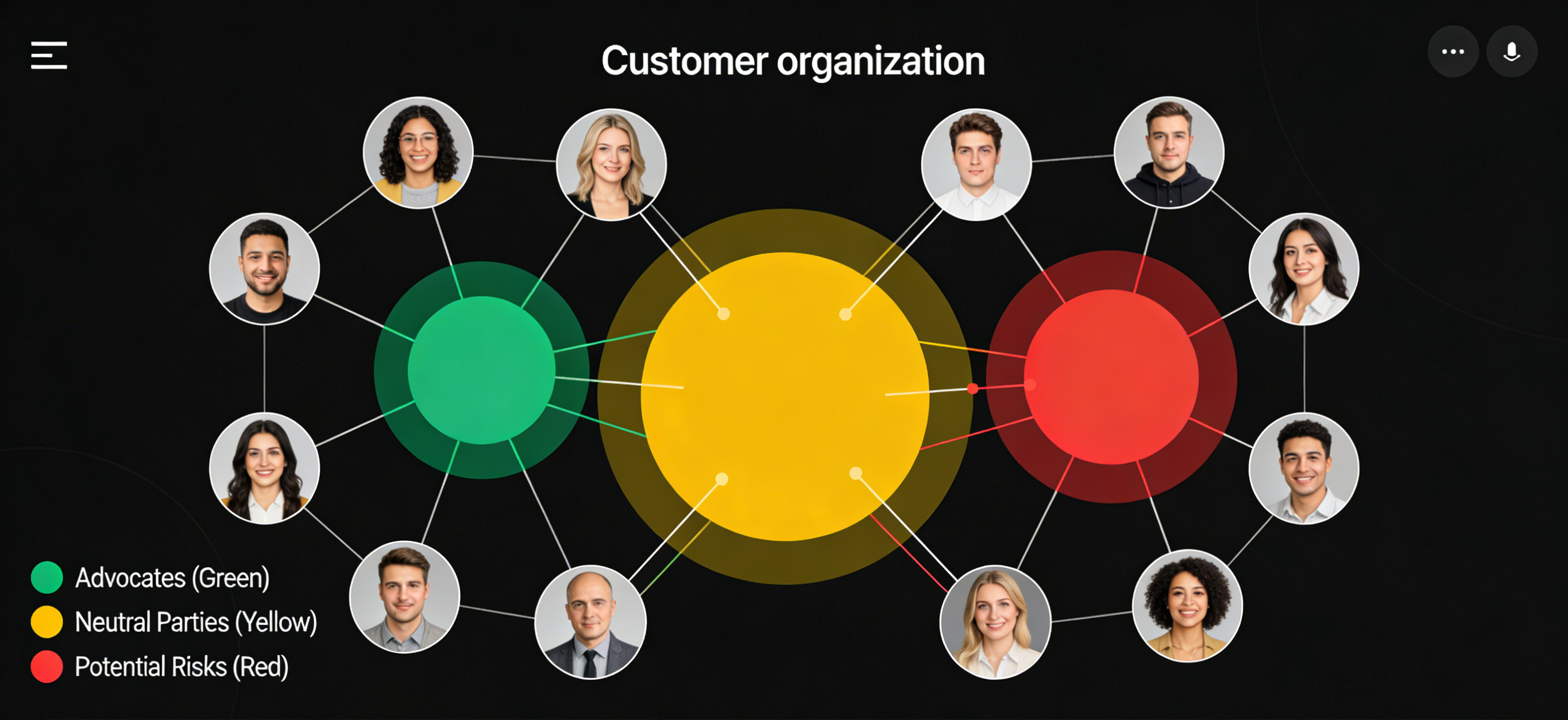
Intelligent CRM moves beyond static contact records to dynamic relationship intelligence. The system analyzes communication patterns, meeting participation, and engagement history to map the real structure of the customer organization. It identifies who holds influence, who is disengaged, and where relationship risks may be emerging. Sales representatives gain visibility into the human dynamics that determine deal outcomes, not just the transactional details.
This intelligence enables more strategic account planning. Instead of relying on the sales representative intuition about who to engage, the system provides data driven recommendations. Which executive requires more attention. Which stakeholder might be cultivated as a champion. Which silent contacts need re engagement. The sales representative focuses on building relationships while the system ensures no critical relationship falls through the cracks.
Opportunity Intelligence
The sales pipeline is the lifeblood of any commercial organization. Yet traditional pipeline management relies heavily on sales representative judgment. Deals are moved through stages based on subjective assessments. Forecasts are built on optimistic estimates rather than objective indicators. The result is pipeline opacity, forecast inaccuracy, and resources allocated to opportunities that will never close.
Intelligent CRM transforms pipeline management from subjective judgment to data driven intelligence. The system continuously analyzes opportunity characteristics, engagement patterns, and historical outcomes to assess deal health. It identifies deals that are progressing normally and those that show warning signs.
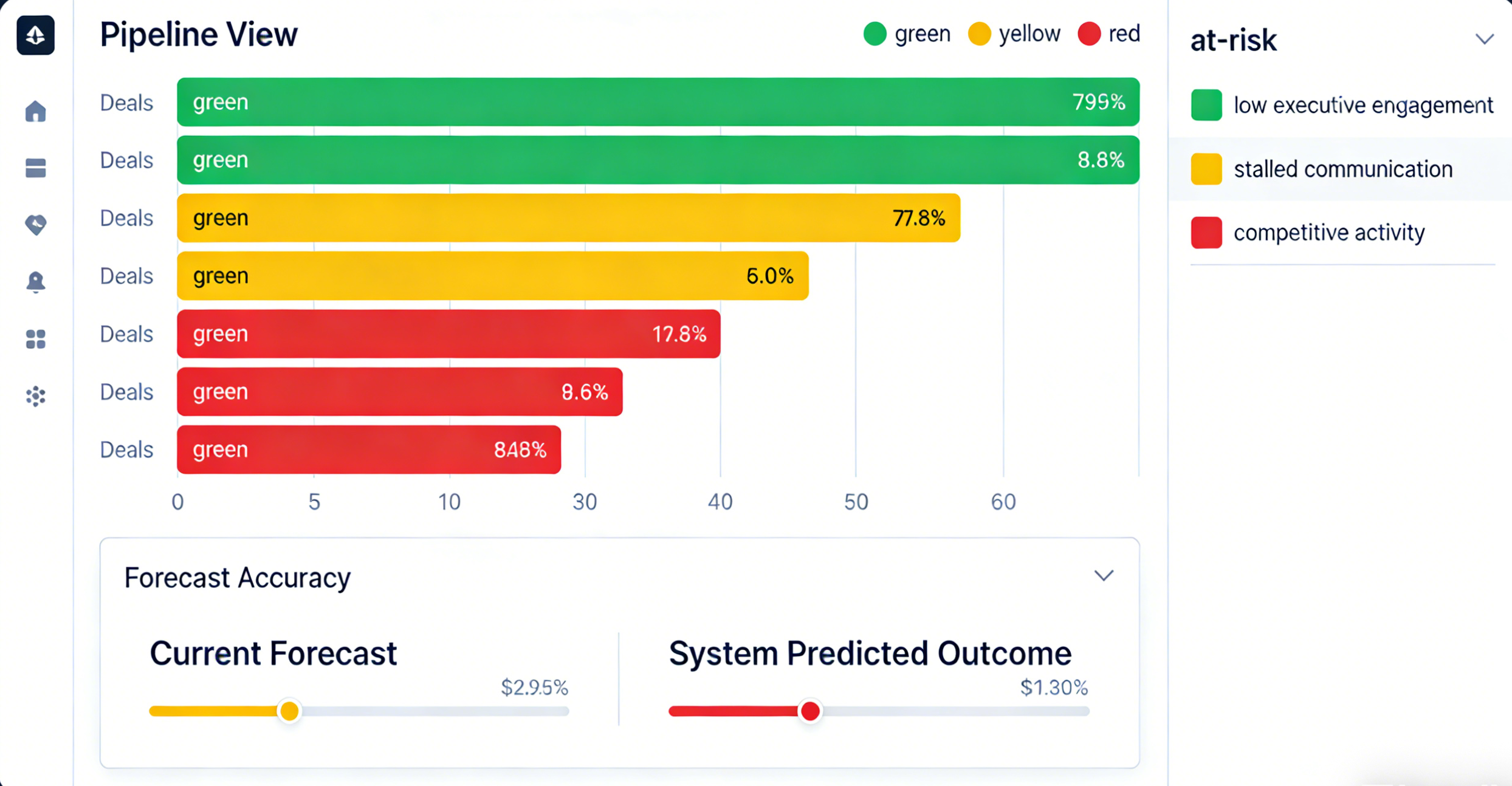
When a deal exhibits signs of risk, such as declining engagement from key stakeholders or a gap between proposed solution and stated requirements, the system flags it for attention. Sales representatives receive alerts not when it is too late to act but when intervention can still change the outcome. Managers gain visibility into pipeline health without relying on the optimistic narratives that often accompany sales reviews.
Forecast accuracy improves as predictions shift from gut feel to pattern recognition. The system learns from historical data which deal characteristics correlate with successful closure. It applies these patterns to current opportunities, providing an objective counterpoint to sales representative optimism.
Customer Health and Retention
Acquiring a new customer costs significantly more than retaining an existing one. Yet traditional CRM provides limited visibility into customer health until it is too late. Churn is detected when a customer fails to renew, at which point the opportunity to intervene has passed.
Intelligent CRM monitors customer health continuously by analyzing usage patterns, support interactions, and engagement metrics. A decline in product usage may indicate dissatisfaction. An increase in support tickets may signal unresolved issues. A drop in meeting frequency may suggest waning engagement.
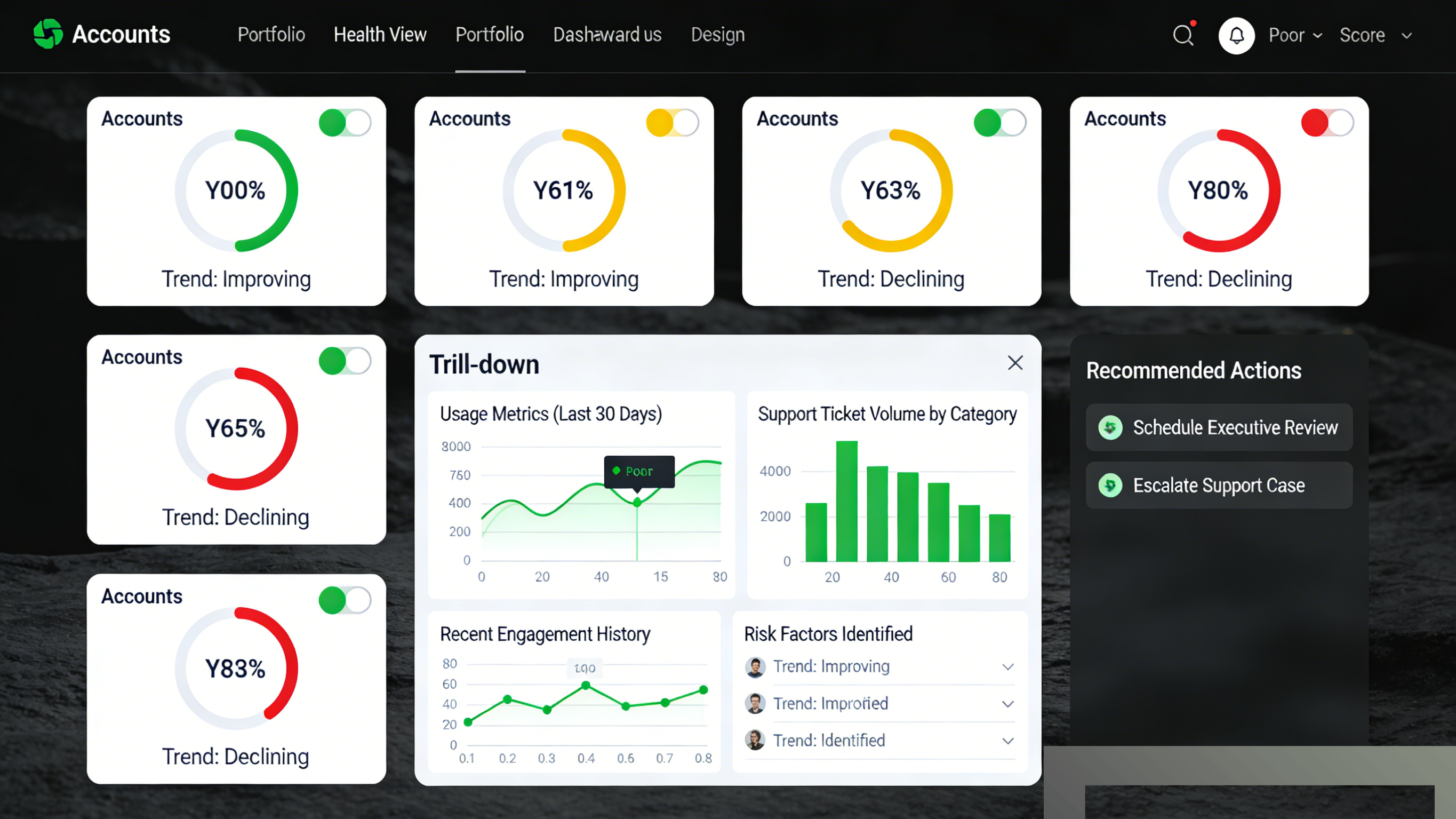
When a customer shows early signs of risk, the system alerts the account team. Intervention can occur while the relationship can still be repaired. A support issue can be escalated before it becomes a frustration. A usage decline can be addressed with targeted training. An engagement gap can be filled with strategic outreach.
Retention efforts shift from reactive to proactive. Account teams focus their attention where it matters most, on customers showing early warning signs, rather than waiting for renewal windows to discover problems.
Sales Efficiency and Automation
Sales representatives spend a significant portion of their time on administrative tasks. Entering data into CRM, scheduling meetings, preparing call summaries, searching for information. This administrative burden reduces time available for what matters most: engaging with customers.
Intelligent CRM reduces administrative overhead through automation. Meeting notes are automatically captured and summarized. Action items are extracted and assigned. Follow up tasks are generated without manual entry. Data entry is streamlined through natural language input and automated field population.

The system learns from representative behavior to further streamline workflows. It predicts which fields are most likely to be updated and pre fills them for review. It suggests the most relevant next steps based on deal stage and engagement patterns. It reminds representatives of pending actions and overdue commitments.
Value Anchors
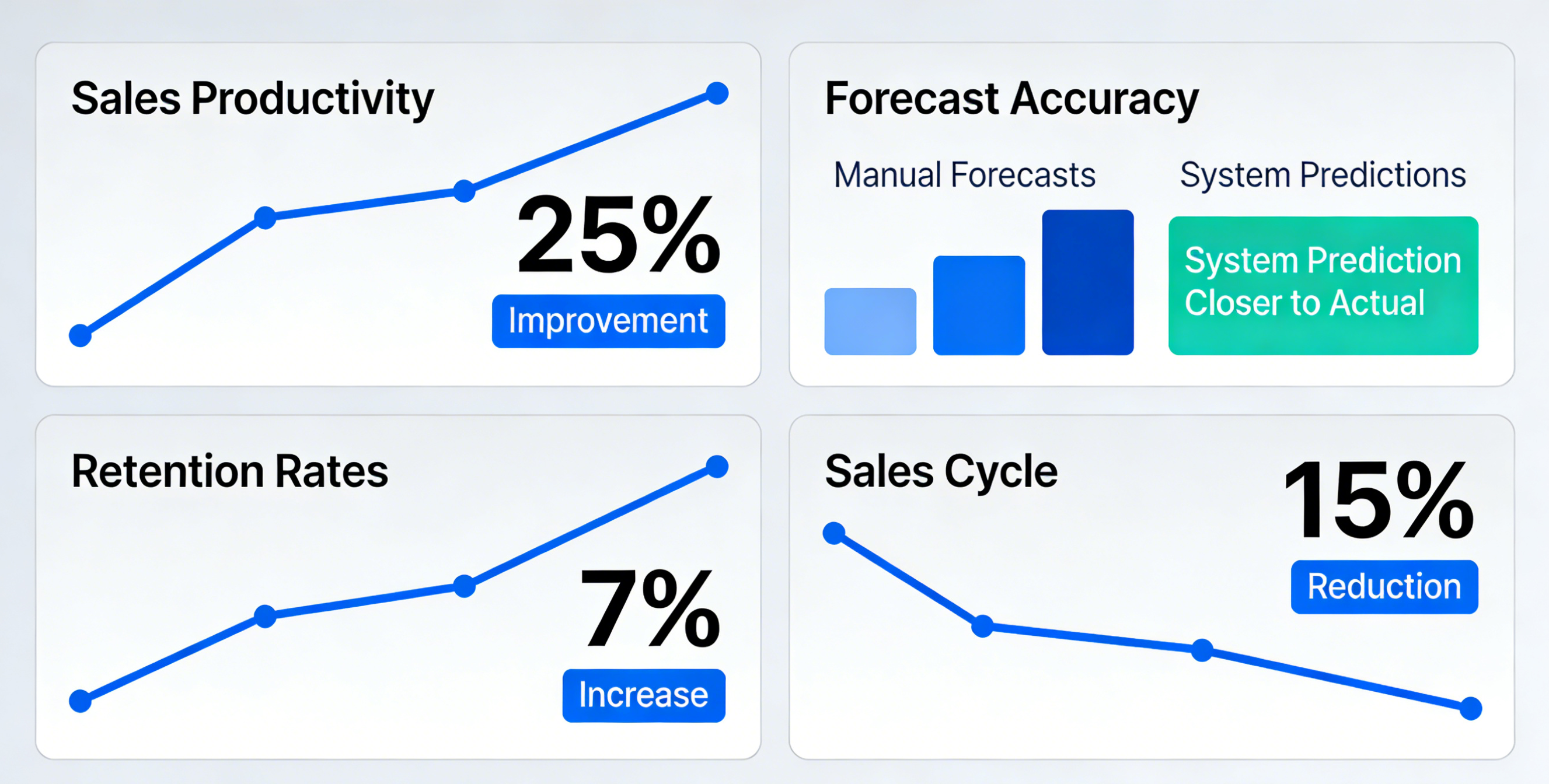
Enterprises that have deployed intelligent CRM report measurable improvements across sales and retention metrics.
Sales productivity increases by 20% to 30%. Administrative time is reduced, and representatives handle larger territories with the same headcount.
Forecast accuracy improves by 15% to 25%. Objective deal health indicators replace subjective stage assessments, and pipeline visibility enables more reliable revenue predictions.
Customer retention rates increase by 5% to 10%. Early warning systems identify at risk accounts before renewal windows, and proactive intervention prevents avoidable churn.
Sales cycle length decreases by 10% to 20%. Opportunity intelligence helps representatives focus on deals with the highest likelihood of closing, and relationship visibility eliminates the delays caused by missing stakeholder alignment.
The Evolution of Customer Engagement
The future of CRM is not about recording what happened but about guiding what happens next. As artificial intelligence capabilities mature, the system will shift from providing insights to recommending actions and eventually to executing actions autonomously.
When a customer shows signs of disengagement, the system will not merely alert the account team. It will analyze past successful re engagement patterns for similar customers and recommend a tailored outreach strategy. When a deal faces competitive pressure, the system will suggest pricing adjustments or value propositions that have proven effective in comparable situations.
When a customer inquiry arrives, the system will surface relevant past interactions and suggest response templates customized to the specific context.
The role of the sales representative will evolve from data entry and administrative coordination to strategic relationship management and complex problem solving. The system handles the routine. The representative focuses on the exceptional.
This evolution does not diminish the importance of the human sales professional. It elevates it. When representatives are freed from administrative burden and equipped with intelligence that reveals what matters most, they can focus on what only humans can do: build trust, understand nuanced needs, and create value through genuine connection.