At a Glance
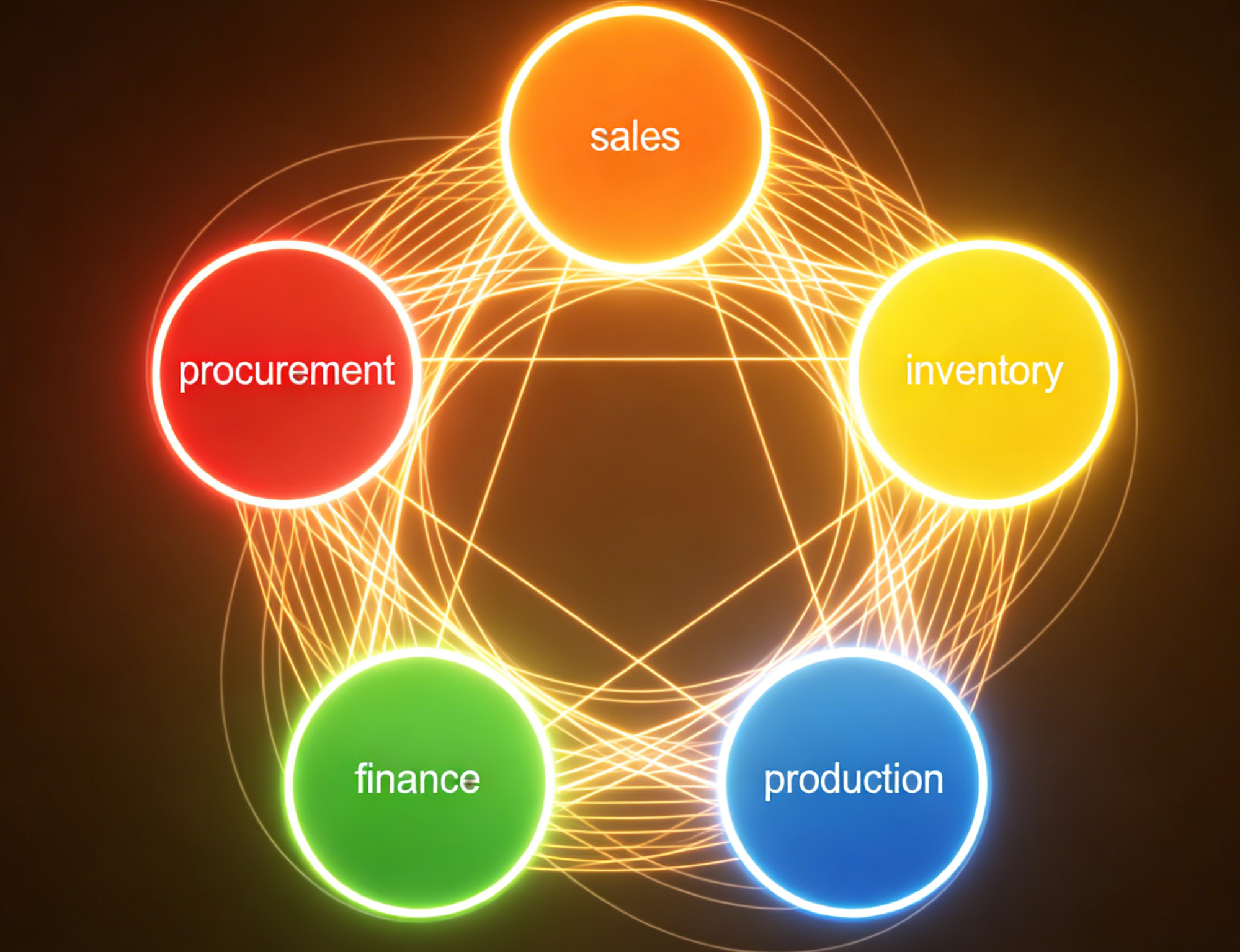
Procurement, sales, inventory, finance, and production operate on a single set of data
Cross departmental reconciliation is eliminated through data consistency
Management gains real time business insights, shifting from historical reports to live data for decision making
Customer Profile
A precision machinery manufacturer with annual revenue of approximately USD 120 million and 350 employees, primarily engaged in the production of aerospace components and high end equipment structural parts. The company manages over 2,000 product SKUs, with customers consisting mainly of major OEMs and tier one suppliers.
Single Source of Truth
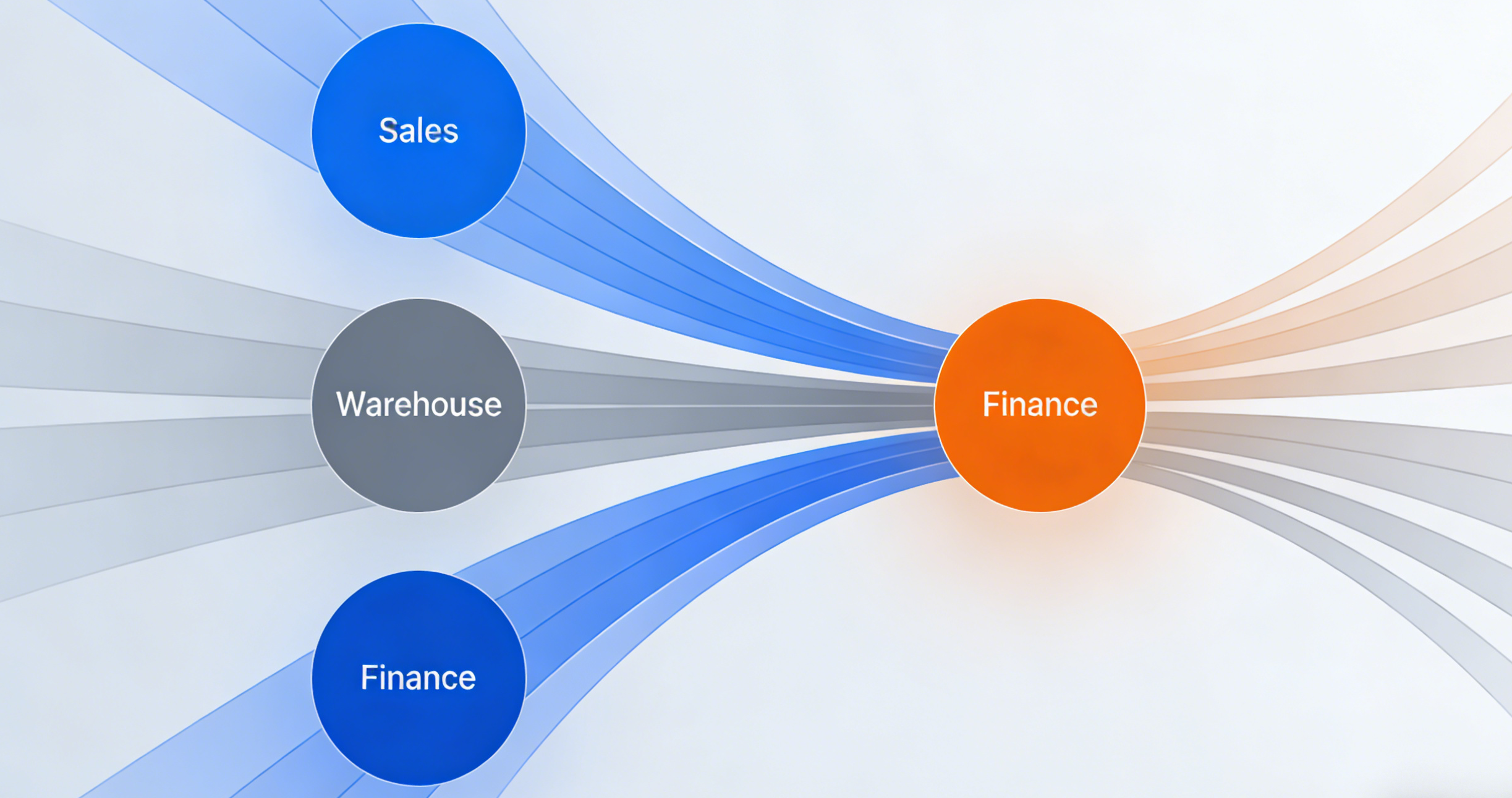
Sales maintained one set of data. Warehouse maintained another. Finance maintained a third. Three sets of data, three versions. Month end reconciliation became personnel reconciliation.
Now, all roles share a unified data view. When an order enters the system, warehouse sees the same document and finance sees the same receivable. Reconciliation is no longer necessary because only one ledger exists.
Data Governance and Organizational Alignment
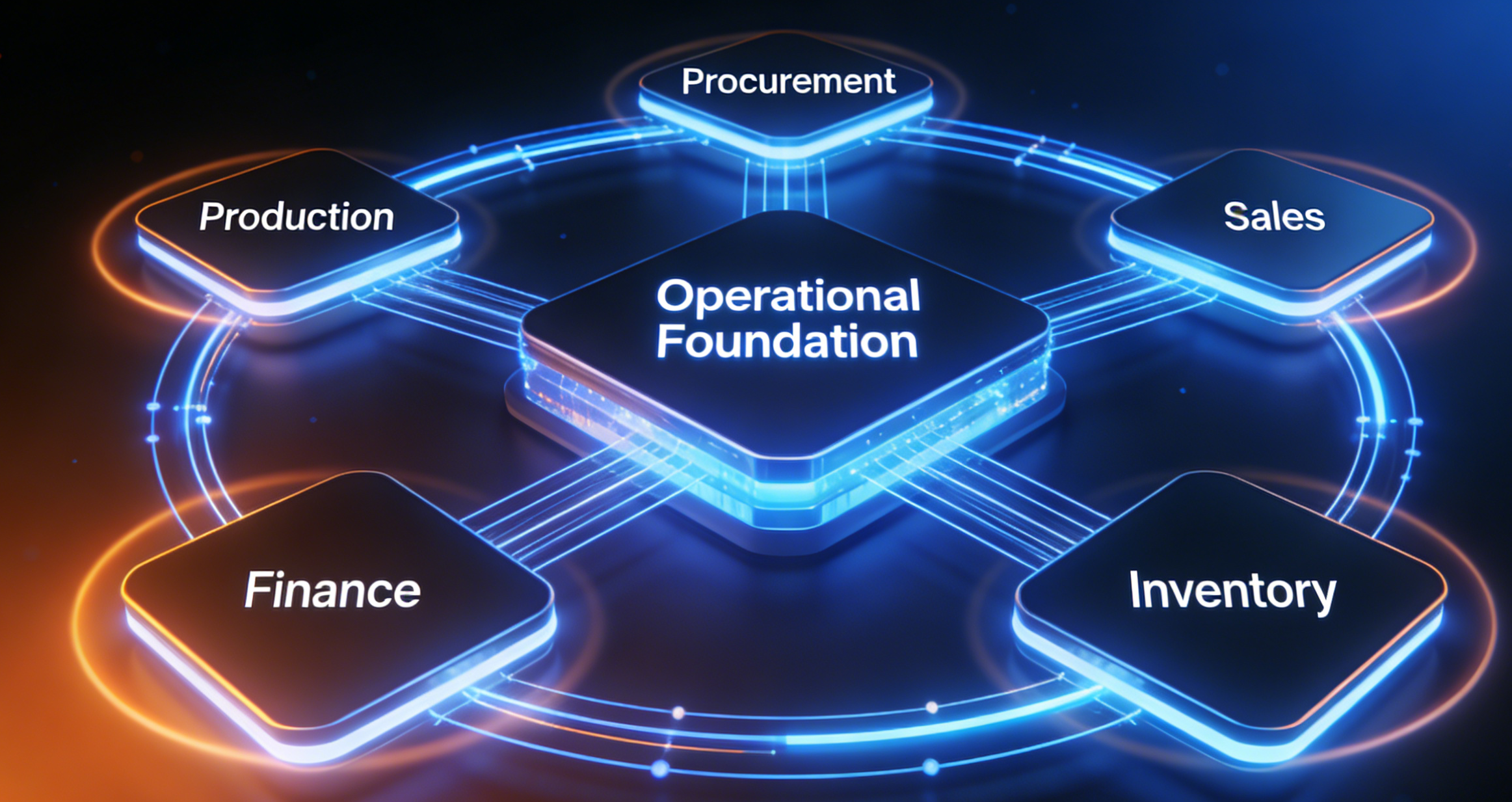
Every enterprise requires an operational foundation. Without it, procurement, sales, warehouse, finance, and production operate in isolation. Data does not flow across functions. Reconciliation depends on manual effort. Decisions wait for reports.
This company was once exactly that. Procurement used its own system. Sales relied on spreadsheets. Warehouse maintained paper logs. Finance operated with standalone software. Production managed work on whiteboards. Every function ran, but there was no conversation between them.
Now, they have finally established a unified operational foundation.
Business Process Automation
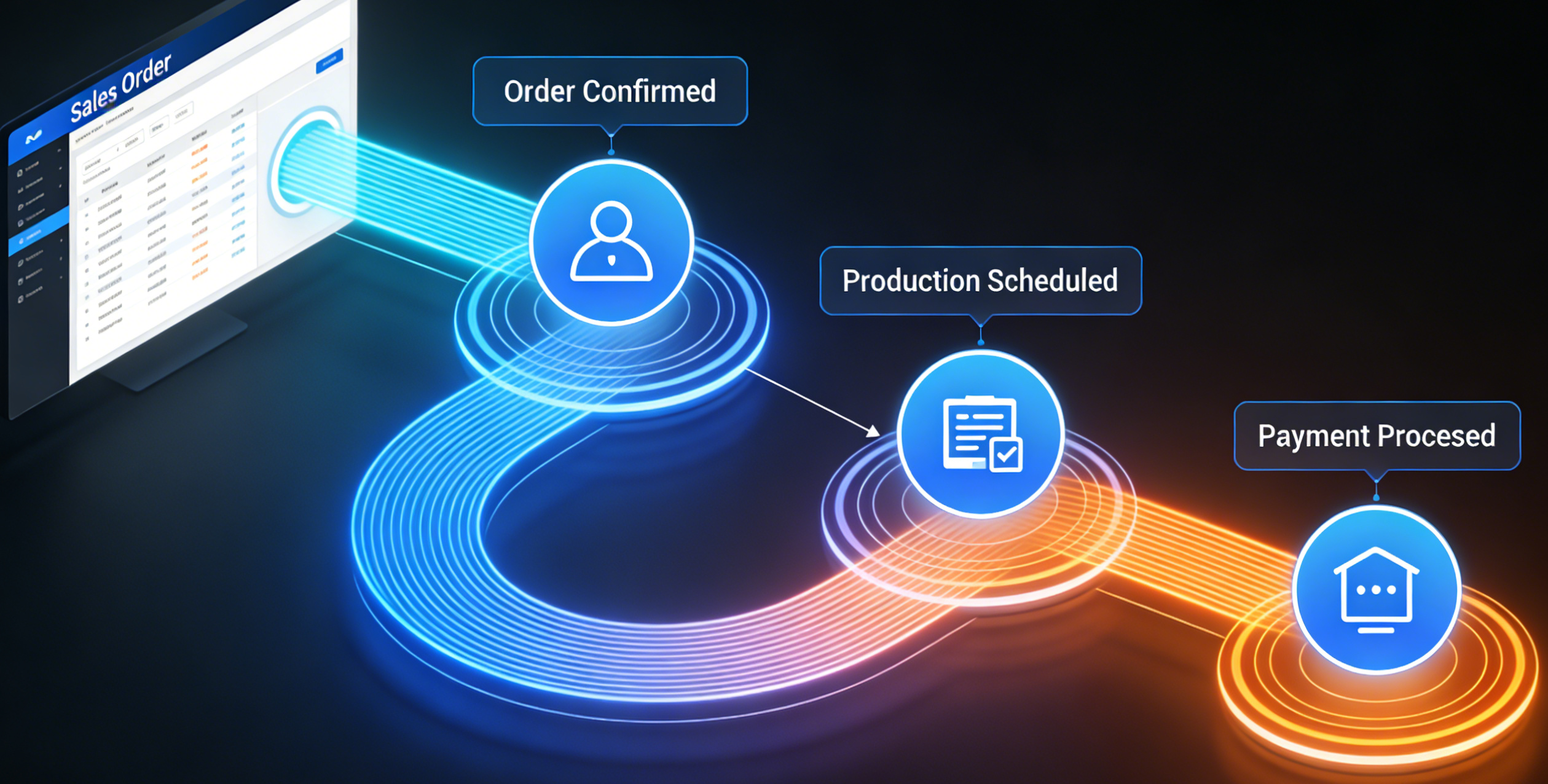
The moment an order is confirmed, the system automatically executes three actions notify warehouse to prepare shipment, notify planning to schedule production, and notify finance to prepare the invoice. No emails need to be sent. No phone calls need to be made. No follow ups are required.
The moment warehouse ships the goods, the system automatically executes three additional actions update inventory, generate a shipping order, and push a billing request. Finance opens the system to find the invoice already prepared, requiring only verification rather than data entry.
With business process automation, personnel shift from being executors to being supervisors.
Real Time Business Insights
Previously, when management sought to understand monthly profit, they waited for finance to collect, consolidate, verify, and adjust spreadsheets from sales, procurement, warehouse, and production. By the time data reached management, it was already the middle of the following month. Decision making was consistently based on lagging indicators.
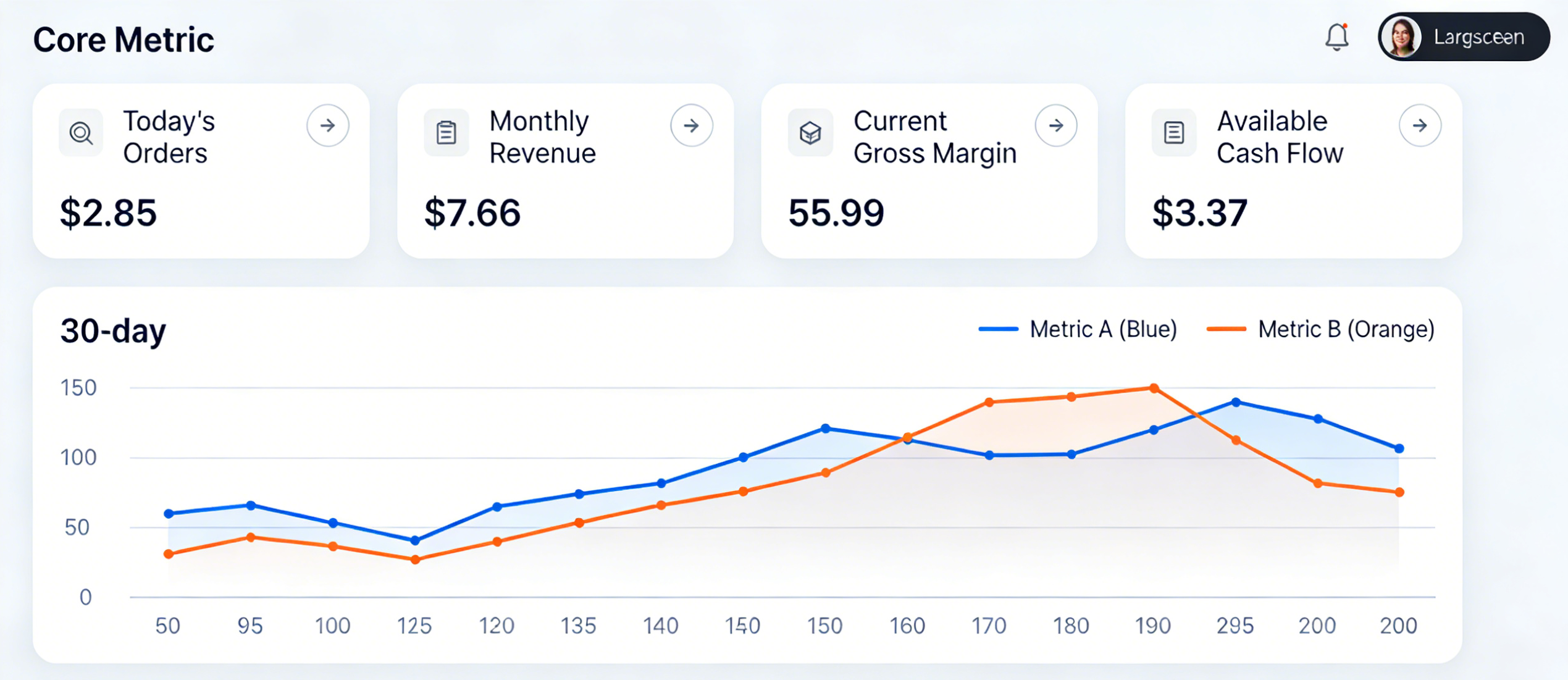
Now, when management opens the system, they see the current state of operations. Today's orders. This month's procurement. Current inventory. Real time cash flow. No one needs to submit reports. No one needs to worry about data latency.
When decisions are no longer based on history, decisions themselves become more precise.
Cross Departmental Data Collaboration
Procurement is no longer solely a procurement function. When procurement places an order, they can view inventory status, production plans, and sales forecasts. Inventory is no longer solely a warehouse function. When inventory changes, procurement knows to replenish, sales knows to accept orders, and finance knows to prepare payment.
When each department can see the real time status of others at the moment of decision making, no one needs to ask. The answers are already present in the system.
This is the value of an operational foundation enabling every functional unit to understand the real time status of other units.
Customer Testimonial
We spent years selecting a system, not because we sought feature richness, but because what we needed was not merely software. We needed the capability for the entire organization to think and decide based on a single set of data. Looking back, we have finally found it. ——General Manager