Inventory Optimization: Turning Stock into an Operational Advantage

Summary
×When companies discuss inventory management, the first concern is often excess stock or frequent shortages. In practice, inventory problems are rarely isolated warehouse issues. They usually come from disconnected purchasing, sales forecasting, production planning, warehouse execution, and financial control. When teams rely on separate spreadsheets, standalone systems, or delayed reports, inventory decisions are often based on partial information.
Effective inventory optimization is about balancing service levels, working capital, supply risk, and operational efficiency. Too much inventory ties up cash, increases storage costs, and hides weaknesses in planning. Too little inventory can cause production delays, missed shipments, lower customer satisfaction, and lost sales opportunities. Strong inventory optimization connects data, workflows, and accountability.
From Static Stock Records to Dynamic Decisions
Traditional inventory management often focuses on how much stock is available now. Modern businesses also need to understand what is likely to happen next. Inventory balances alone cannot show which materials may soon run short, which products are slowing down, or which purchase orders may create excess stock.
Industry Software helps companies move from static inventory records to dynamic inventory control. By connecting purchasing, sales, warehouse, and planning workflows, businesses can identify exceptions earlier, detect supply gaps, and trigger replenishment, transfer, or planning actions based on defined rules. For management teams, inventory becomes more than a month-end number; it becomes an operational asset that can be monitored and improved continuously.
Safety Stock Requires Smarter Rules
Many companies still define safety stock using fixed experience-based numbers. That approach may work when demand is stable, but it becomes fragile when demand patterns change, supplier lead times shift, or product structures evolve. Some materials may remain overstocked for months, while critical items still run short.
A more mature approach is to classify inventory based on item value, demand variability, lead time, substitution options, and business criticality. High-value and unstable-demand materials may require stricter approval, forecasting, and risk monitoring. Low-value and frequently consumed items may be better suited for automated replenishment rules. With modular and configurable software workflows, companies can embed these strategies into system logic instead of relying only on individual judgment.
Replenishment Should Become Proactive
When replenishment depends on manual reminders or urgent communication, inventory teams stay in a reactive mode. Sales teams chase orders, production teams chase materials, purchasing teams chase suppliers, and warehouse teams handle constant exceptions. This creates inefficiency, duplicated buying, conflicting priorities, and distorted planning.
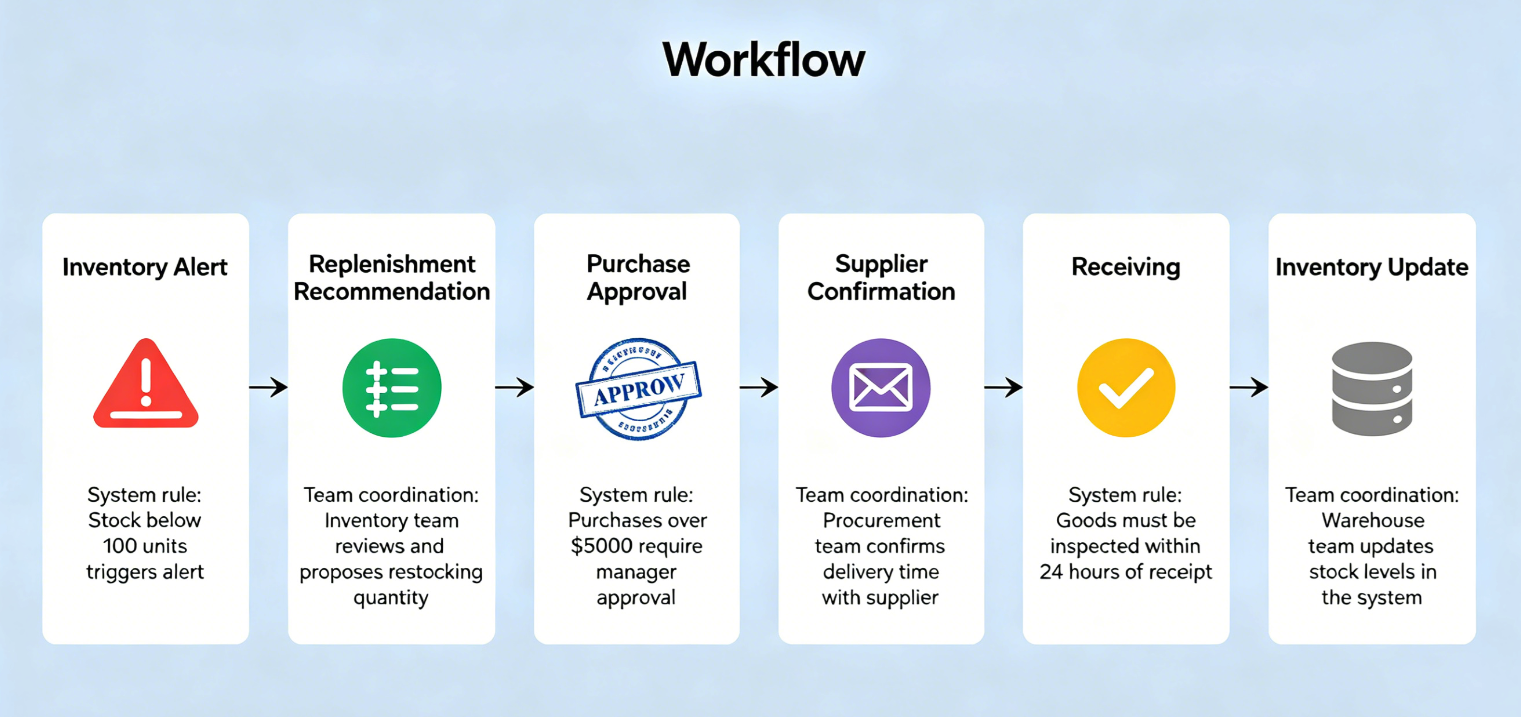
Inventory optimization software makes replenishment logic more transparent and consistent. The system can generate replenishment recommendations based on minimum stock levels, forecast demand, open purchase orders, historical consumption, and supplier lead times. Purchasing teams can see why an order is needed, planners can see future risk, and managers can supervise rules and exceptions. Replenishment becomes a planned operating process rather than a response to shortages.
Excess Inventory Requires Better Visibility
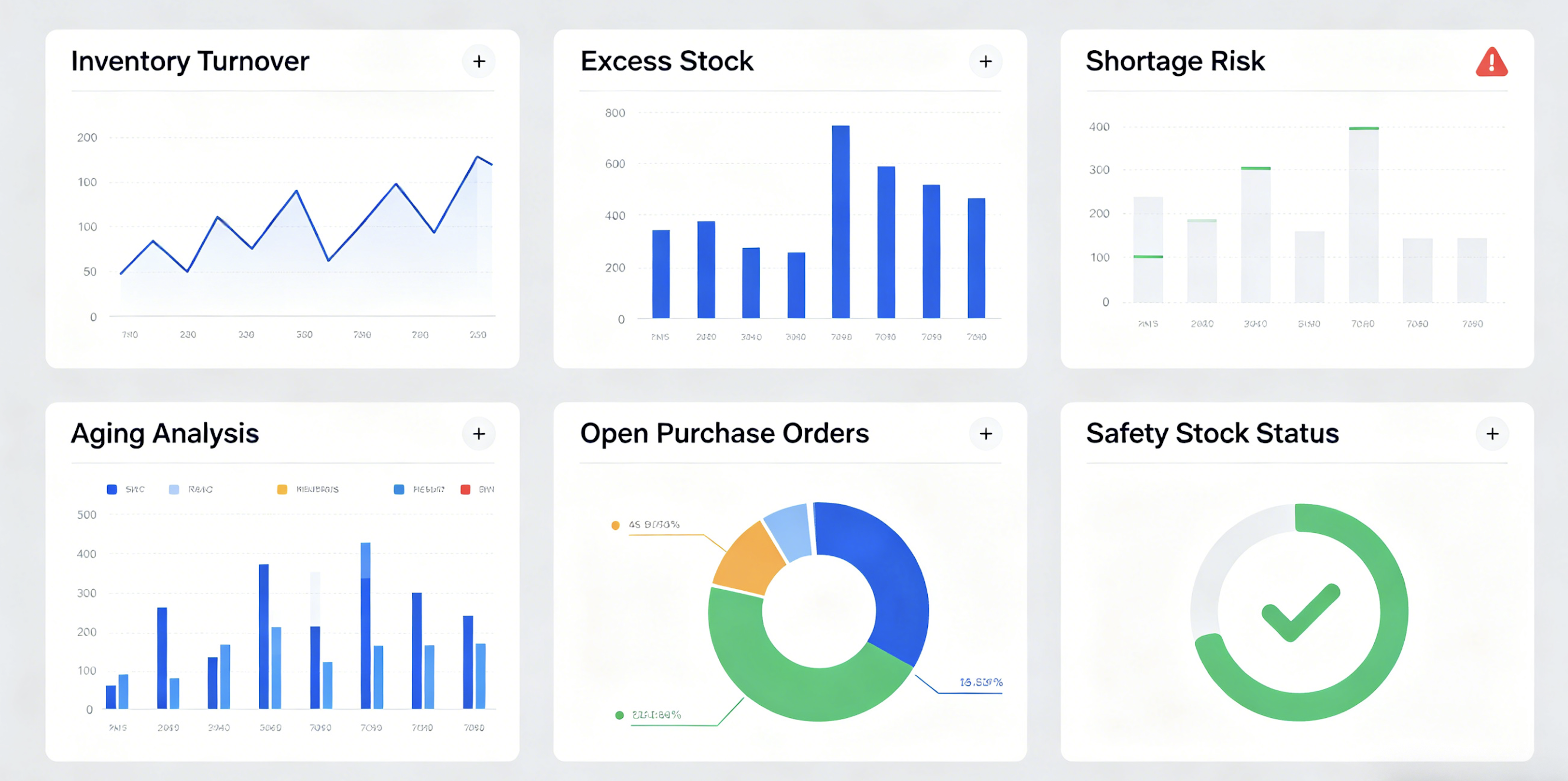
Inventory optimization is not only about avoiding shortages. It also requires companies to understand inventory quality. Some stock may appear usable on the balance sheet but become inefficient because of aging, demand changes, specification changes, or canceled projects. Looking only at total inventory value makes it difficult to separate useful stock from slow-moving assets.
Through aging analysis, turnover analysis, demand matching, and inventory classification, companies can identify excess risk earlier. Industry Software helps create clearer inventory visibility so operations and finance teams can evaluate whether inventory structure is healthy. For slow-moving items, companies can define consumption plans, alternative usage rules, purchasing restrictions, or sales strategies to reduce repeated buildup.
Inventory Optimization Connects the Floor and Management
The value of inventory data depends on whether it is timely, accurate, and usable. If receiving, put-away, transfer, counting, and outbound activities are not updated quickly, management teams will see a delayed inventory picture. Planning and purchasing decisions based on delayed data can create new shortages or excess stock.
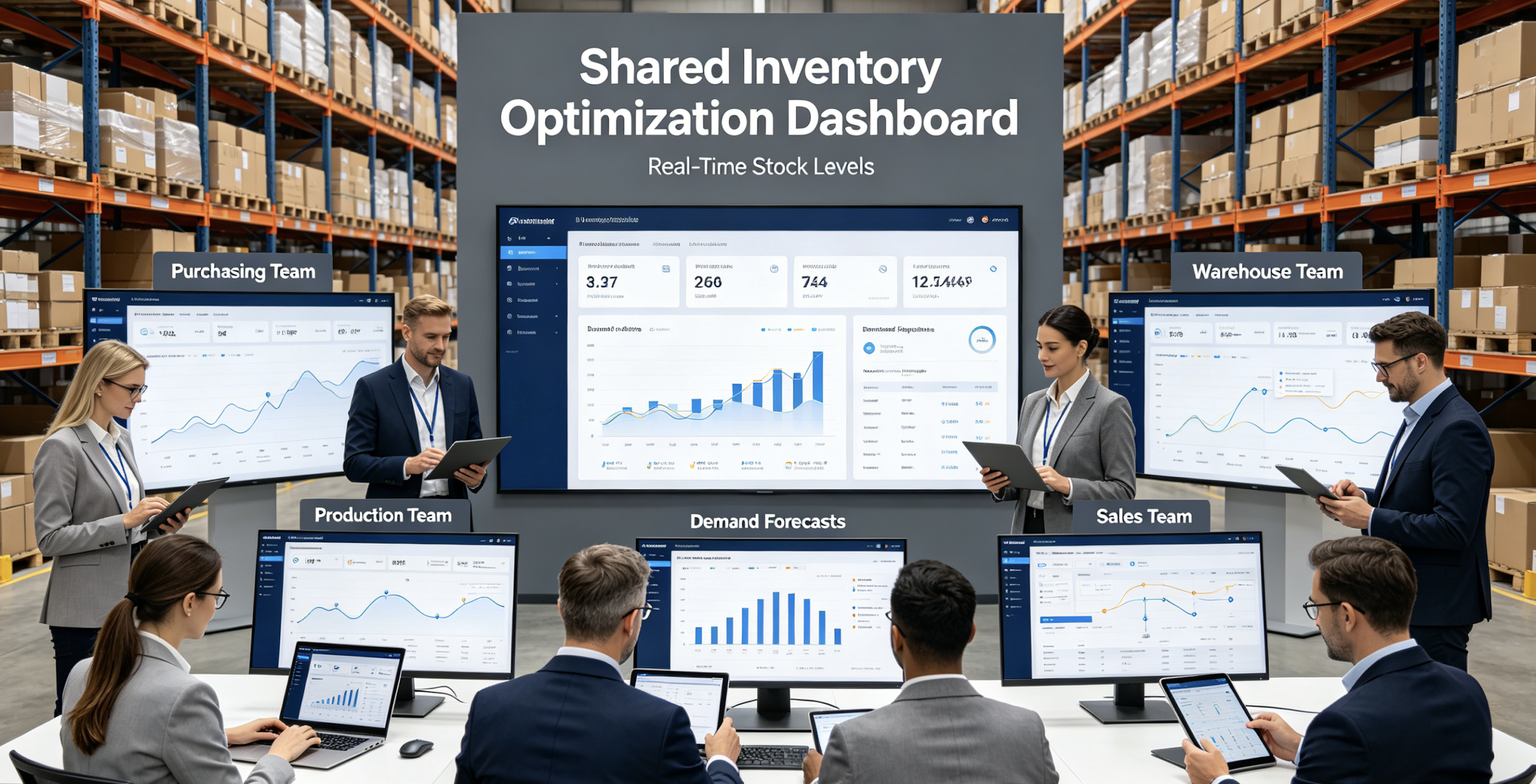
A cloud-based, modular software platform allows different roles to work from the same data foundation. Warehouse teams update inventory movements, purchasing teams track open orders and arrivals, sales teams review available-to-promise quantities, and managers monitor trends and working capital. With connected workflows and no heavy local setup, teams can collaborate on one platform and improve the reliability of inventory decisions.
From Inventory Control to Operational Resilience
The real value of inventory optimization is not only cost reduction. It improves how quickly a company can respond to change. Supply delays, demand shifts, customer order changes, and production plan adjustments will continue to happen, and businesses need better judgment and stronger execution discipline.
Industry Software helps companies connect workflows, configure operating rules, and visualize inventory performance. For industrial organizations pursuing digital transformation, inventory optimization is a high-value starting point because it directly affects cash flow, delivery reliability, customer experience, and operating efficiency. When inventory becomes visible, predictable, and collaborative, companies can support growth with less waste and stronger control.