Purchase Order Management Should Not Stop at the PO

Summary
×The PO Is Not the End of the Process
A manufacturing company is preparing to start an urgent production run. The production plan is already scheduled, but the warehouse finds that several critical parts are still short. The purchasing team confirms that related POs exist, but some items have not arrived, while others have been delivered by the supplier but cannot be treated as available inventory because receiving quantities have not been confirmed. Finance is also waiting for complete purchasing documents and receiving records before downstream processing can move forward. This situation shows that purchase order management is not only about whether an order has been placed; it is about whether purchasing commitments, material readiness, supplier delivery, receiving confirmation, and downstream process readiness are connected in one execution chain.
For manufacturing, engineering, maintenance, and project-driven businesses, the real impact of a PO depends on whether materials arrive on time, whether inventory can support demand, whether suppliers complete delivery, whether receiving is confirmed, and whether downstream finance has complete records for processing. When these details are split across purchasing, warehouse, and finance workflows, teams can place an order while production remains blocked by missing materials. Industry Software focuses on connecting purchasing, inventory, supplier follow-up, and receiving confirmation into a traceable execution chain instead of treating the PO as a standalone record. Buyers can identify which orders need supplier follow-up, warehouse teams can confirm which materials need receiving, and management can see earlier whether purchasing spend is becoming real supply support.
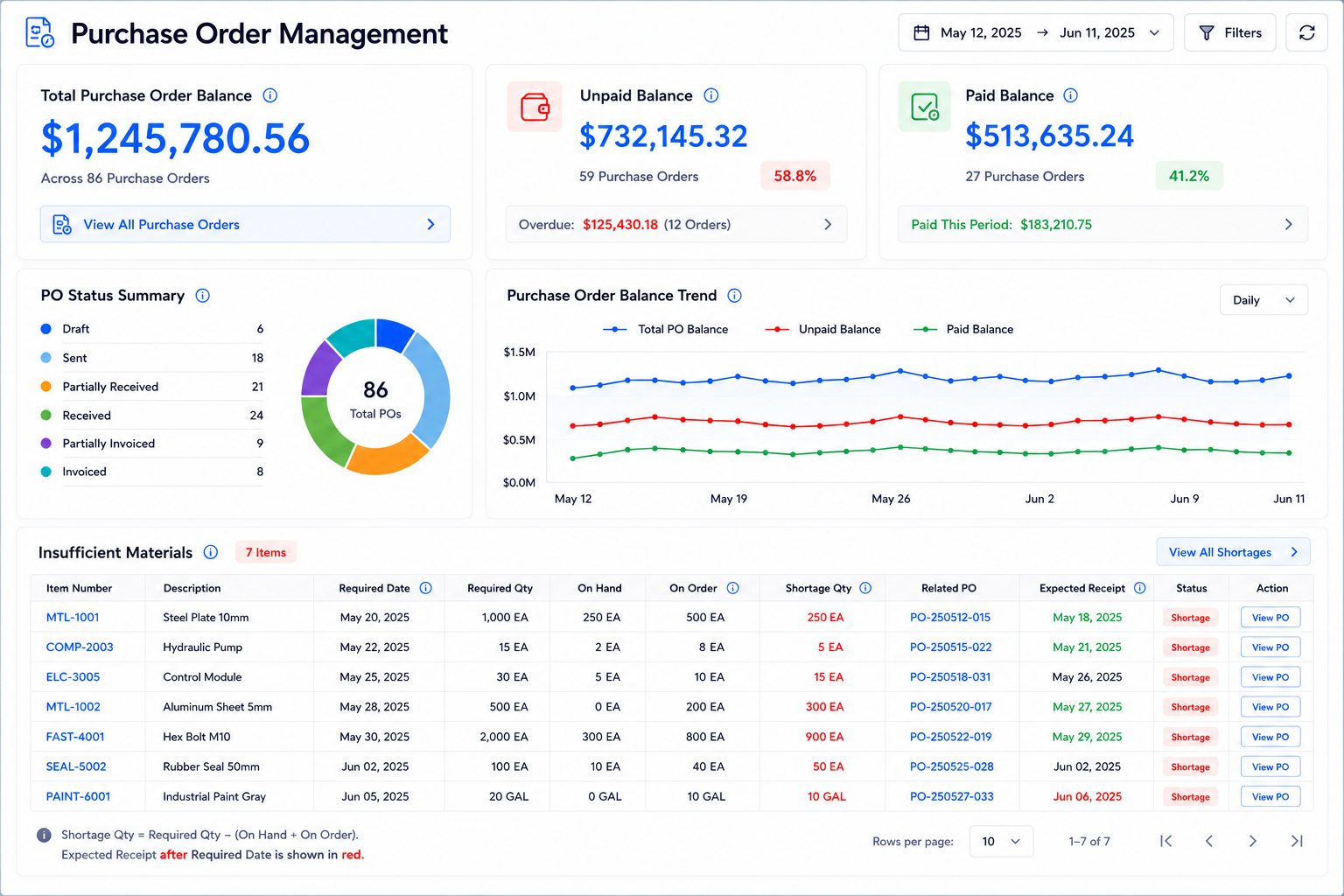
Purchase Balances Should Connect to Material Demand
Managing purchase amounts is not only a finance reporting activity; it is a way to understand purchasing commitments, material demand, and supply readiness together. Total purchase order balance helps a company understand the purchasing responsibility created during a selected period, while unpaid balance does more than point finance teams toward payment planning. It also signals to purchasing teams which high-value orders still require receiving follow-up, shortage review, document preparation, or supplier confirmation before the process can move forward. Paid balance should also be reviewed alongside material availability, receiving confirmation, and supporting files to confirm whether purchasing spend has become usable supply.
A clearer balance view helps purchasing, warehouse, production, and finance teams work from the same information. Buyers can identify which suppliers or orders need closer follow-up, warehouse teams can prepare for receiving, and production or project teams can connect material status with upcoming work. Finance teams still care about payment timing, but in a purchasing article, payment status should be treated as one signal of order maturity rather than the center of the story. This turns purchase balance from a static financial number into a practical view of whether purchasing commitments are becoming real material support.
A purchase balance view can help teams focus on:
Whether purchasing commitments are increasing too quickly
Whether high-value orders have completed receiving and document preparation
Whether unpaid orders still carry material or supplier follow-up risks
Whether paid amounts match actual delivery and business completion
Whether spending is concentrated in selected suppliers, projects, or critical material categories
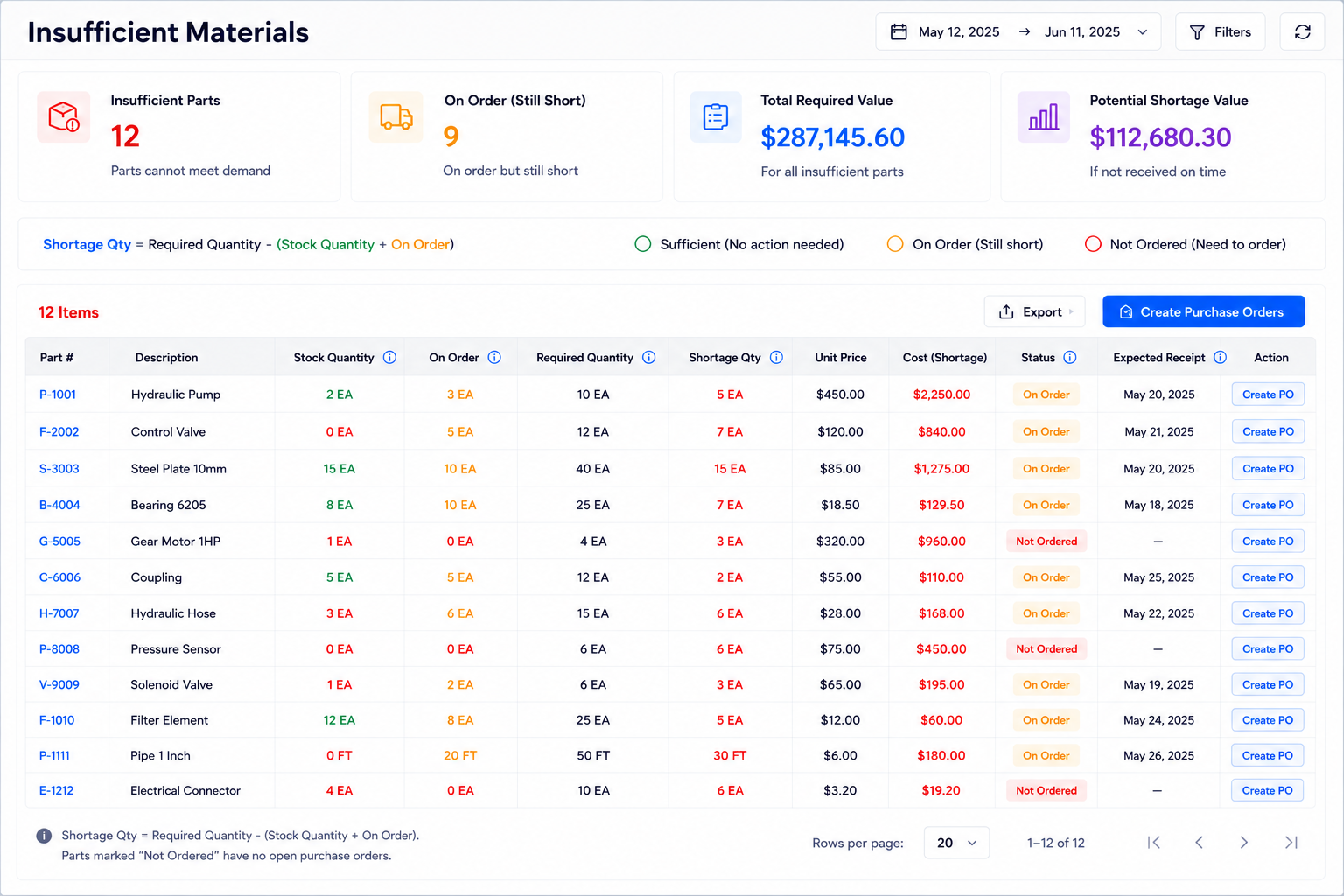
Shortage Lists Should Trigger Purchasing Action
Material shortage is one of the purchasing issues that needs to surface early. Companies need to know not only how much stock is available, but also whether parts are already on order, how much is required, and whether current purchasing activity can cover production or project demand. Industry Software can bring stock quantity, on-order quantity, required quantity, and material status into one view so buyers can separate true shortages from items already in progress. When a material is marked as Not Available or On Order, teams can quickly decide whether to expedite purchasing, confirm supplier lead times, review substitute materials, or adjust execution plans.
This capability is especially important in manufacturing and engineering environments. Many delays do not occur because no purchase order exists, but because the PO does not cover real demand or the shortage information does not reach buyers early enough. If a shortage is discovered only when work is about to begin, production schedules, labor arrangements, and project timelines may all be affected. By placing shortage visibility inside purchase order management, Industry Software helps move risk upstream into procurement and inventory control, reducing last-minute coordination and costly emergency purchases.
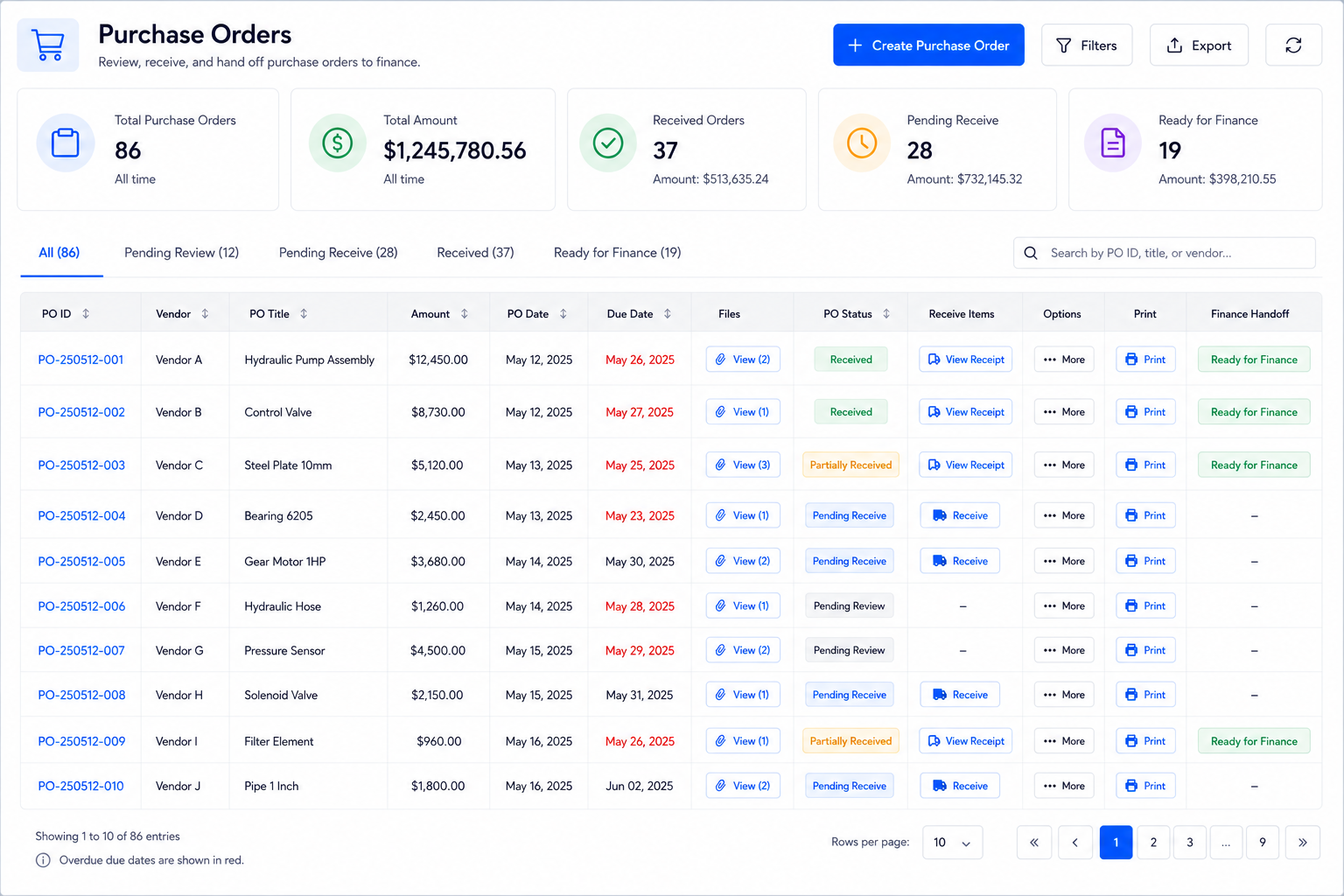
PO Details Should Manage Every Next Action
A purchase order detail list should not be a historical archive. Each PO needs to connect vendor, amount, PO date, due date, attachments, order status, receiving entry, and readiness for downstream processing. The main focus is not pushing the order into accounts payable as quickly as possible; it is making sure the purchasing-side work is complete before the order reaches that stage. Supplier follow-up, delivery confirmation, receiving records, document readiness, and exception handling all need to be visible before finance can confidently continue the process.
Every PO field should support a real business action. Attachments help teams review quotes, contracts, and purchasing documents, receiving actions confirm whether materials or services have been delivered, and status fields show whether the process is moving forward. The downstream finance handoff should be treated as the natural endpoint of a prepared purchasing workflow, not as the core purchasing function itself. By keeping these actions inside purchase order management, Industry Software helps buyers reduce manual tracking and make each order easier to trace from creation to receiving confirmation.
A PO execution list should support:
Reviewing vendor, amount, PO date, and due date
Opening order attachments or related purchasing files
Confirming whether materials or services have been received
Editing or reviewing exception orders
Printing or exporting purchase records
Handing off orders to finance after purchasing records are complete
Receiving Confirmation Completes the Purchasing Side
For many companies, the biggest purchasing gaps appear before receiving is fully confirmed. Supplier delivery, warehouse receiving, document readiness, quantity matching, and exception handling all determine whether a PO is truly ready for downstream processing. If receiving status is not updated quickly, purchasing may assume the order is complete while inventory records remain inaccurate and production teams still lack material confidence. Industry Software brings receiving confirmation into the purchase order workflow so order status, material arrival, and warehouse activity can stay connected.
Downstream finance processing should be the natural result of a completed purchasing workflow, not the main theme of the purchasing story. What purchasing teams need to manage is the preparation before that point, including order files, receiving confirmation, supplier delivery performance, and exception records. When these conditions are clear, finance teams can process the payable with fewer questions and supplier communication becomes easier to support. This shifts purchase management from “placing an order and waiting for payment” to “ensuring that purchasing commitments are delivered, confirmed, and documented.”
Supplier Performance Should Be Part of the PO Workflow
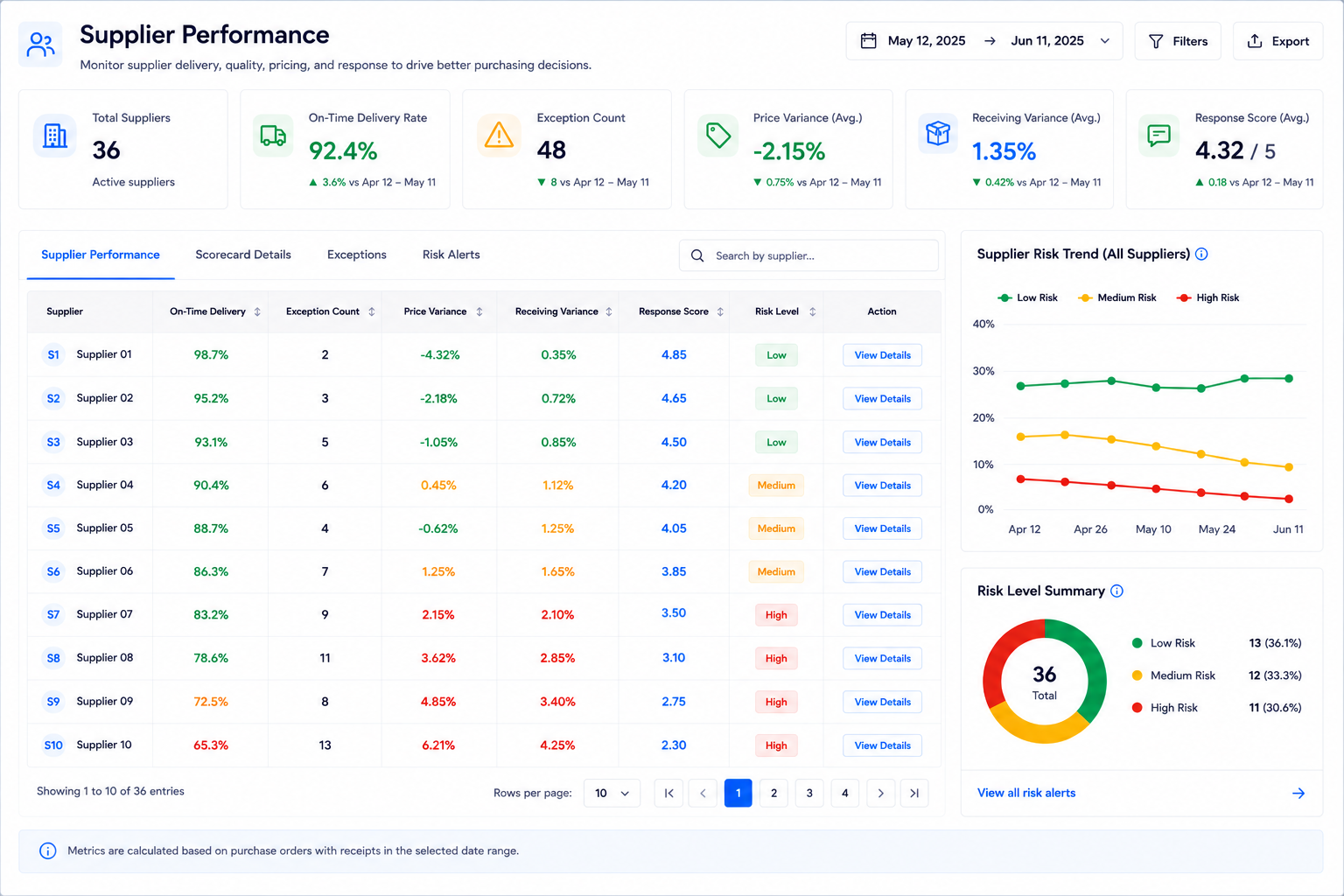
A purchase order is not just a transaction; it is also a record of supplier performance. On-time delivery, quantity accuracy, issue resolution, price consistency, and responsiveness all affect whether a supplier can be trusted for future orders. If these insights stay only in buyers’ personal experience and are not connected to the PO workflow, companies may repeat the same supplier problems without learning from past orders. Industry Software can help purchasing teams capture supplier execution patterns inside the purchasing process so every order contributes to better future sourcing decisions.
Supplier performance management is not only about after-the-fact scoring. For critical materials or urgent orders, buyers need to know which suppliers deliver reliably, which suppliers require frequent follow-up, and which suppliers may offer lower pricing but create greater schedule risk. Management can also use supplier performance data to adjust supplier strategy, build backup sources, or strengthen approval control for high-risk purchasing categories. In this way, purchase order management does not only process current orders; it helps build a more reliable supply base over time.
Supplier performance can focus on:
On-time delivery rate
Receiving quantity variance
Quality issues or returns
Price variance and quote consistency
Response speed for exceptions
Stability for critical material supply
Purchasing Data Should Help Teams Decide What Comes First
Purchasing teams do not manage static orders; they manage changing priorities. Which materials are short, which items are already on order, which POs are high value, which orders have been received but still lack documents, and which suppliers require urgent follow-up all affect the daily work sequence. If buyers can only search by date, vendor, or PO number, it is difficult to understand which tasks have the greatest impact on production, projects, or supply reliability. Industry Software connects purchase amounts, shortage status, supplier performance, PO details, and follow-up actions so teams can prioritize by business impact instead of document order alone.
This priority-based view also improves cross-functional coordination. Production teams care about when materials will be available, warehouse teams care about what needs to be received and stocked, finance teams care about whether order records are complete, and managers care about purchasing exposure and supplier risk. A shared purchasing view allows different roles to discuss the same order, material, and supplier status. The more consistent the operating data is, the less purchasing execution is slowed by information gaps, repeated checking, and manual handoffs.
Purchasing Go-Live Requires Real Data and Workflow Rules
A purchasing system creates value only when implementation can handle the company’s existing purchasing data, supplier structure, and approval rules. Many companies already have supplier records, material codes, open POs, pricing history, purchasing attachments, and receiving data before a new system is introduced. If this information is not cleaned, mapped, and imported properly, the system will struggle to become the daily workspace for purchasing teams. Industry Software focuses on building the right data foundation, workflow rules, and role permissions first so the purchasing module can reflect real operating needs from the start.
Purchasing configuration also needs to match how the company actually manages procurement. PO approval levels, supplier categories, partial receiving, over-receiving, short receiving, urgent purchasing, project purchasing, and inventory purchasing can vary significantly across organizations. Industry Software can configure PO fields, approval rules, receiving status, material status, supplier performance metrics, and reporting views around the company’s workflow. The result is not a generic purchasing template, but a practical operating process shaped around how purchasing work is actually done.
For purchasing module implementation and service, Industry Software can support:
Supplier master data setup and import: Organizing supplier names, contacts, payment terms, categories, status, and cooperation history.
Material and purchasing data import: Bringing material codes, descriptions, stock quantity, on-order quantity, required quantity, unit prices, and open POs into the system.
Purchasing approval workflow configuration: Setting approval rules by amount, department, project, material category, or supplier type.
Receiving rule configuration: Supporting partial receiving, quantity variance, receiving exceptions, missing documents, and receiving status tracking.
Three-way matching preparation rules: Building validation readiness around PO, receiving records, and invoice information before downstream finance processing.
Supplier performance metric setup: Defining on-time delivery rate, receiving variance, exception count, price variance, and response speed.
Role-based workspace and permissions: Configuring different views and permissions for buyers, warehouse users, production planners, finance teams, and managers.
Phased go-live support: Starting with PO management, shortage tracking, and receiving confirmation, then expanding into supplier performance and purchasing analytics.
Purchasing team training: Providing role-specific training for buyers, receiving users, approvers, and managers.
Continuous optimization service: Adjusting fields, workflows, reports, and permissions after go-live based on real usage feedback.
These services make Industry Software’s purchasing module more than a purchase order page. It becomes a software foundation that can support real purchasing operations, from supplier data and material shortages to open PO tracking and receiving confirmation. Companies can begin with the most urgent purchasing control needs, then expand into supplier performance, approval governance, inventory coordination, and downstream finance readiness. For businesses with growing purchase volume, more suppliers, or increasingly complex cross-functional coordination, this phased and configurable approach reduces rollout pressure while helping teams adopt the system in daily work.