Digital Takeoff Should Connect Drawings, Quantities, and Proposal Readiness

Summary
×Takeoff Is More Than Measuring a Drawing
The strength of a proposal is often determined before pricing even begins. A point, a linear measurement, or an area markup on a PDF may look simple, but it can affect material quantities, labor hours, equipment cost, and the final proposal value. When a markup is not connected to the right category, unit, crew, and cost rule, later pricing adjustments cannot fully correct the uncertainty created at the quantity and cost-logic level. Public industry guidance also shows that estimate accuracy depends not only on calculation, but also on project definition maturity, input quality, and consistency in estimate classification methodology.
For contractors, engineering service providers, and project-based teams, digital takeoff is not just about moving manual PDF markups online. It is about connecting drawings, measurements, classifications, cost rules, and proposal preparation into a reviewable estimating workflow. Labor cost deserves particular attention because public industry materials show that labor can represent up to 50%–60% of total construction costs for some project and contract types, and labor cost includes more than wages; it can also include training, paid time off, benefits, and payroll taxes. This is why crew production rates, production units, and category cost rules should not live only in individual estimators’ experience. Industry Software connects session management, drawing scale, markup detail, categories and kits, crew production rates, and takeoff summaries so each measurement can become explainable, reviewable data that is ready to support a proposal.
Session Management Keeps Estimating Work Traceable
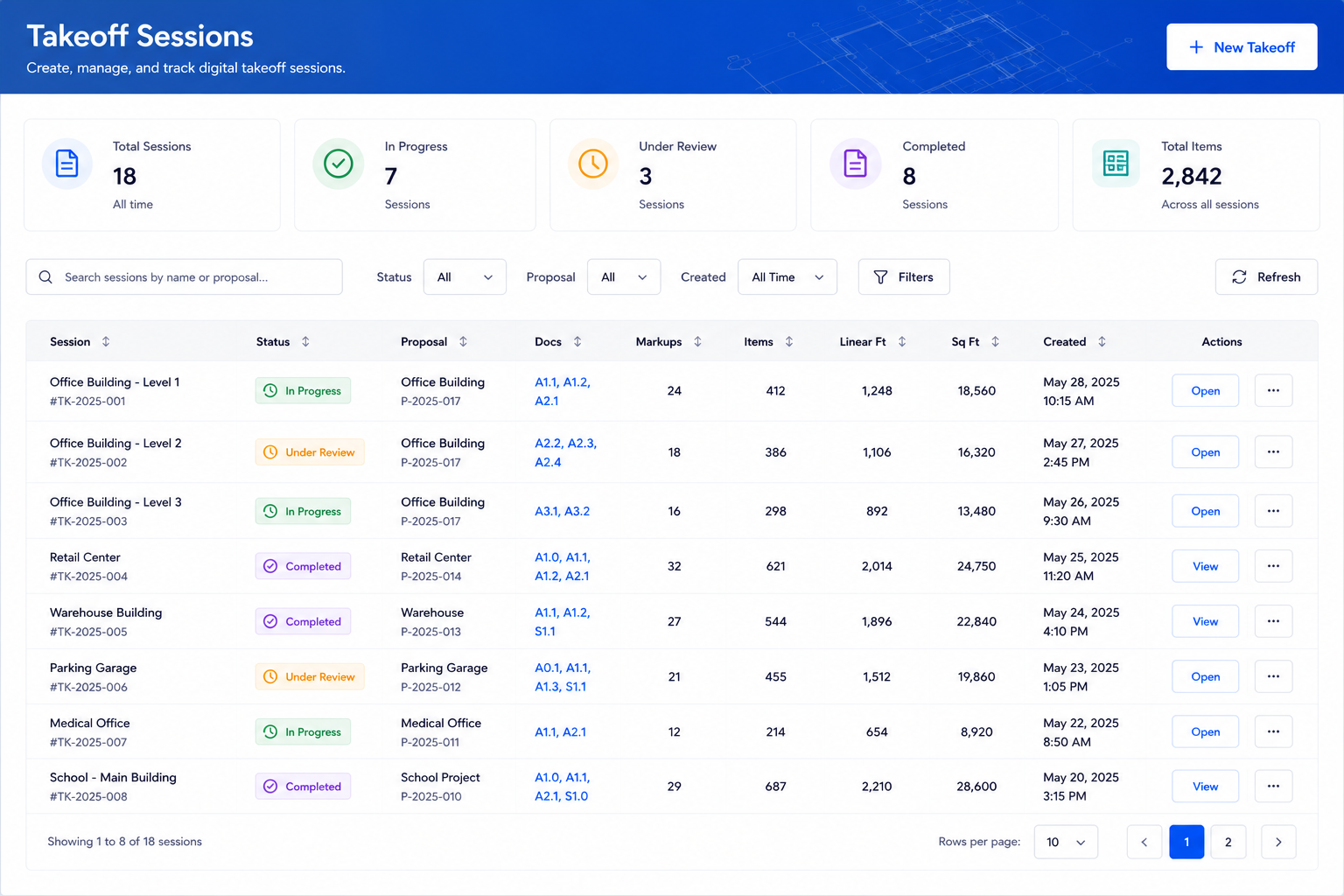
A takeoff project rarely involves just one drawing or one measurement. A single proposal may include multiple PDFs, floor levels, trades, markup types, and review rounds. Without session management, teams can lose track of which takeoff belongs to which proposal, which documents were used, which markups are complete, and which quantities still need review. Industry Software organizes takeoff work by session so drawings, markups, quantities, and creation history stay inside one project workspace.
This structure is especially useful when several estimators or managers work across many opportunities at the same time. Teams can review session status, document count, markup count, item count, linear length, and area totals without opening every drawing manually. Managers can see which estimating tasks are still in progress and which results may be ready for proposal preparation. When questions appear later, the session gives the team a practical way to return to the original documents and markup logic.
Takeoff sessions can help teams track:
Which projects already have a takeoff
Which takeoffs are still in progress
How many documents and markups belong to each session
Whether count, linear, and area quantities are complete
Which results may be ready for proposal preparation
Drawing Markups Need Measurement Rules
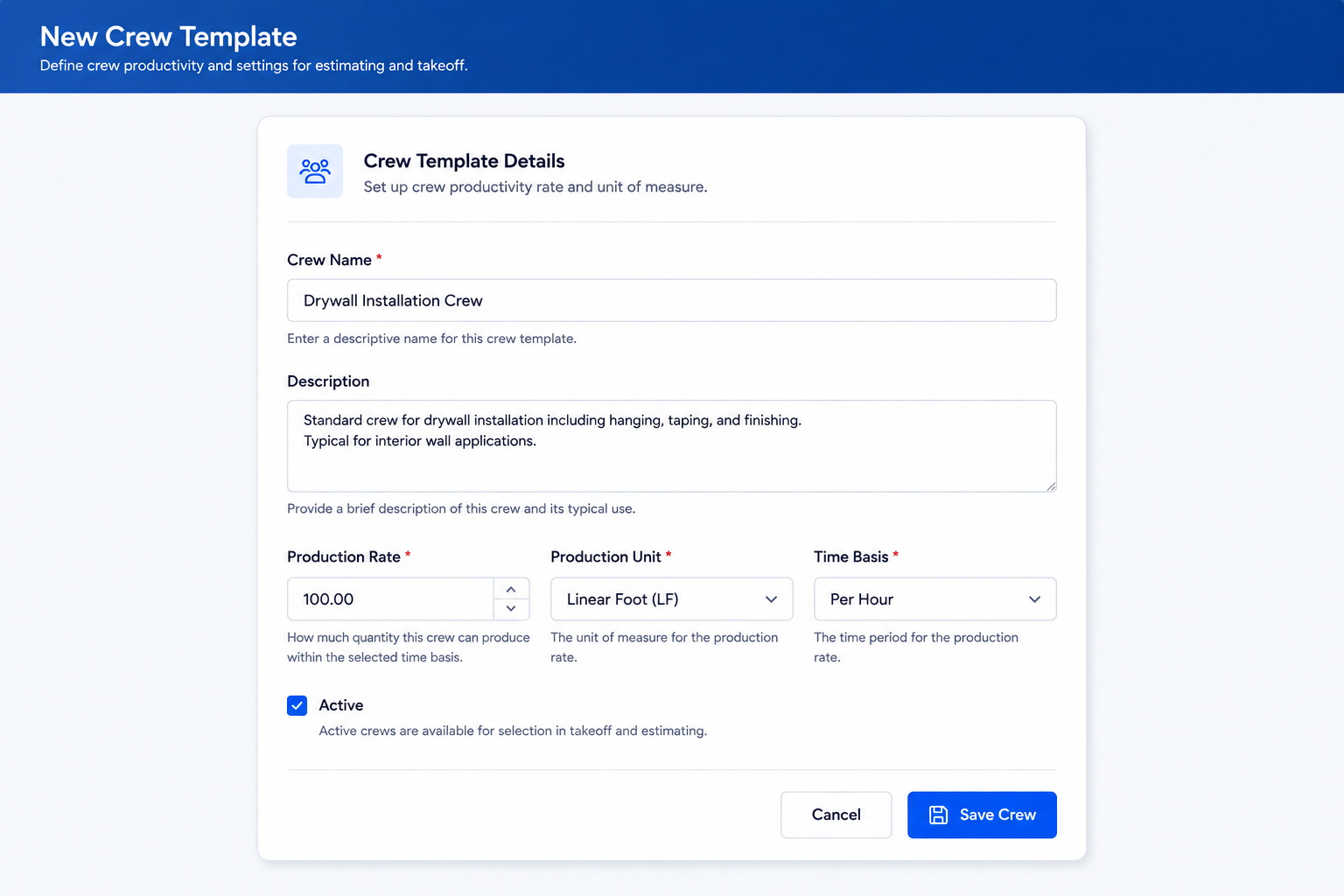
The core of digital takeoff is not simply placing shapes on a PDF. Each markup needs a business meaning. Points can support count quantities, lines can support linear feet, rectangles and polygons can support area measurement, and text or shapes can help explain special conditions. When those markups connect to categories, units, and cost rules, the drawing becomes a structured estimating source rather than a static document.
Scale setup is one of the most important parts of this process. If the drawing scale is wrong, area and linear measurements will be wrong, and those errors can affect material quantities, labor assumptions, and proposal values. By setting scale directly in the takeoff workspace, estimators can reduce manual conversions and make quantities easier to trust. This is especially important when teams work with PDF drawings, scanned plans, floor-by-floor layouts, or documents from different sources.
Categories and Kits Keep Estimating Standards Consistent
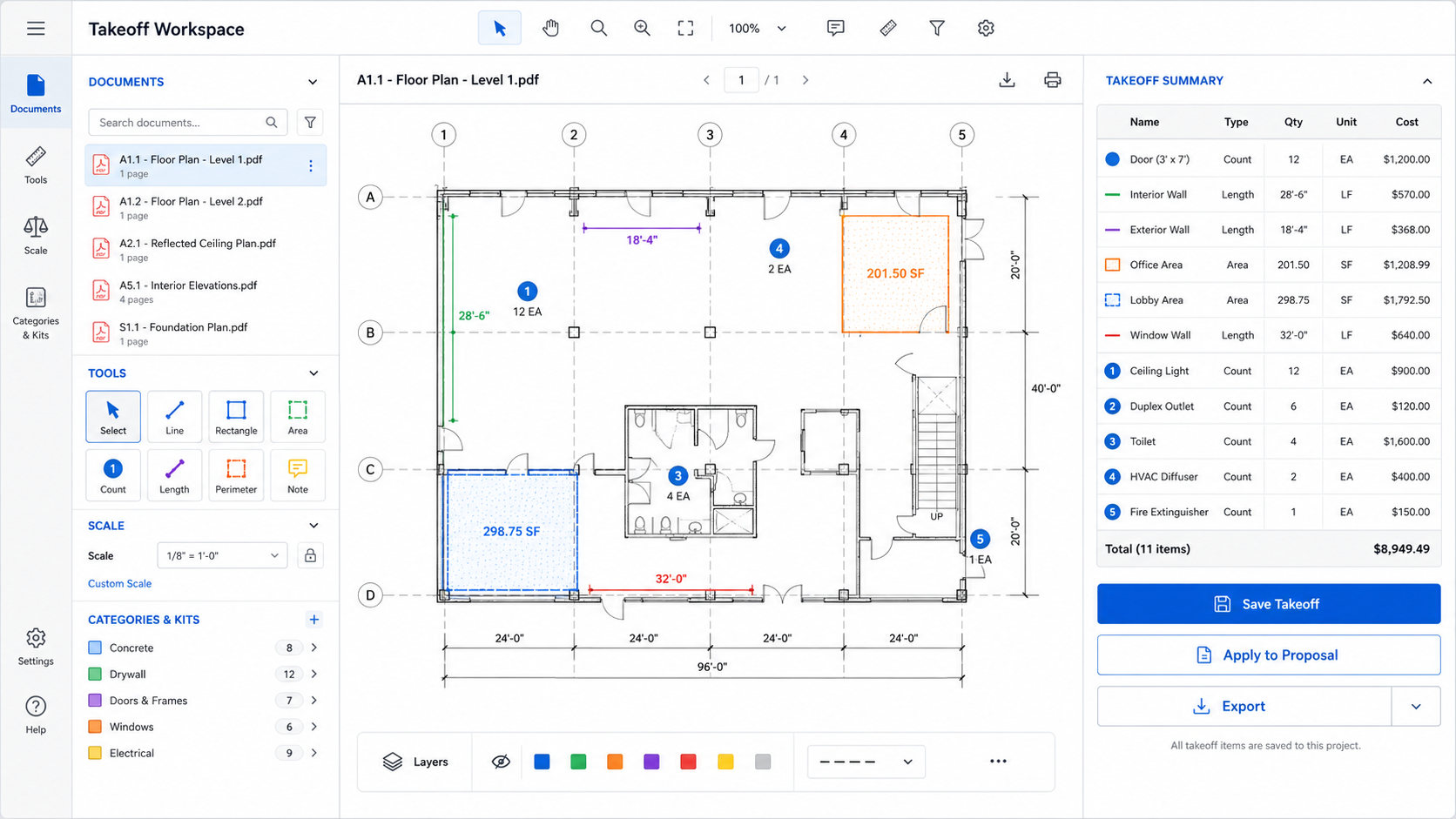
Many estimating issues come from inconsistent category rules rather than measurement mistakes alone. Different users may name the same item differently, assign different units, or use different cost assumptions for the same type of work. A project may also contain count, linear, and area-based measurements at the same time, which makes consistency even more important. Industry Software’s Takeoff Categories help companies manage measurement type, default unit, material cost, labor cost, equipment cost, crew, and budget category in one structured library.
A category is not just a label; it is part of the company’s estimating standard. Plumbing can be measured by linear feet, equipment can be counted by each item, and floor or room work can be measured by square feet. Each category can carry material, labor, and equipment cost assumptions so results are easier to compare across sessions and proposals. For teams with multiple estimators, a shared category and kit structure reduces individual variation and keeps takeoff results closer to the company’s pricing logic.
Category and kit management can support:
Count, linear, and area measurement categories
Default unit setup
Material, labor, and equipment unit costs
Crew or manual rate source assignment
Budget category mapping
More consistent estimating rules across projects
Crew Templates Make Labor Cost More Realistic
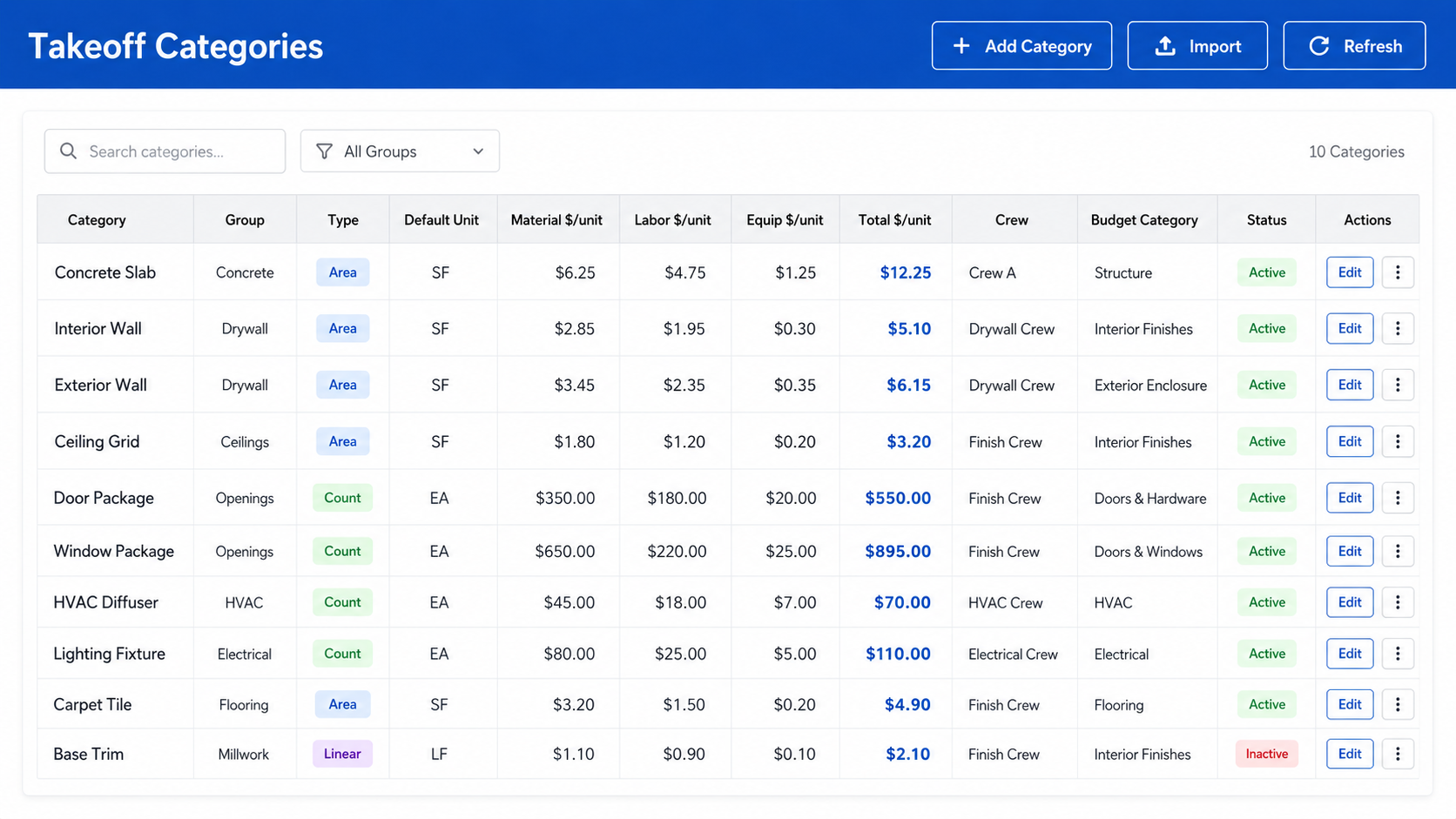
Labor cost is one of the easiest areas to underestimate in estimating. The same quantity of work can require different labor assumptions depending on crew structure, production rate, equipment support, and job conditions. If all labor is handled through one fixed manual rate, proposal values may not reflect how the work will actually be performed. Industry Software’s Crew Setup helps companies define crew name, description, production rate, production unit, and active status so labor assumptions can be tied to real execution capacity.
Crew templates turn estimating experience into reusable rules. Companies can build different crew templates for grading, plumbing, electrical, or other specialized work, then connect those crews to takeoff categories. Estimators are not only choosing a price; they are using a more operational view of how much work a crew can produce per hour or per unit. For growing teams or companies that bid frequently, crew templates help reduce reliance on individual memory and create a more stable labor costing method.
Combining Categories Reduces Duplication
In real takeoff work, similar items may be split across different categories because they came from different drawings, areas, or estimator habits. Some categories may belong to the same group and measurement type but use slightly different names, creating extra cleanup before the final summary can be trusted. Combine Categories helps teams consolidate compatible categories and produce a cleaner estimating structure. This makes the final takeoff easier for project managers and proposal teams to understand.
Combining categories should still follow measurement logic. Count, linear, and area quantities use different calculation methods and should not be mixed without rules. Groups, trades, and budget categories also need to remain clear so the estimate does not lose structure. A controlled combine process helps teams reduce manual cleanup while avoiding incorrect merging of different work types.
Markup Details Make Quantities Auditable
A takeoff summary is not enough if the team cannot return to the source of each quantity. An All Markups view can record markup name, category, group, type, page, sequence number, length, area, coordinates, source document, and creation time. This gives estimators a way to check where each quantity came from and how it was measured. It also helps teams identify duplicate markups, missed areas, or incorrect category assignments.
Markup detail is valuable during review and handoff. A proposal manager can audit key categories, project teams can trace quantity sources, and new estimators can understand the logic behind a previous takeoff. If final quantities only exist in a spreadsheet, every question requires manual searching across drawings. By preserving markup-level detail, Industry Software makes takeoff results more transparent and easier to defend during proposal review.
Summary Results Should Support Proposal Readiness
The goal of takeoff is not to create a large number of markups; it is to produce quantities and cost information that can support pricing decisions. A Detailed Takeoff Summary can bring together total markups, categories used, total linear length, total area, and total value. Category Summary can then separate material cost, labor cost, equipment cost, and total cost by category. This gives estimators a clearer checkpoint before the work moves into proposal preparation.
Applying takeoff results to a proposal should be the natural next step after review, not an automatic shortcut. Teams need to confirm scale, category rules, crew assumptions, cost fields, and markup details before the results become part of the proposal. This reduces the risk of carrying unreviewed drawing measurements into customer-facing pricing. Industry Software connects takeoff summary and proposal preparation while still preserving the review discipline that estimating teams need.
Takeoff Go-Live Starts with Estimating Standards
Takeoff implementation should not only focus on teaching users how to upload PDFs, draw points, measure lines, and export results. The real success factor is whether the company can define stable estimating standards before daily use begins. These standards include measurement types, category names, default units, material rates, labor rates, equipment rates, crew production rates, and budget mappings. Without this foundation, digital takeoff may become an online drawing tool while teams still struggle with inconsistent categories and cost assumptions during summary and proposal preparation.
Drawing scale and markup review are also specific implementation priorities for Takeoff. PDF sources, page formats, floor plans, and trade drawings can vary widely across projects, and unclear scale practices can distort area, length, and quantity results. Industry Software can help teams define scale calibration methods, markup naming rules, category usage rules, and exception review steps so each quantity can be traced back to its drawing and markup source. This makes takeoff results more than exportable data. They become explainable, reviewable, and ready to hand off into proposal work.
For Takeoff implementation, Industry Software can focus on:
Estimating standards library setup: Organizing common categories, kits, groups, budget categories, and measurement types to reduce naming differences across estimators.
Unit and measurement rule configuration: Defining how count, linear, and area measurements should be used, summarized, and kept separate.
Scale calibration process: Establishing drawing scale validation methods to reduce area and linear measurement errors.
Cost logic import: Configuring material rates, labor rates, equipment rates, and historical pricing structures inside the system.
Crew production rate setup: Building crew templates based on trade, production unit, and expected output so labor cost reflects execution capacity.
Category combination rules: Defining which categories can be combined and which should remain separate to avoid duplication and summary confusion.
Markup review controls: Creating review practices around page, coordinate, type, category, and quantity source so critical measurements remain traceable.
Proposal handoff rules: Defining which takeoff results can move into proposals and what scale, category, cost, and markup checks must happen first.
This support is more specific than general user training. Estimating teams do not only need a product walkthrough; they need reusable takeoff and costing rules that can support future bids. Industry Software can help companies turn historical estimating knowledge into categories, kits, crews, and cost structures inside the system. As project types expand, the company can continue refining category libraries, crew production rates, and proposal mappings so digital takeoff remains useful in more complex estimating scenarios.