Say Goodbye to ERP Nightmares: How Modular Architecture Brings Enterprise Software Back on Track

Summary
×If your organization is considering implementing an ERP system, you have likely heard about two equally frustrating options: choose a generic ERP with comprehensive features but years long implementation cycles, or opt for a vertical solution that fits your industry but struggles to integrate with other systems. This "either or" dilemma has plunged countless companies into cost overruns, project delays, and maintenance difficulties.
The good news is that modular ERP architecture is changing the game entirely. It no longer forces companies to painfully choose between "generic complexity" and "vertical limitations". Instead, it offers a smarter path.
The Dilemma of Traditional ERP
Generic ERP: A Blank Slate You Must Draw On Yourself
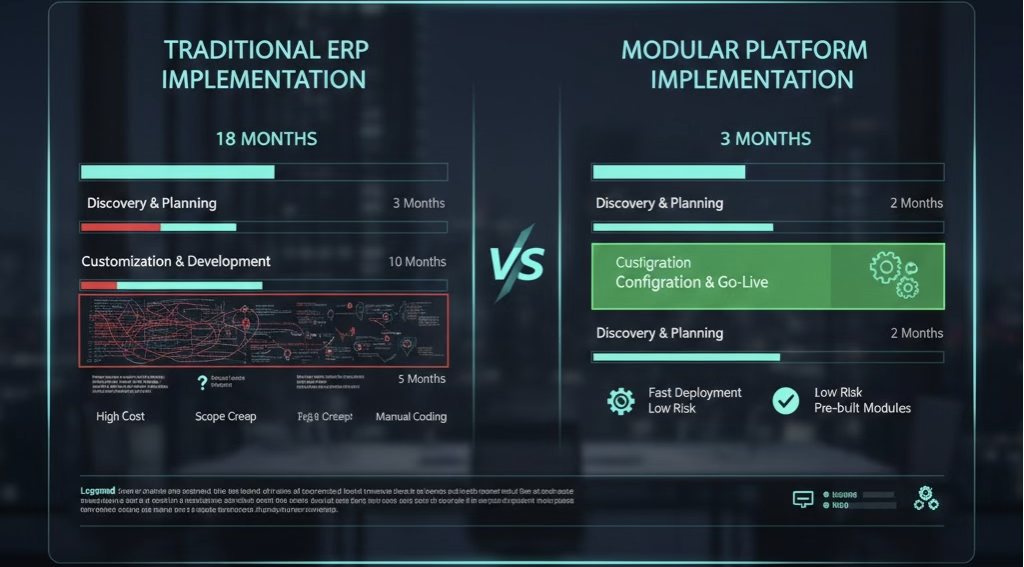
Large scale generic ERP systems promise "one stop" solutions, but what they often deliver is a blank slate. Companies must invest significant time and money to sketch out their own business processes. The results are rampant customization needs, implementation cycles stretching beyond 18 months, out of control total cost of ownership, and accumulating technical debt.
Vertical Solutions: Jumping from One Cage to Another
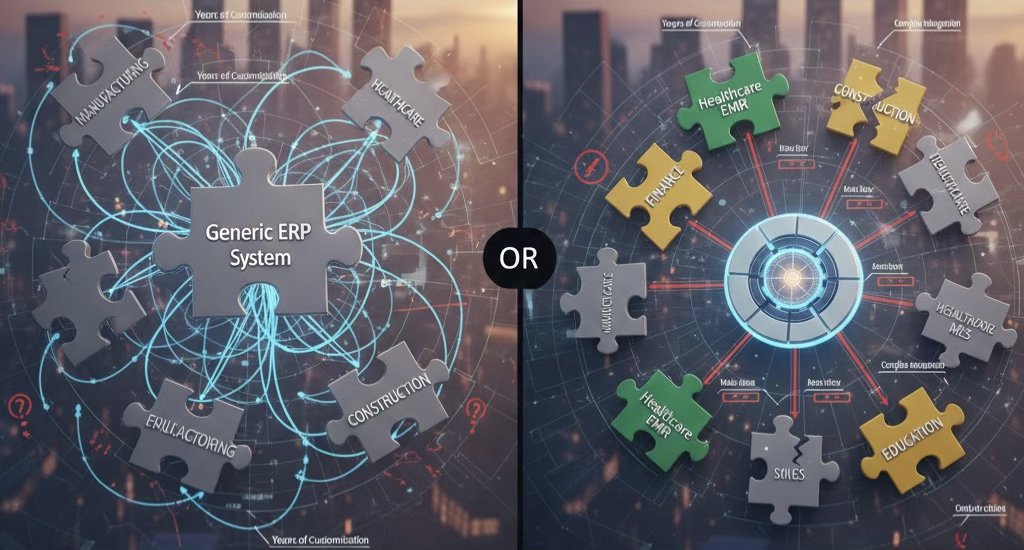
Industry specific systems solve customization issues but introduce new troubles: functional silos, integration difficulties, and high vendor risk. When companies need to expand, they often find themselves trapped in systems that cannot grow.
Modular Architecture: The Third Way
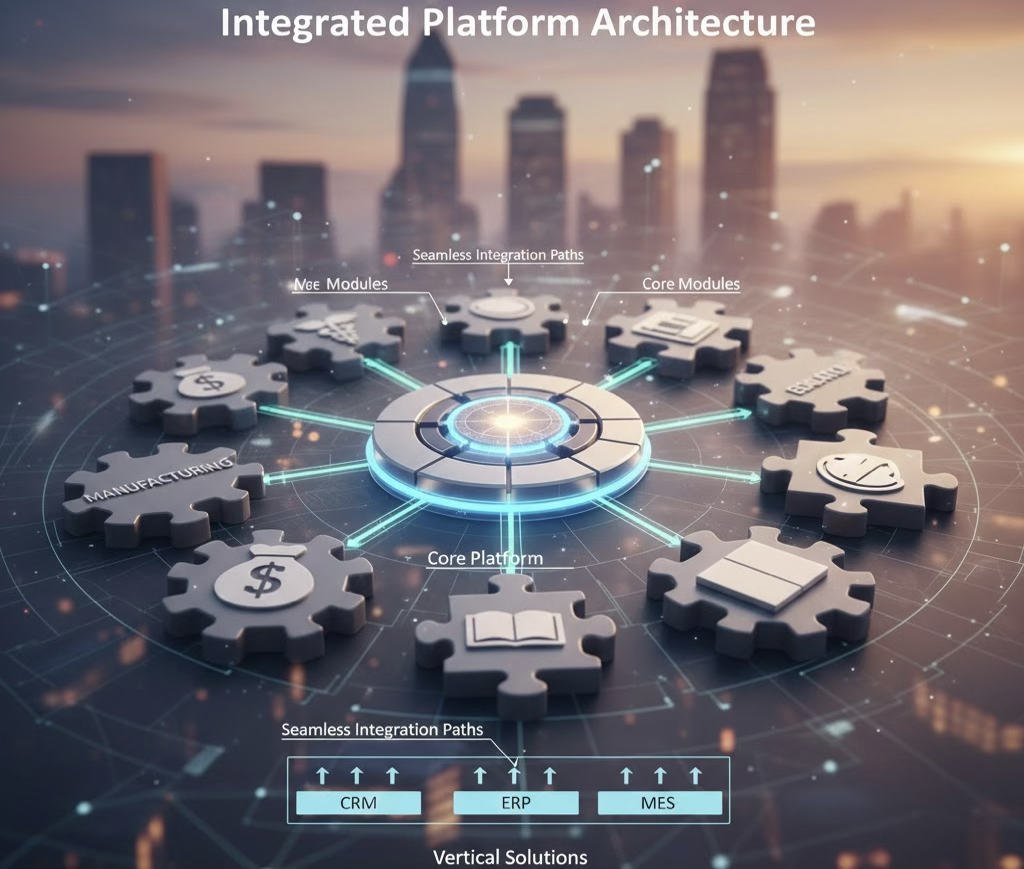
The core idea of modular ERP is simple: separate the common functions needed by every organization from industry specific professional capabilities, allowing both to evolve independently while integrating seamlessly.
Core Modules are the foundational capabilities that every business relies on: financial management, inventory management, order management, human resources, etc. They share a unified data model, ensuring that once a sales order is created, it automatically updates inventory and generates accounting entries. No integration code required.
Industry Modules are specialized capabilities built on top of the core: MES for manufacturing, project cost accounting for construction, patient management for healthcare, 3D visualization for warehousing... These modules don't replace core functions but add industry-specific attributes to them.
Industry Focus: How Modularity Takes Shape
Manufacturing: Real Time Production Monitoring
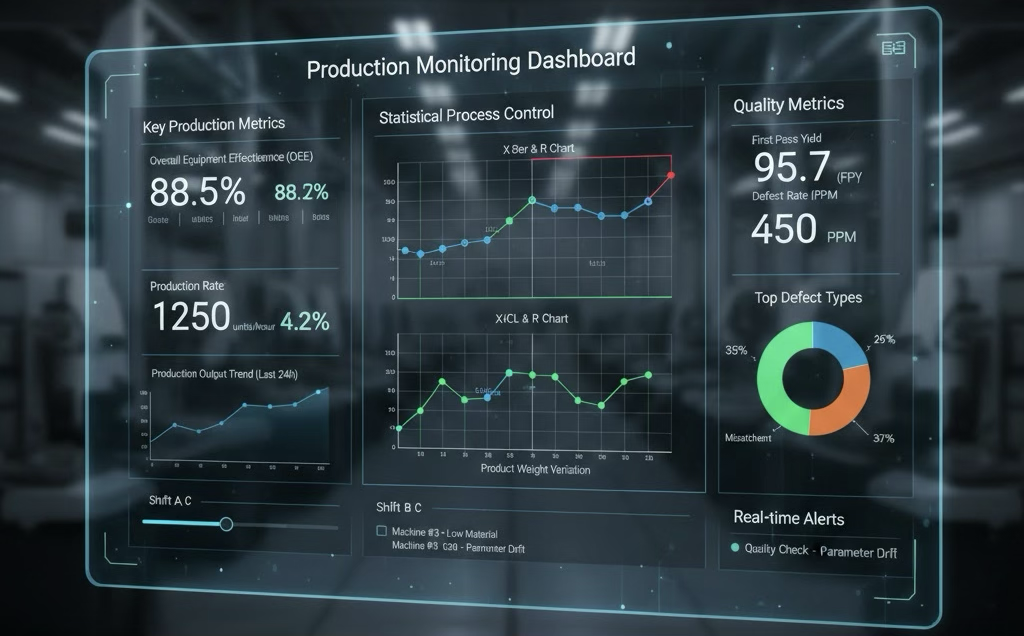
Manufacturers need tight coordination between production, quality, and equipment. Modular ERP, through modules like MES, SPC, and QMS, connects shop floor data with back end systems. Managers can view key metrics on dashboards in real time: Overall Equipment Effectiveness (OEE), Statistical Process Control charts, defect rates, and more.
Construction: Fine Grained Project Cost Management
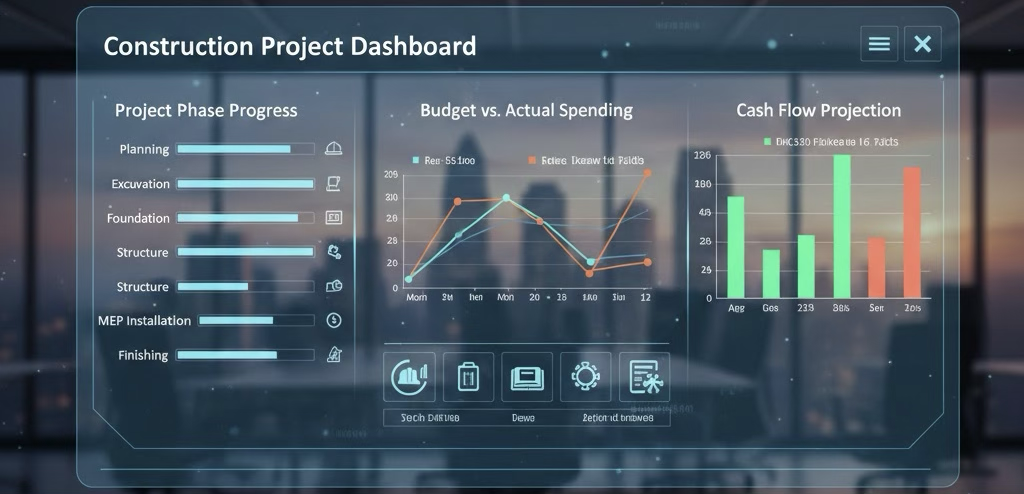
Construction companies need project centric financial management. Modular ERP provides project phase tracking, budget vs. actual comparisons, cash flow forecasting, subcontractor management, and more, making each project's profitability crystal clear.
Healthcare: Patient Centric Workflows
Healthcare organizations need patient management, donor tracking, compliance records, and more. Modular ERP extends core finance and inventory with patient demographics, insurance billing, HIPAA compliance, ensuring healthcare processes and back office management are seamlessly connected.
Fire Departments: Supplies & Equipment Tracking
Emergency services need reliable supply chains and equipment management. Modular ERP supports station inventory, supply requisition workflows, PPE lifecycle tracking, and NFPA compliance checks, keeping fire stations fully aware of resource status at all times.
Warehousing & Distribution: 3D Visualization and IoT
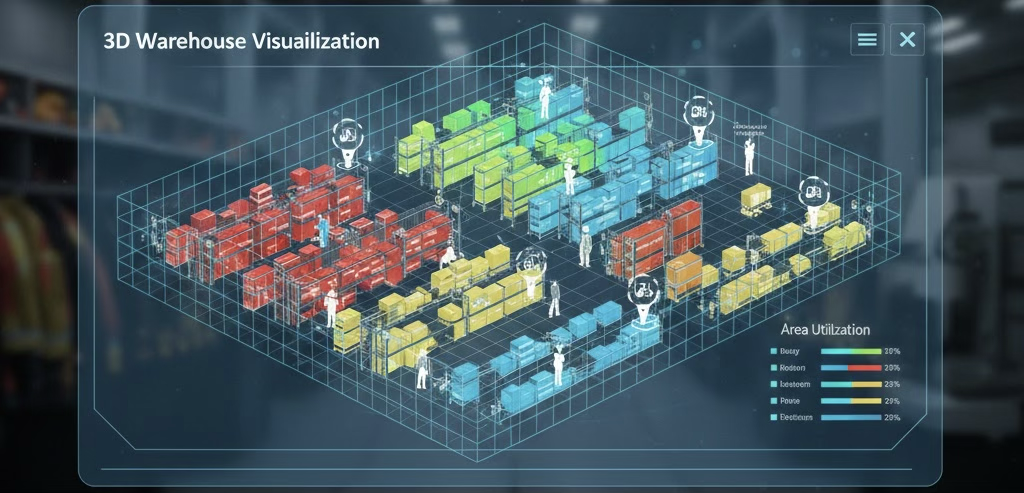
Distribution centers need spatial optimization and real time visibility. Modular ERP provides 3D warehouse visualization through digital twin technology, combined with IoT sensors to monitor temperature controlled zones, forklift locations, and inventory heat maps.
Flexible Activation: Choose Only What You Need
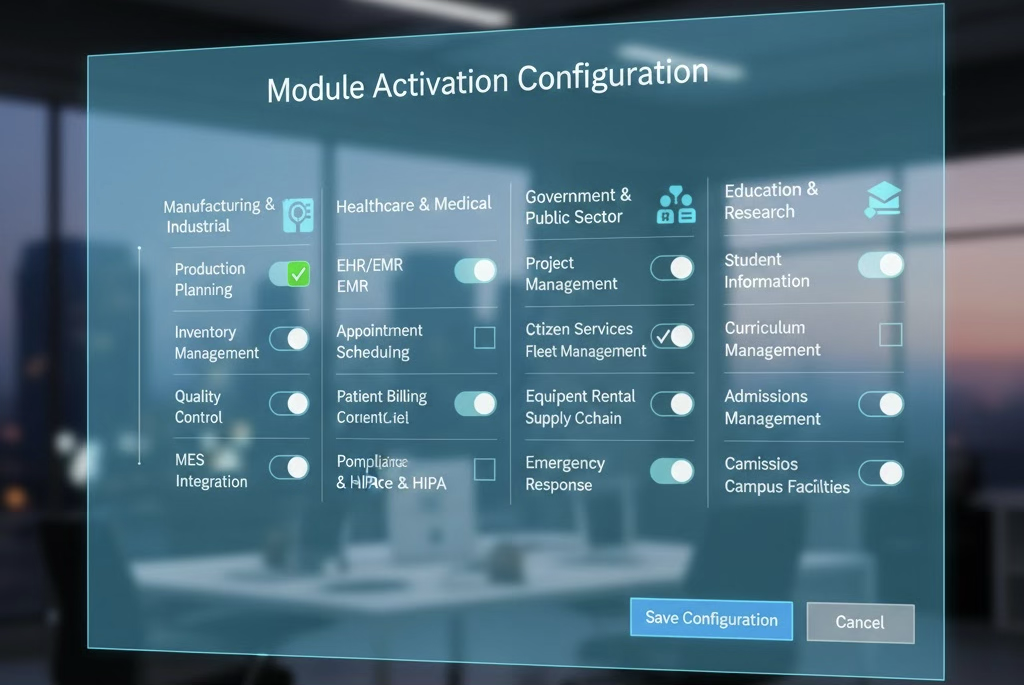
Another key feature of modular ERP is on demand activation. Companies simply check the modules they need. Inactive modules do not appear in menus and consume no resources.
This design transforms implementation from "custom development" to "configuration activation". Traditional ERP often takes 18+ months to go live, while modular platforms can typically be deployed within 3 months.
Conclusion: Embrace the Modular Future
The traditional approach in enterprise software, forcing a choice between generic complexity and vertical limitations, was never a real choice. Modern modular architecture offers a wiser path: standardized core functions plus seamlessly integrated industry specific capabilities.
What specialized capabilities does your industry need? Share your requirements, and let's explore how modular ERP can be tailored for your organization.