Digital Twin: Reshaping the Intelligent Future of Warehouse Management

Summary
×In today's fast paced supply chain environment, warehouse managers face unprecedented challenges: How to track the precise location of thousands of SKUs in real time? How to quickly identify bottlenecks amidst massive operational data? How to ensure inventory accuracy while maintaining high efficiency? Although traditional warehouse management systems provide basic data recording functions, they cannot answer these dynamic questions.
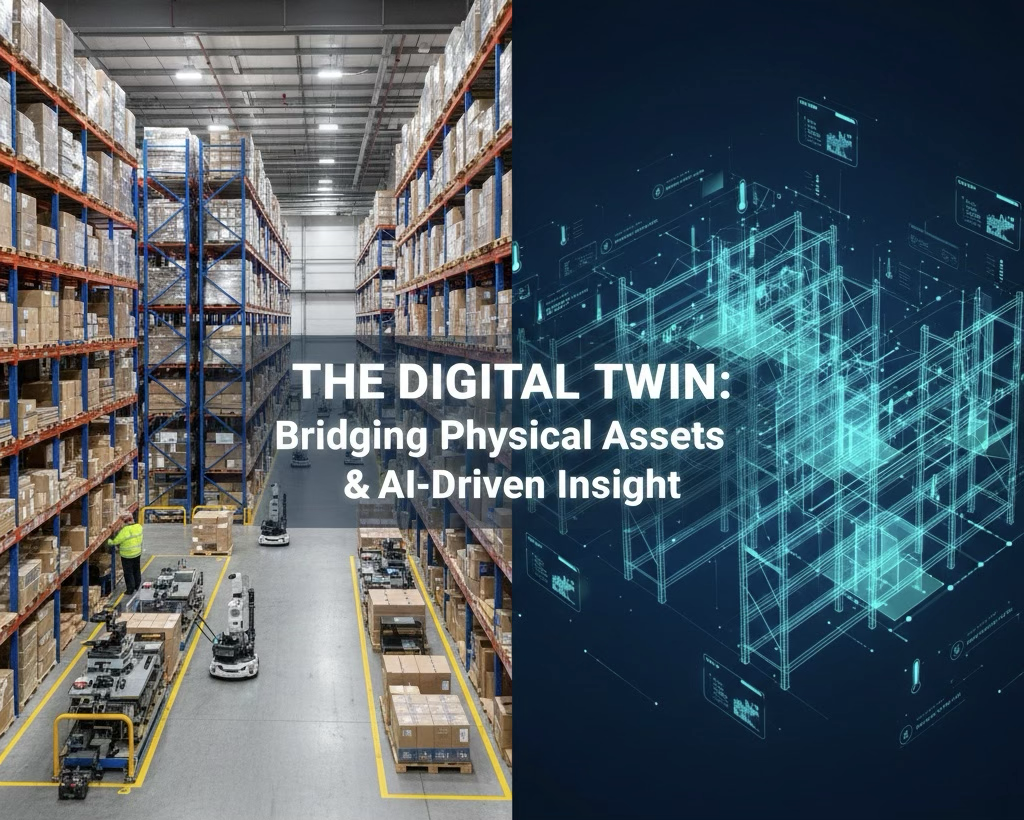
The emergence of digital twin technology has fundamentally changed this situation. By creating a precise mirror image of the physical warehouse in virtual space, combining real time data streams from IoT sensors with artificial intelligence analytics, digital twins provide warehouse managers with a pair of "X ray eyes". They not only see every detail happening in the present but also foresee potential problems before they occur. This is no longer a scene from science fiction. It is an intelligent solution being implemented in leading warehouses worldwide.
1. Technology Foundation: From Physical World to Digital Mirror
The core of digital twins lies in the seamless integration of a three layer technical architecture, constructing a complete closed loop from data collection to intelligent decision making.
Perception Layer: The Neural Network of the Internet of Everything
Various intelligent sensors are deployed in every corner of the warehouse: RFID readers capture material inflows and outflows in real time at loading docks; temperature and humidity sensors continuously monitor the environmental status of refrigerated areas; telematics devices on forklifts record the speed and path of every movement. These sensors converge through IoT gateways into a dense perception network, transforming every change in the physical world into digital signals.
Data Layer: The Intelligent Brain in the Cloud
Massive amounts of raw sensor data are transmitted to a cloud data platform, where they are cleaned, aggregated, and stored. More importantly, machine learning algorithms begin to play a role. They analyze historical patterns, identify anomalies, predict equipment failures, and transform raw data streams into intelligent insights with business value.
Application Layer: An Immersive Interactive Interface
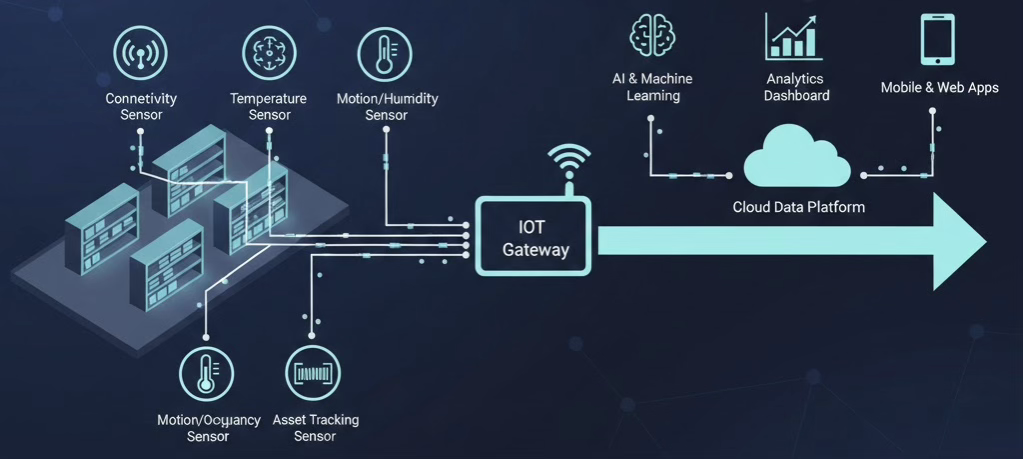
A complete digital twin architecture includes perception, data, and application layers, achieving a closed data loop
The processed data is ultimately presented to managers, no longer as cold tables and charts. Through web based and mobile 3D visualization interfaces, managers can overlook the entire warehouse like browsing an electronic game map. Clicking on any rack, forklift, or pallet retrieves its real time status and historical trajectory.
2. Core Capabilities: Visualization Driven Intelligent Operations
Digital twins are not just about 3D modeling; they are a capability platform that transforms data into actionable decisions.
Spatial Heat Maps: Making Utilization Instantly Clear
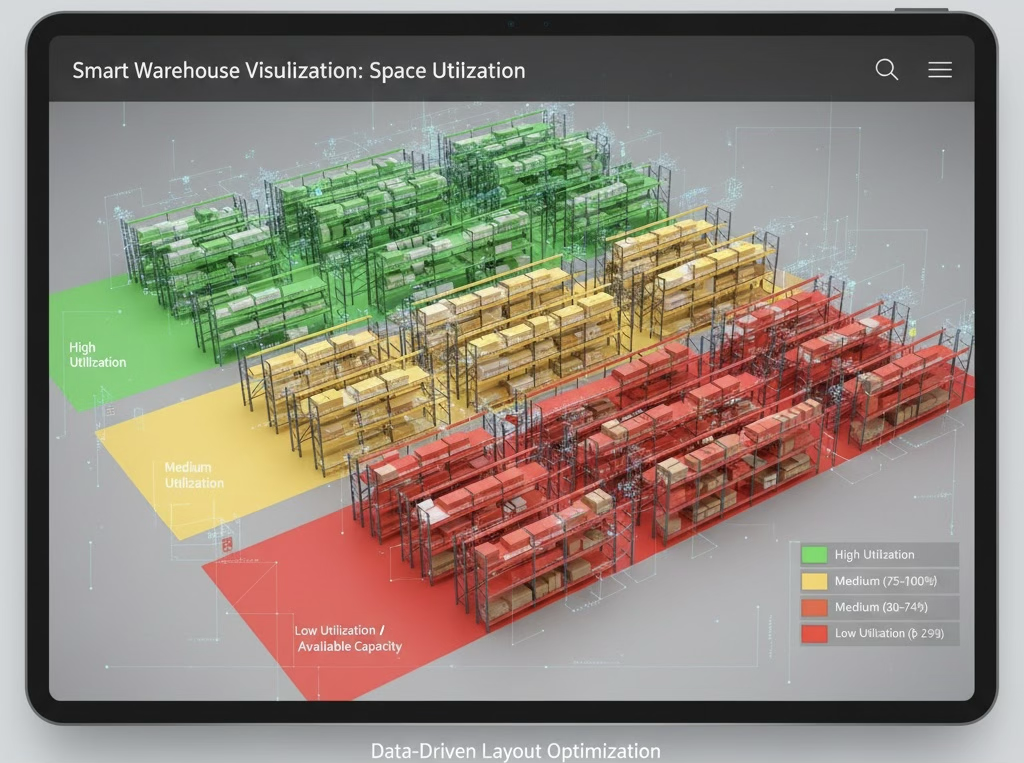
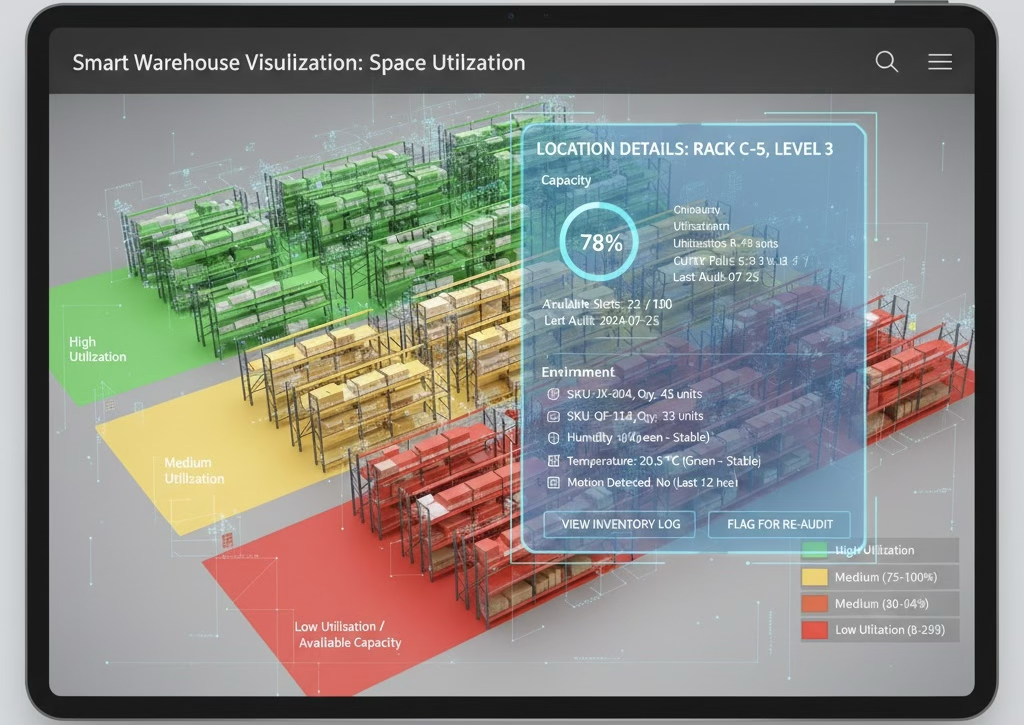
Heat map visualization makes warehouse space utilization intuitively clear, with red areas signaling managers to require attention.
Warehouse space is a precious resource, yet traditional methods struggle to accurately assess the utilization efficiency of every square inch. Digital twins intuitively display real time utilization rates of each area through dynamic color coding (green, yellow, and red): green areas (0 to 60%) have ample space, yellow areas (60 to 85%) are approaching capacity limits, and red areas (85 to 100%) require immediate intervention. Managers can quickly identify idle spaces and congestion hotspots, enabling data driven layout optimization decisions, such as moving slow moving materials to non premium areas or adjusting rack layouts to balance traffic flow.
Equipment Monitoring: From Reactive Repair to Predictive Maintenance
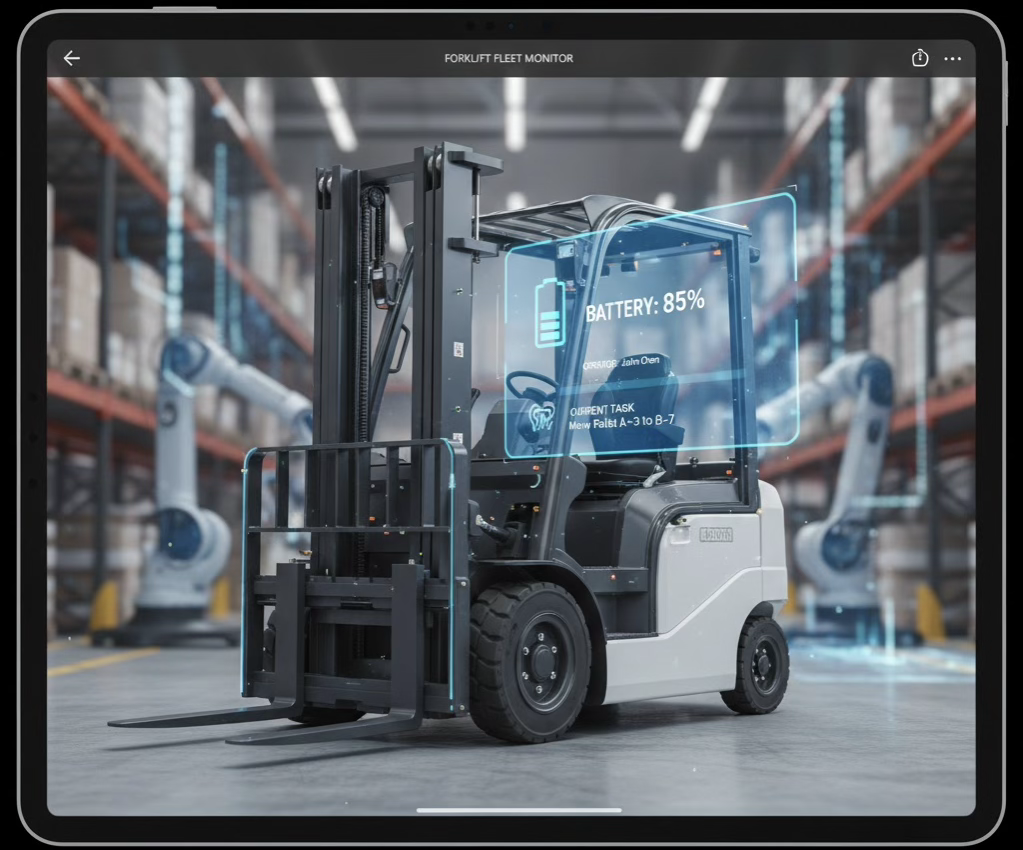
Every forklift, pallet jack, and conveyor has a "digital mirror" in virtual space, displaying real time operational status, location, battery level, operator information, and more. When equipment icon colors change from green to yellow to red, managers can schedule maintenance in advance, avoiding production interruptions caused by sudden failures. Clicking on any equipment reveals detailed telemetry data. Maintenance plans based on actual usage rather than fixed calendars significantly improve overall equipment effectiveness.
Location Details: Bin Level Fine Management
Digital twins map the complete hierarchical structure from warehouse to zone, aisle, rack, and bin. Each location is configured with attributes such as capacity limits, material type restrictions, and environmental requirements. Hovering over any bin displays detailed information: current load capacity, temperature and humidity, stored SKUs and quantities, time of last activity. This bin level visualization elevates inventory management from "roughly knowing" to "precisely controlling".
3. Quantifiable Benefits: The ROI of Digital Twins
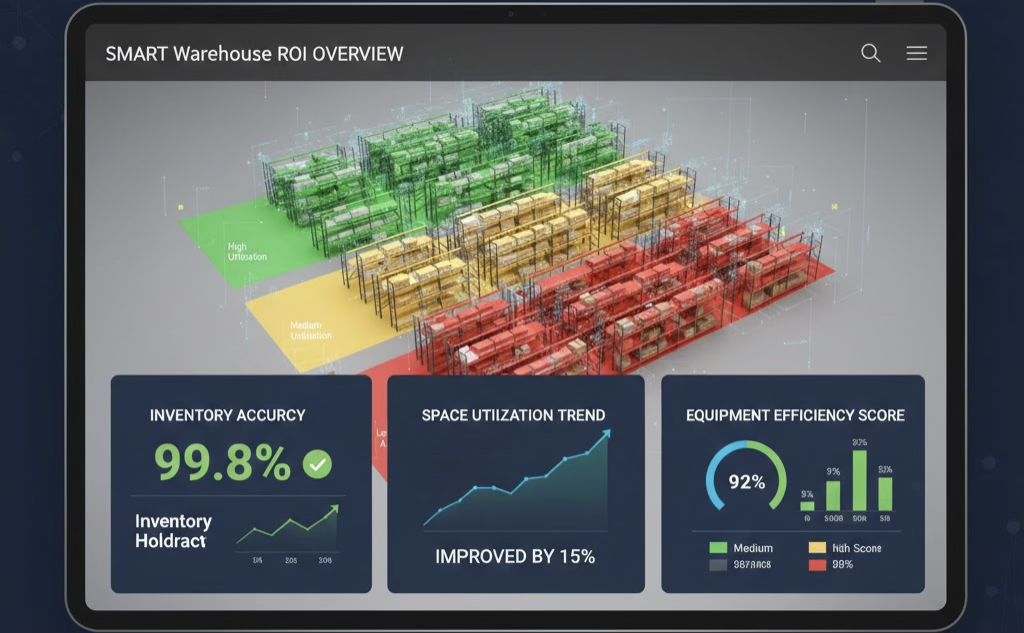
The value brought by digital twins is not just an enhanced management experience, but tangible business returns. Based on actual deployment cases, enterprises can achieve the following key benefits:
Inventory Accuracy Reaches 99.8%: Through continuous sensor validation and real time discrepancy alerts, the time lag of periodic counts is eliminated, keeping inventory data consistently precise.
Space Utilization Increased by 15%: Heat map analysis helps identify and consolidate underutilized space, optimizing storage layout and accommodating more inventory without expansion.
Equipment Efficiency Improved by 9%: Predictive maintenance reduces unplanned downtime, and intelligent scheduling optimizes equipment paths, significantly improving overall fleet operational efficiency.
4. Implementation Path: From Planning to Value Realization
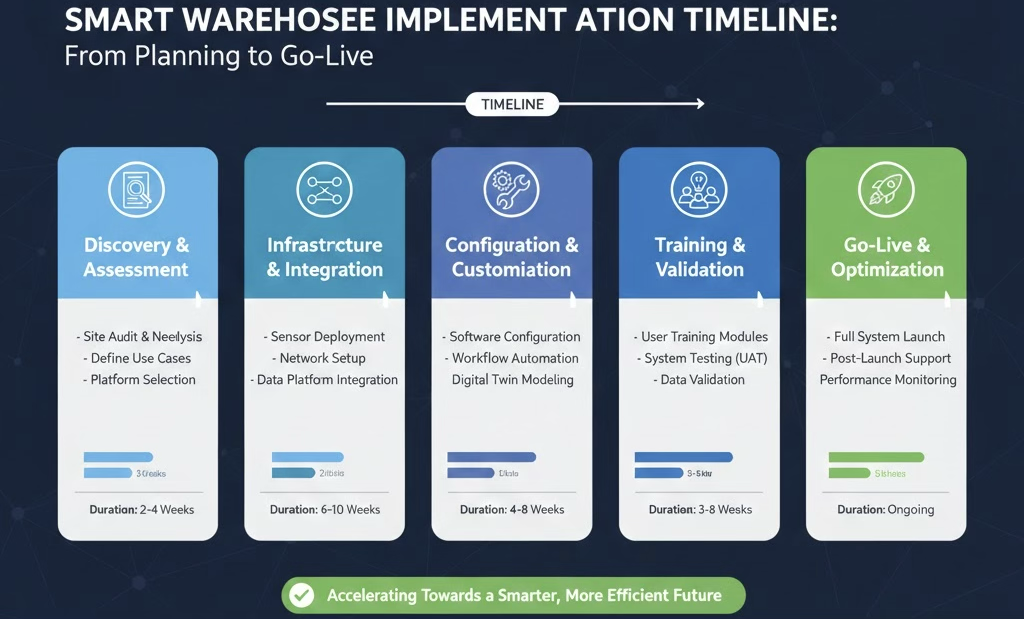
Successful digital twin deployment requires meticulous planning and phased execution. A typical implementation process includes five key stages:
Discovery & Assessment: Site audit, define use cases, platform selection
Infrastructure & Integration: Sensor deployment, network setup, data platform integration
Configuration & Customization: Software configuration, workflow automation, digital twin modeling
Training & Validation: User training modules, system testing (UAT), data validation
Go-Live & Optimization: Full system launch, post launch support, performance monitoring
Each stage requires close collaboration between business and technical teams, with high quality master data (materials, locations, assets) serving as the cornerstone of the entire project.
Conclusion: Embracing a New Era of Proactive Operations
Digital twin technology transforms warehouse management from a reactive "post event review" model to a proactive "real time intervention" model. Through the deep integration of IoT, cloud computing, and 3D visualization, managers can transcend the limitations of physical space and continuously optimize operational efficiency, inventory accuracy, and equipment utilization in a data driven manner. In an increasingly competitive supply chain landscape, enterprises that adopt digital twins early will establish a significant differentiated advantage. This advantage extends beyond technological leadership to operational wisdom and customer response speed.
Want to learn how digital twins can create value for your warehouse? Contact our solutions team to schedule a customized technical demonstration.