Industrial Integration: Bridging Data Silos to Unleash Smart Manufacturing Potential

Summary
×In the wave of digital transformation, manufacturers face a core challenge: an invisible data gap separates the shop floor from enterprise systems. Manual recording, paper based workflows, and fragmented systems lead to delayed decisions, rising costs, and eroding competitiveness. How to cross this gap? The answer lies in industrial integration, seamlessly connecting device level data to business systems in real time, creating a closed loop from the physical to the digital world.
The Challenge: Data Gaps in Traditional Operations
Manual Entry, Crippling Delays
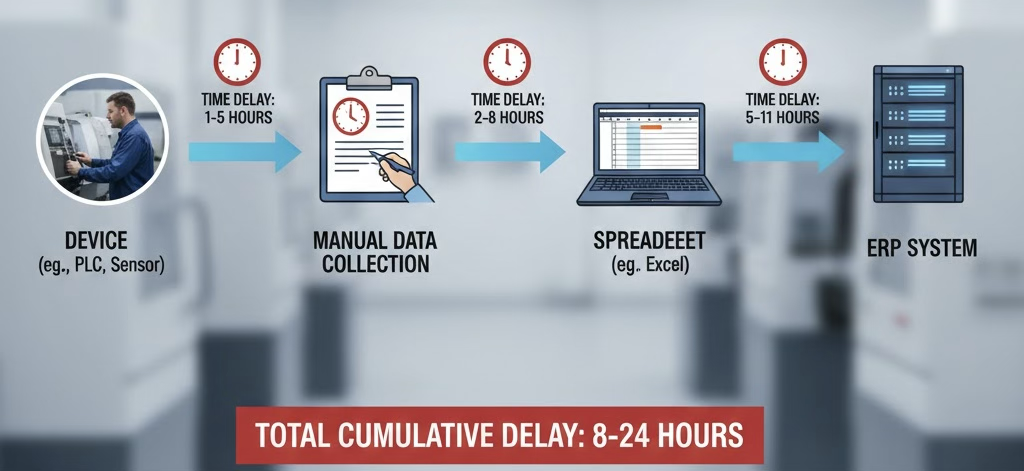
Production data is recorded on paper or in Excel and then entered into the ERP system, resulting in cumulative delays of 8 to 24 hours. Managers see history, not real time.
Information Silos, Fragmented Systems
Production, quality, and maintenance operate in isolation. Equipment historians, SPC software, and CMMS remain disconnected, unable to form a unified operational view.
The Solution: Four Layer Integration Architecture
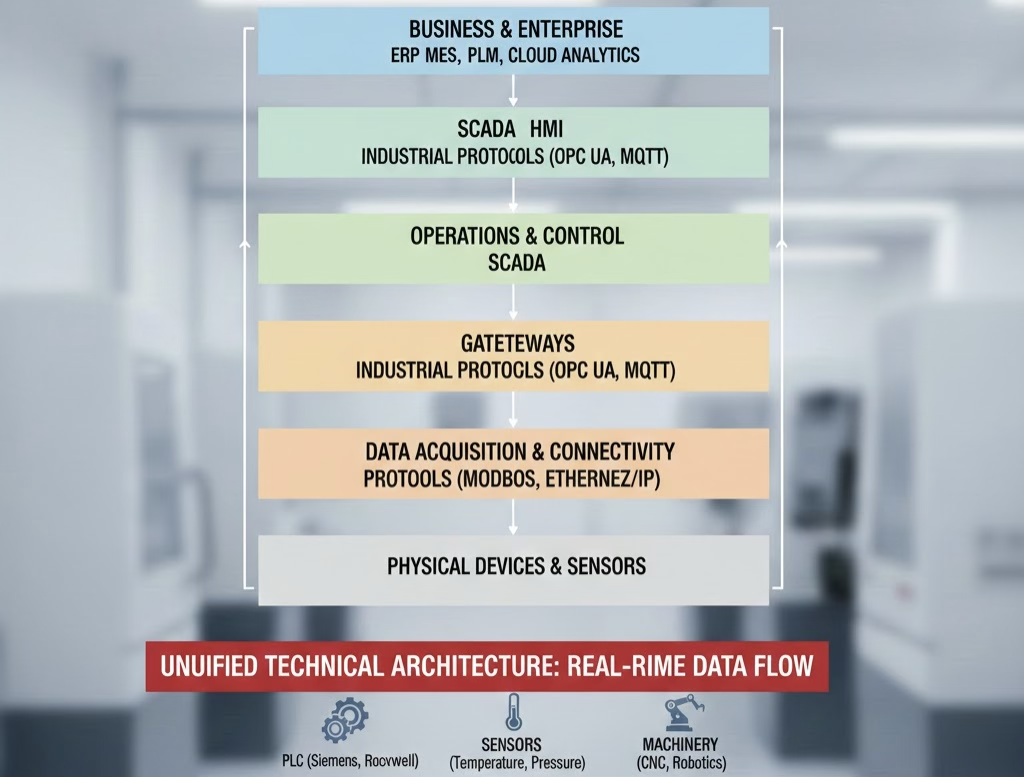
True industrial integration demands an end to end technology stack. Our layered architecture ensures reliable, secure data flow from devices to enterprise systems:
Physical Layer: PLCs, including Siemens and Rockwell, sensors, and CNC machines, supporting major industrial protocols.
Data Acquisition & Connectivity: Edge gateways perform protocol conversion (Modbus→OPC UA) and local preprocessing, reducing bandwidth load.
Operations & Control: SCADA, HMI provide real-time monitoring; OPC UA/MQTT ensure standardized transmission.
Enterprise Layer: ERP, MES, PLM, cloud analytics platforms leverage data for business decisions.
Multi Protocol Compatibility
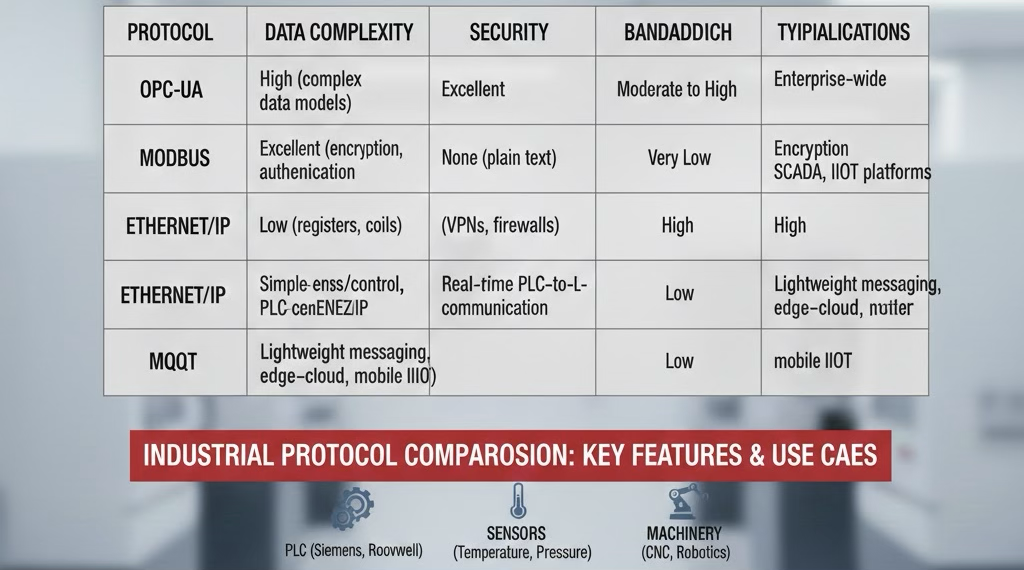
Support for OPC UA (enterprise interoperability, strong security), MODBUS (legacy devices), EtherNet/IP (real time control), and MQTT (lightweight IoT). New and old equipment alike can join the digital ecosystem.
Real Time Visibility: From Device to Dashboard
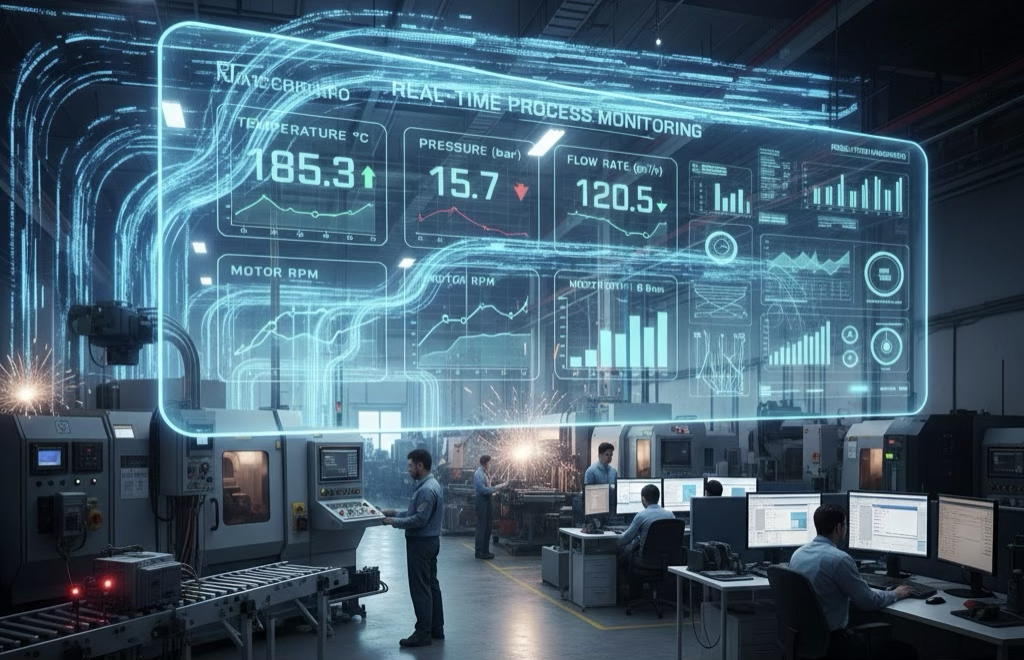
Data creates value only when visualized. We offer multidimensional real time monitoring:
Production Monitoring, real time output, OEE, equipment status, Andon colors at a glance.
Quality Control: SPC charts update instantly; parameter drift triggers alerts.
Equipment Health: Vibration, temperature, current trends enable predictive maintenance.
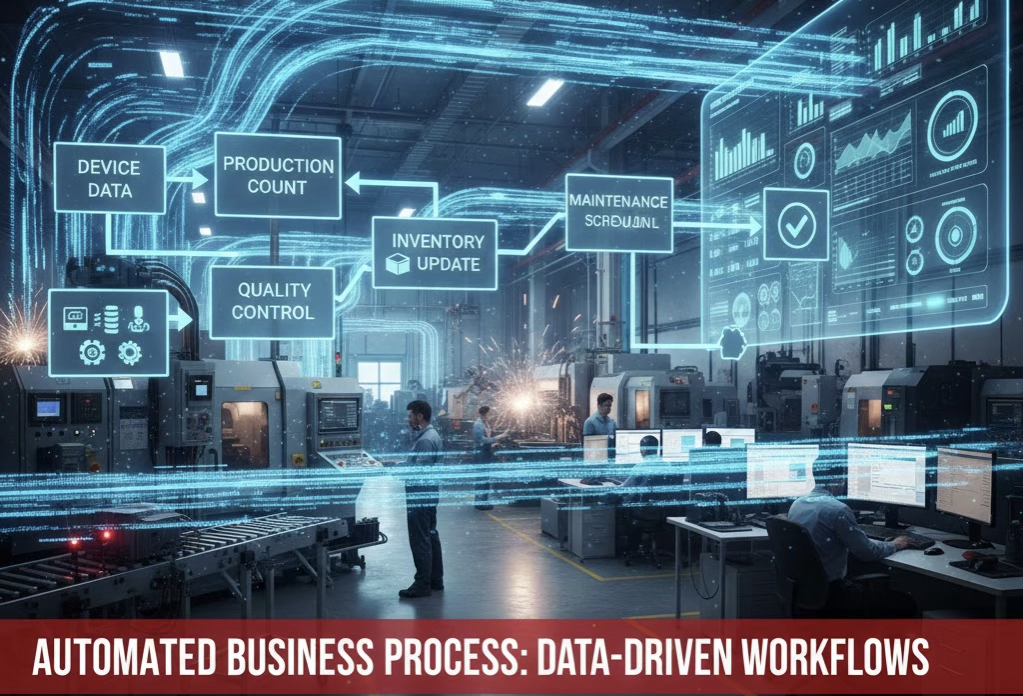
Intelligent Automation, Data Driven Workflows
When real time data meets business logic, automated workflows emerge:
Automatic Production Reporting: PLC counts directly update production orders and deduct WIP inventory.
Automated Quality Holds: OOS triggers non conformance reports, locks inventory, notifies engineers.
Predictive Maintenance Initiation: Vibration warnings generate work orders, check spare parts, adjust schedules.
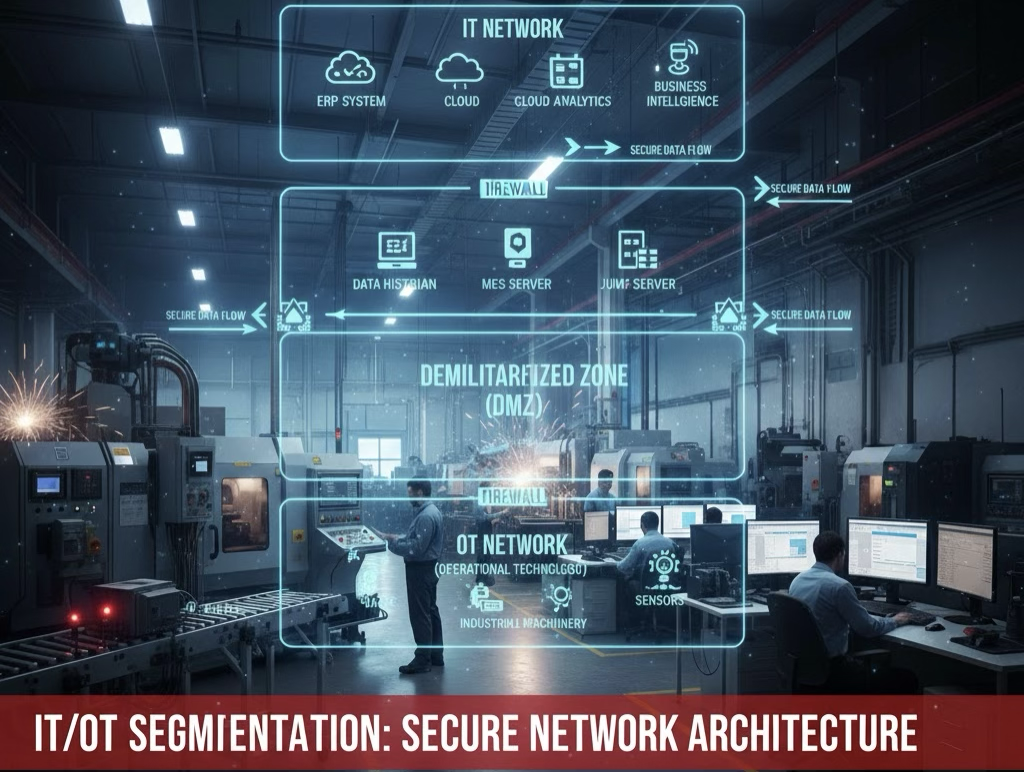
Security by Design: IT/OT Segmentation
Industrial cybersecurity is non negotiable. Our defense in depth strategy includes:
Network Isolation: DMZ separates OT from IT networks; firewalls enforce strict policies.
Encrypted Transmission: OPC UA supports authentication based on certificates and TLS encryption.
Audit Trails: All data access is logged for compliance.
Quantifiable ROI: Measurable Business Value
For a mid sized manufacturer, industrial integration delivers substantial annual savings:
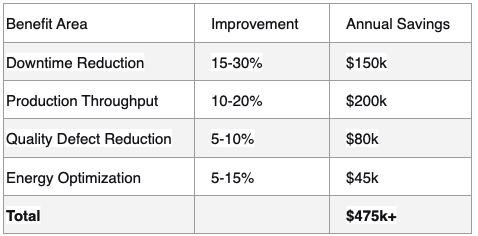
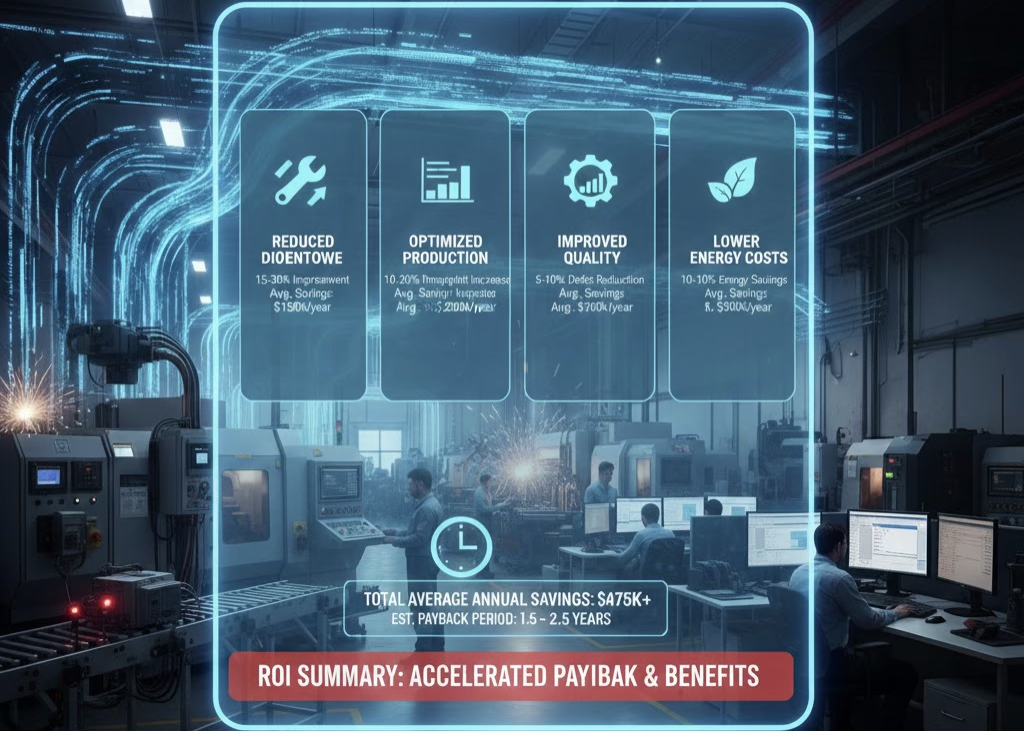
Estimated payback period, just 1.5 to 2.5 years, ROI that outperforms traditional IT projects.
Conclusion: Let Data Flow, Make Manufacturing Smart
Industrial integration is no longer an option, it is the infrastructure of smart manufacturing. It awakens silent data, driving real time decisions, predictive maintenance, quality traceability, and continuous improvement. Whatever stage of your digital journey, we help you cross the data gap and turn your shop floor into a competitive advantage.
Your equipment data is waiting to be unleashed. Contact us to start your industrial integration journey.