Digital Takeoff and Smart Estimating: Redefining Project Cost Management

Summary
×In construction and engineering projects, estimating is both a critical and tedious task. Traditional measurement methods rely on paper drawings, manual calculations, and scattered spreadsheets. They are not only time consuming and labor intensive but also prone to errors. Every area measurement, material count, and labor or equipment cost calculation requires manual recording and aggregation. Any oversight can lead to bid deviations, ultimately impacting project profit margins.
Today, digital tools are changing this landscape. Through integrated digital takeoff and estimating platforms, contractors and estimators can combine drawing uploads, online measurements, cost association, and report generation into a seamless workflow. This article uses a feature complete estimating software as an example to demonstrate how intelligent measurement and cost management can enhance estimating accuracy and efficiency.
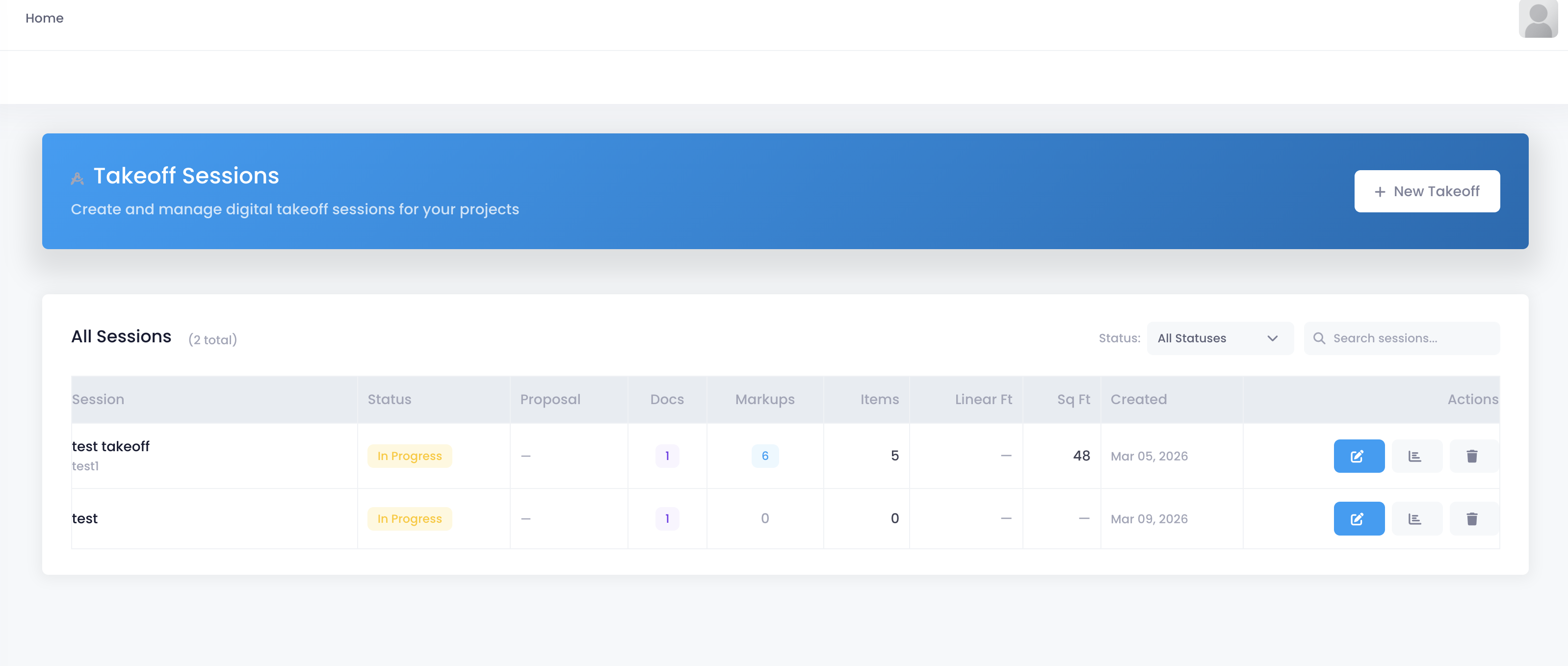
From the home screen, you can quickly create and manage multiple takeoff projects with all data visible at a glance
Core Capabilities: Full Workflow Coverage from Measurement to Cost
Digital Measurement and Markup
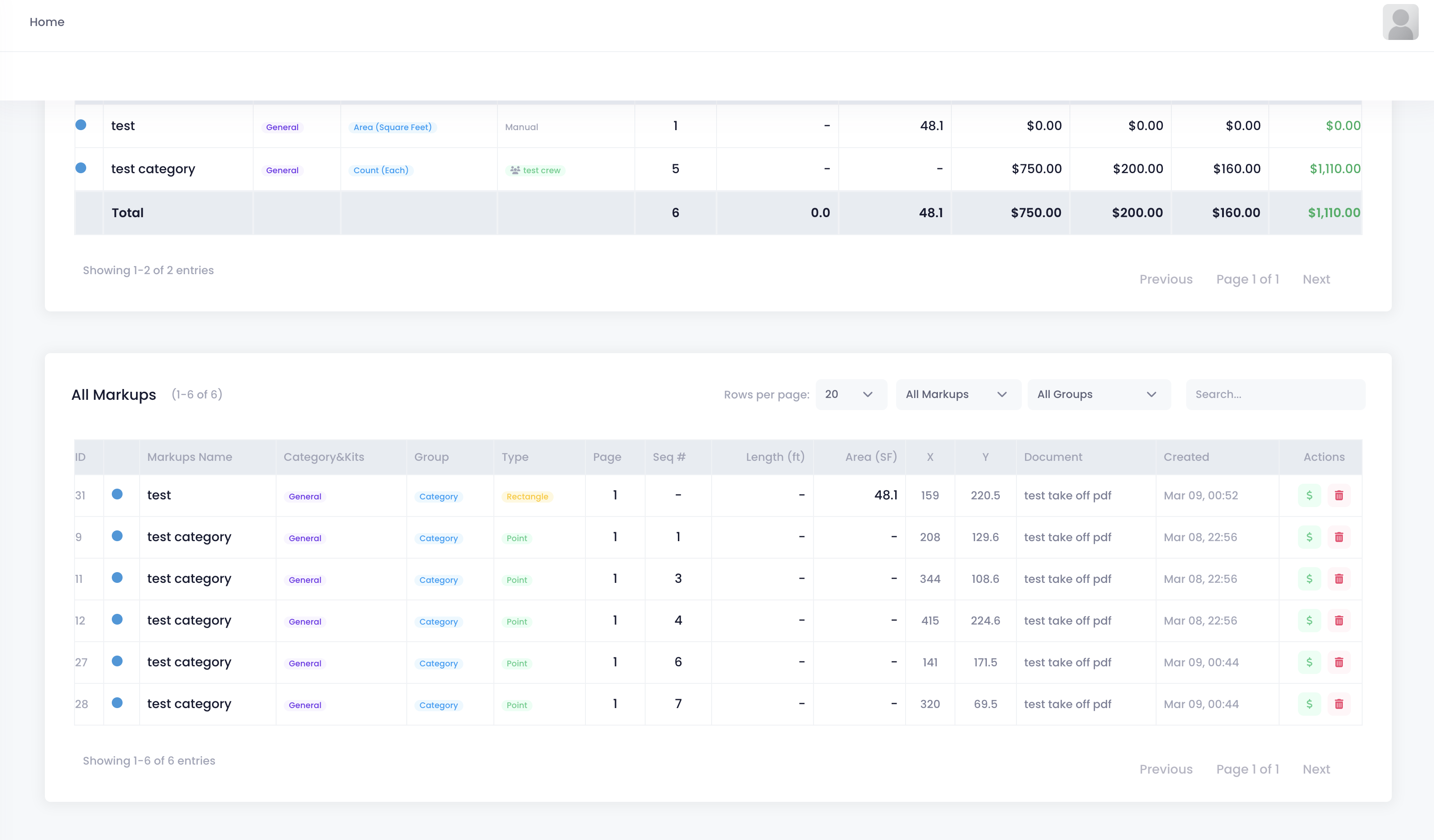
At the heart of the software are digital measurement tools. After uploading drawings in PDF or image format, users can employ various markup tools for measurement: rectangle tools for area measurement, line tools for length measurement, and point tools for item counting. Each markup can be associated with a specific category, recording its location, dimensions, and page number. All markups are aggregated in real time, forming a detailed measurement list.
Category and Cost Management
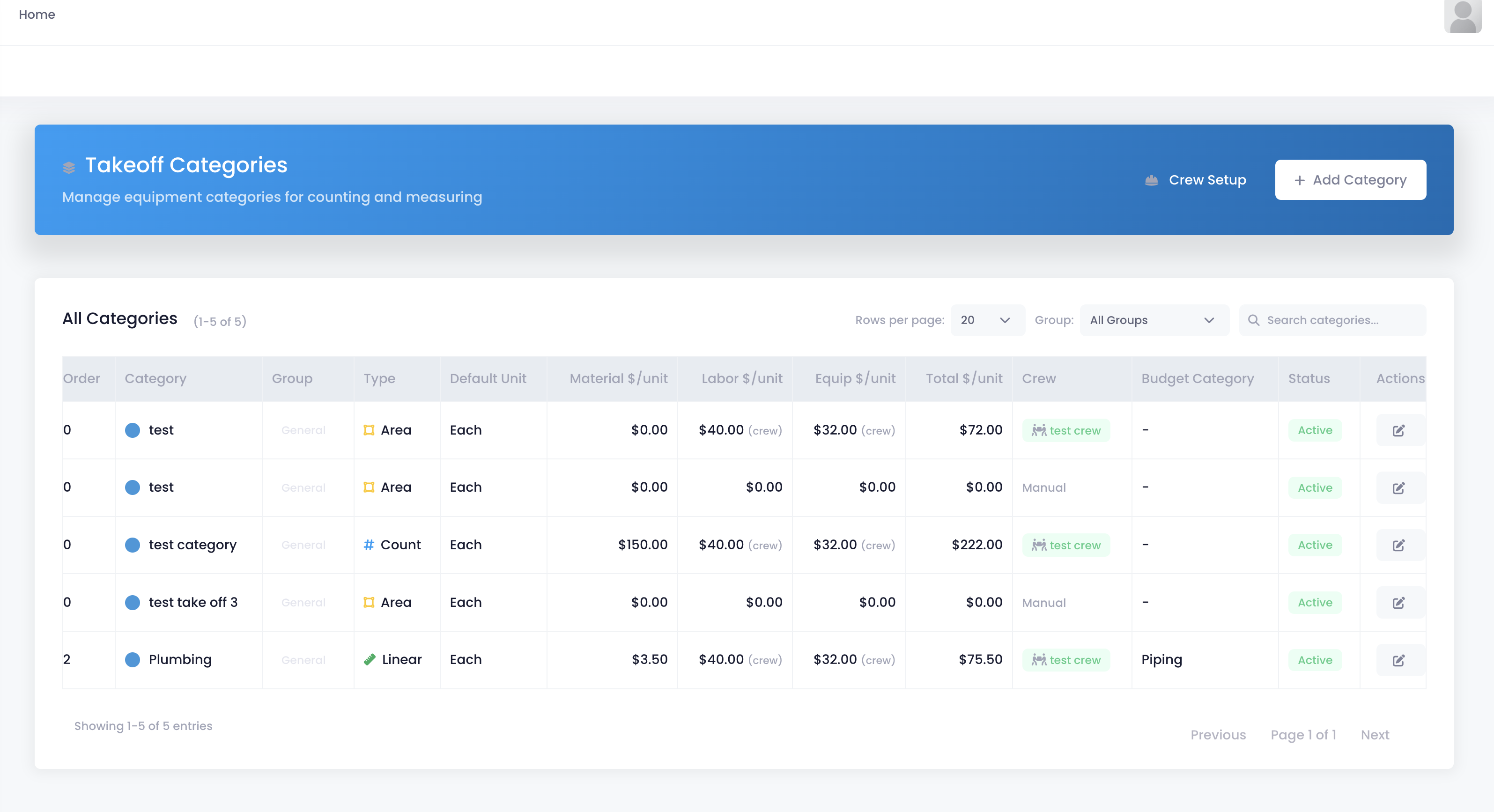
The purpose of measurement is to translate data into costs. The software includes built in category management functionality, allowing users to define various item categories such as "Plumbing","Electrical Equipment","Concrete",and more. For each category, users can specify default units, material unit prices, labor unit prices, and equipment unit prices. Labor and equipment costs can be linked to predefined crew templates, enabling automatic calculation.
Crew and Equipment Rates
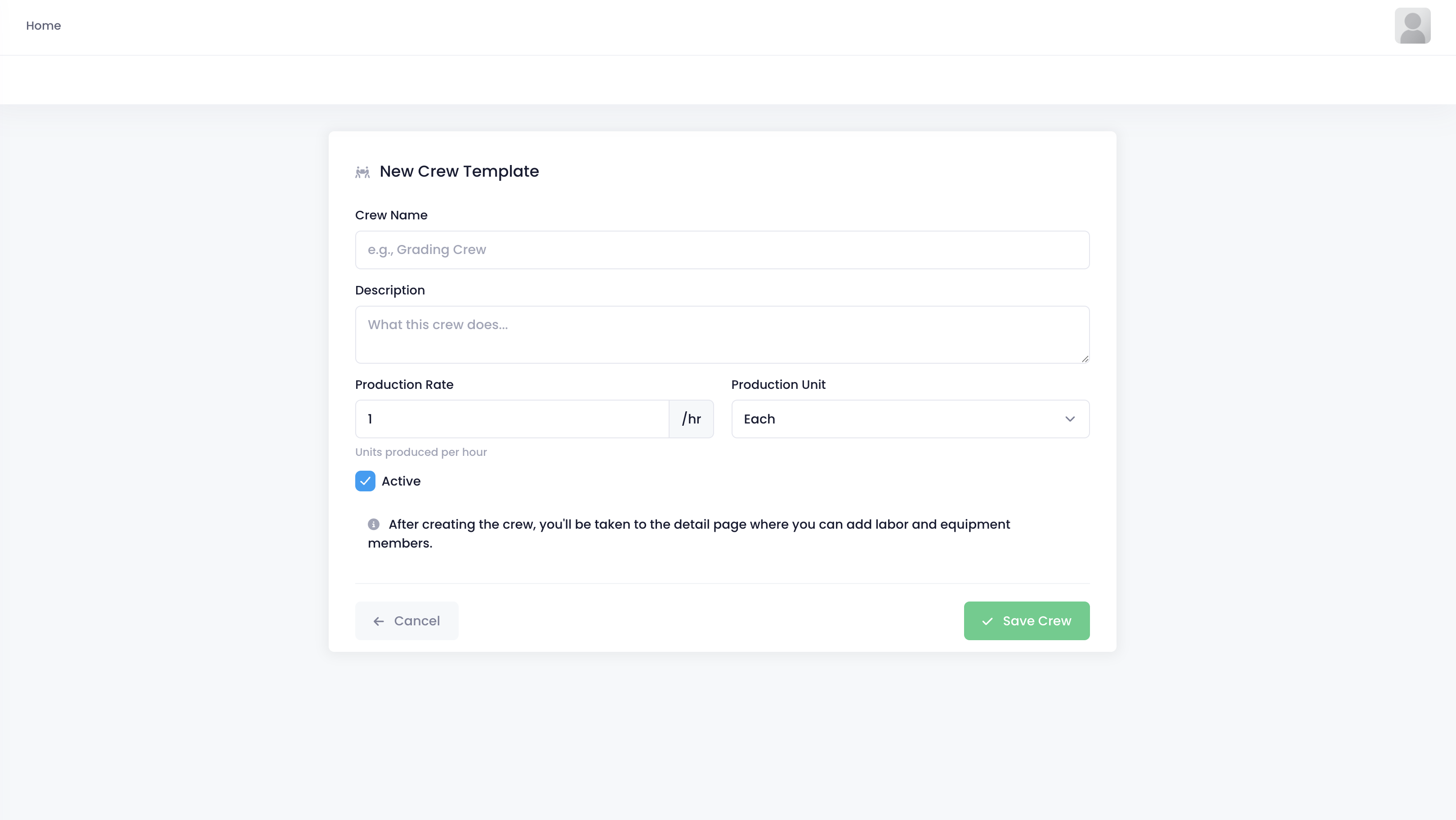
To accurately calculate labor and equipment costs, the software provides a crew setup module. Users can define hourly wages and burden percentages for different labor classifications, as well as hourly ownership and operating costs for various equipment types. These resources are then combined into crew templates, with a specified production rate (e.g., units completed per hour). Consequently, when a category is associated with a crew, the system automatically calculates the per unit labor and equipment costs based on the crew's total hourly cost and production rate.
Reusable Kits: Boosting Efficiency for Repetitive Work
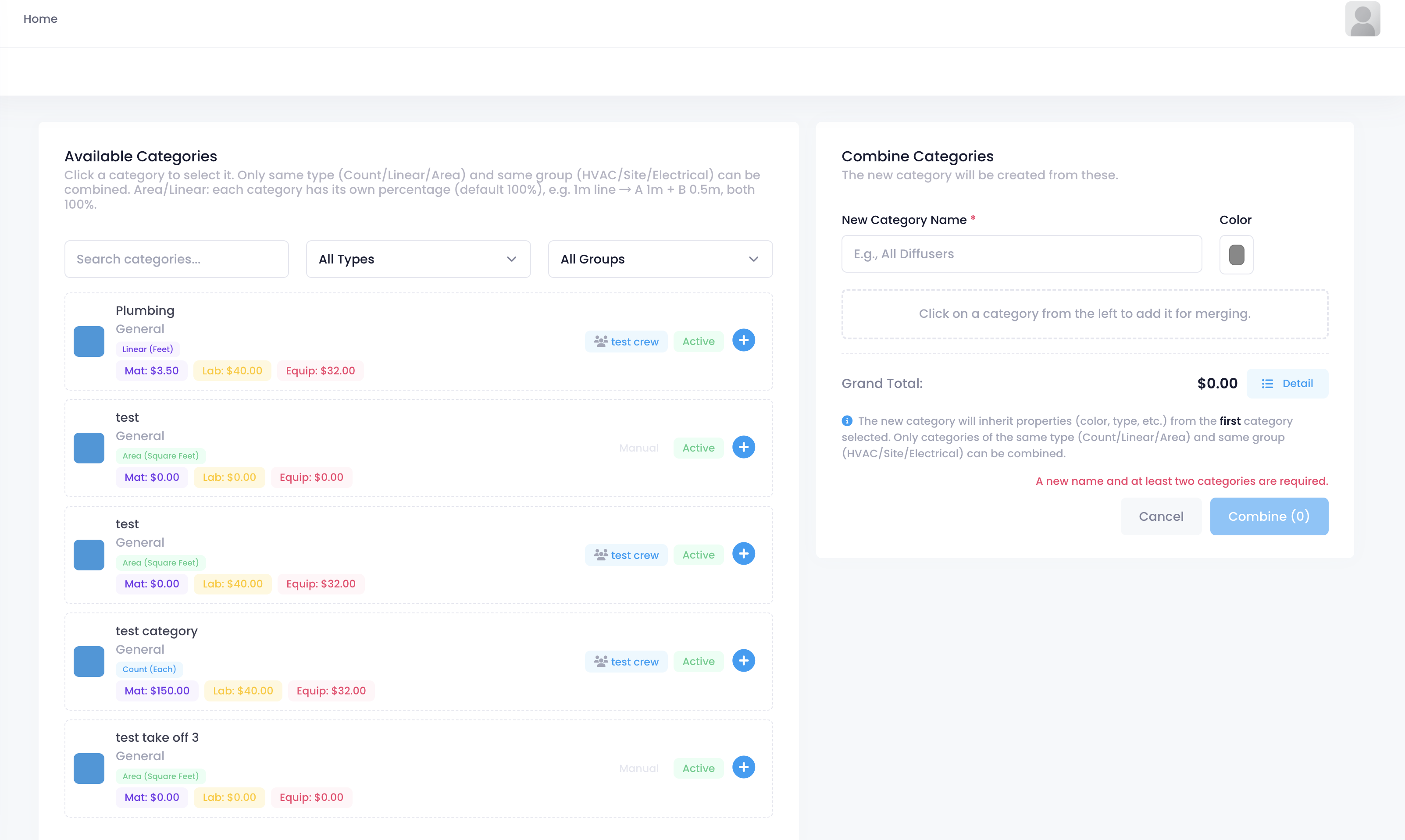
For combinations of items that frequently appear together (such as a bathroom fixture set including a toilet, sink, faucet, etc.), the software supports creating "category kits". Kits can combine multiple categories and set their respective ratios (for example, one meter of piping might include two materials simultaneously). When performing a takeoff, directly using a kit allows for adding all related items at once, significantly improving efficiency for repetitive tasks.
Data Integration and Reporting: From Measurement to Quote in One Step
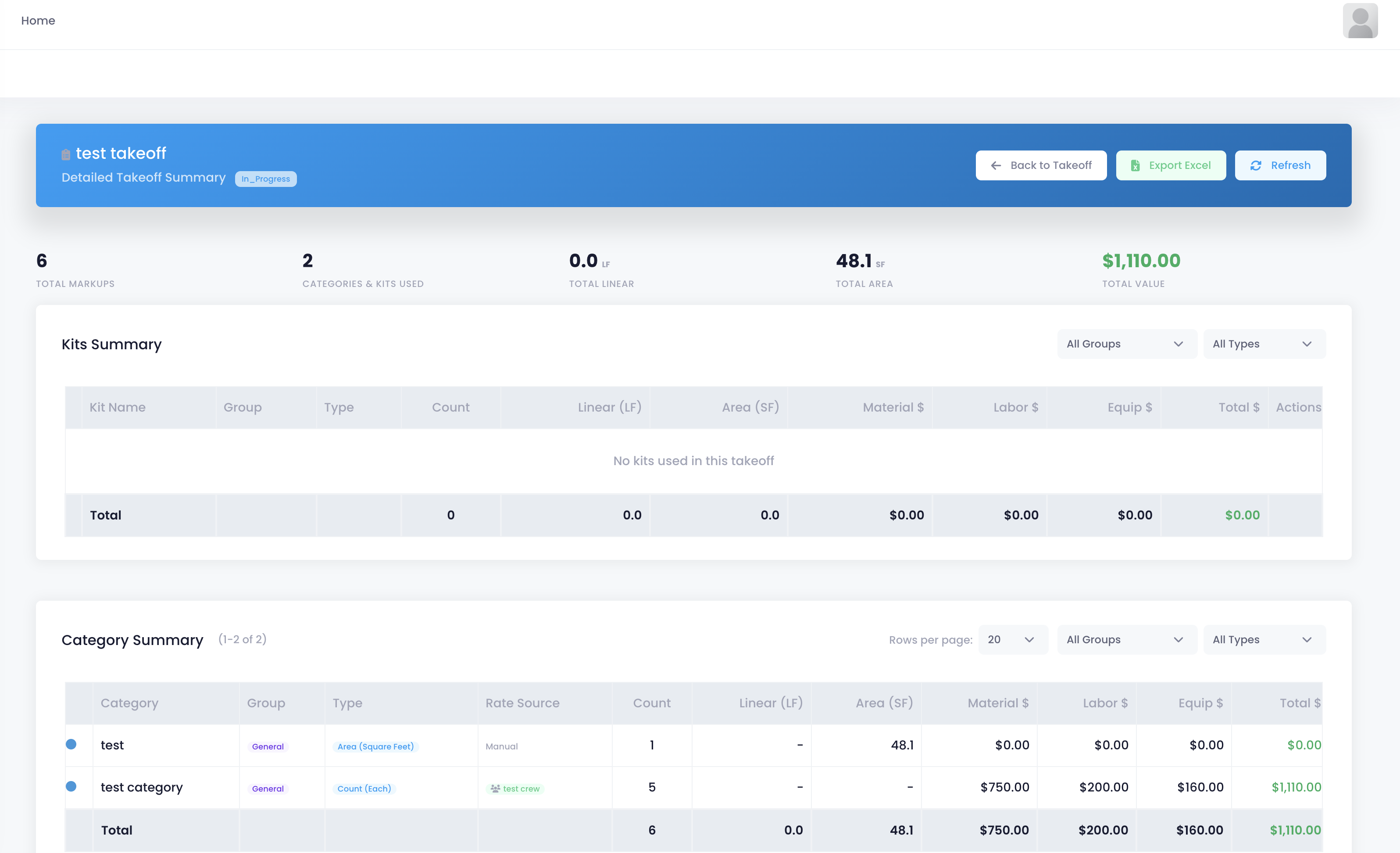
Once all measurement markups are completed and costs are associated, the software automatically aggregates the data. Users can view quantities, areas, total material costs, total labor costs, total equipment costs, and grand totals, all grouped by category. Detailed information for all markups can also be exported to Excel or generated into PDF reports at any time, for use in quotes or internal reviews.
This end to end integration means estimators no longer need to manually transcribe data into spreadsheets, avoiding errors caused by version confusion. Every change in measurements is reflected in the total price in real time, ensuring the accuracy and timeliness of quotes.
Implementation Value: Efficiency, Accuracy, and Traceability
By adopting such a digital takeoff and estimating platform, companies can achieve significant benefits:
Improved Efficiency: Measuring, categorizing, and costing are completed within the same platform, saving over 50% of estimating time.
Enhanced Accuracy: Automatic aggregation eliminates manual calculation errors; crew and rate templates ensure consistent cost calculation.
Traceability: Every markup has a detailed record, allowing for easy tracing of its origin and calculation basis, facilitating audits and adjustments.
Standardization: Through categories and kits, companies can build their own cost libraries, directly invoking them for new projects to maintain quote consistency.
Conclusion
In an increasingly competitive construction market, accurate estimating is the foundation for winning projects and protecting profits. Traditional estimating methods struggle to meet the demands of modern projects for speed and precision. With the help of integrated digital takeoff and intelligent estimating platforms, estimators can break free from tedious manual operations and dedicate more energy to value analysis and strategic optimization. This is not just an upgrade of tools, but a transformation of work methods, moving from fragmented measurement and calculation towards systematic, data driven decision making.
If you're looking to enhance your team's estimating capabilities, why not start with a digital takeoff and experience the seamless journey from drawing to quote.