The Age of Volatility: Beyond the Just In Time Model
Global supply chains are facing a "perfect storm" of disruption. From geopolitical shifts and trade wars to climate-related events and global pandemics, the traditional "just in time" (JIT) model, which prioritized efficiency and lean inventories above all else, is being fundamentally reevaluated. Today, the industry is moving toward a "Just In Case" model, where resilience, redundancy, and agility are the new primary metrics of success.
This shift requires a radical reimagining of how goods flow across borders. We are seeing a move away from hyper globalization toward "Regionalization" and "Near Shoring", as enterprises seek to shorten their supply lines and reduce exposure to trans oceanic bottlenecks. However, regionalization alone is not a panacea. Without the digital infrastructure to manage these localized networks, manufacturers risk creating new silos that are just as opaque as the global ones they replaced.
At the core of this new resilience is the concept of Nodal Intelligence. A supply chain is no longer a linear sequence but a complex, multi dimensional web of interconnected nodes. Each node, whether it be a Tier 3 raw material supplier, a contract manufacturer, a regional distribution center, or a final mile shipping port, must be analyzed in real time to identify potential bottlenecks and cascading failures before they impact the end customer.
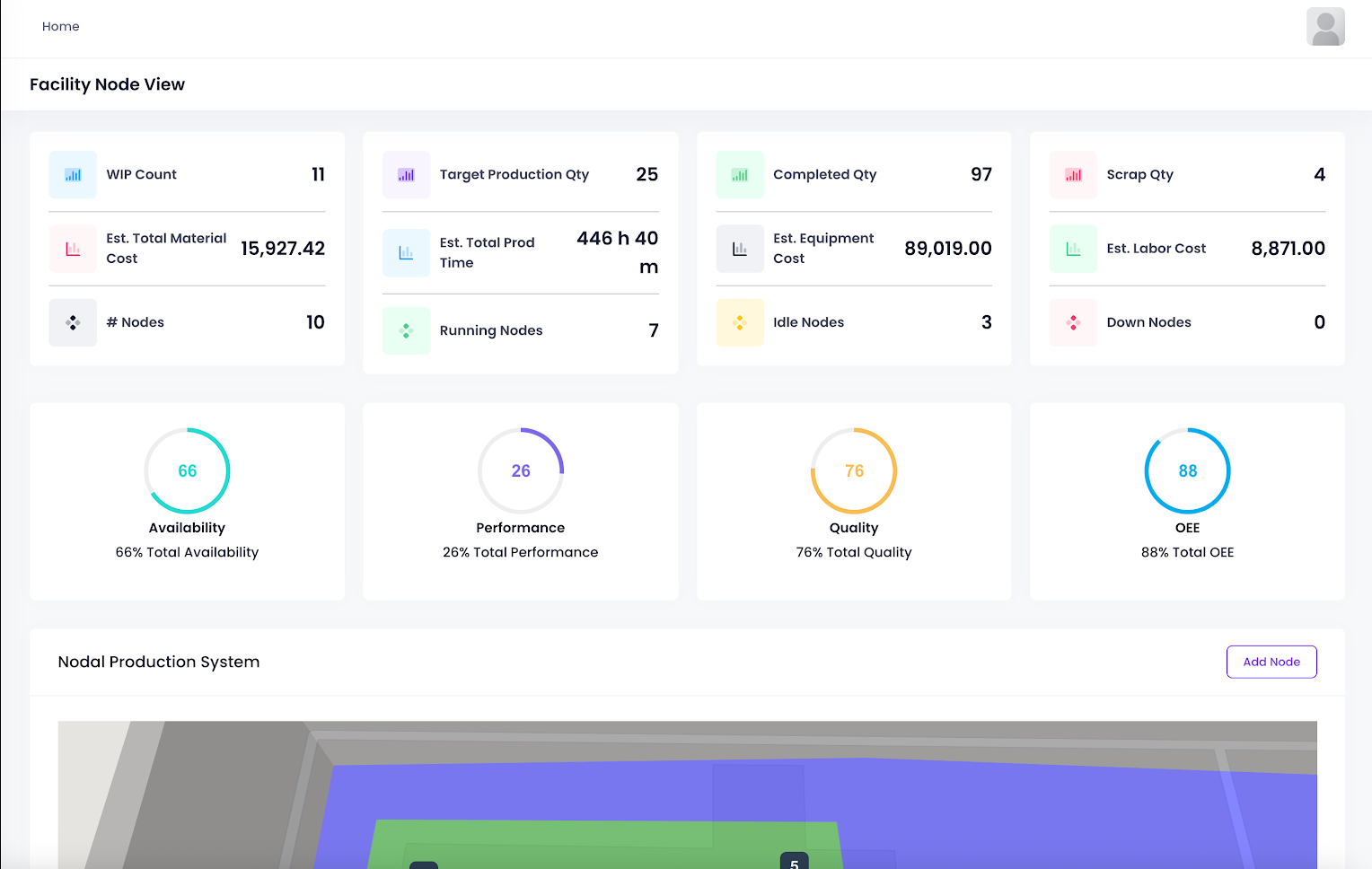
True resilience comes from intelligence, the ability to see across the entire value chain and act before a disruption becomes a disaster. As shown in Figure 1, modern supply chain platforms allow executives to visualize their entire ecosystem as a set of dynamic nodes. This visualization enables them to simulate "what if" scenarios: What if the Suez Canal is blocked for 10 days? What if a major electronics hub in Southeast Asia goes into lockdown? By having the data mapped to these nodes, enterprises can reroute resources and shift production volumes within minutes rather than weeks.
The Digital Thread in Global Logistics
The concept of the Digital Thread is often discussed in the context of product design, but its application in logistics is perhaps even more critical. A logistics digital thread connects every piece of data associated with a product's journey, from the initial purchase order of raw materials to the final delivery confirmation at the customer's doorstep.
Integrating this thread requires breaking down the barriers between ERP (Enterprise Resource Planning), WMS (Warehouse Management Systems), and TMS (Transportation Management Systems). When these systems operate in isolation, "blind spots" are created. For example, a warehouse manager might see that a shipment is ready to leave, but without visibility into the TMS, they won't know that the carrier is delayed by 48 hours due to a labor strike. A unified digital core eliminates these gaps, ensuring that every stakeholder is looking at the same real time data.
Strategies for Global Agility
1. Multi-Tier Visibility & RFID Tracking
Most enterprises only have visibility into their Tier 1 (direct) suppliers. However, the majority of supply chain disruptions originate in Tier 2 or Tier 3, the suppliers of your suppliers. Mapping this entire network is the first step toward true resilience.
Our platform provides the data bridge needed to synchronize information across this entire multi tier network. By leveraging standardized APIs and blockchain enabled ledgers, manufacturers can gain a window into the capacity and health of even the smallest component provider.
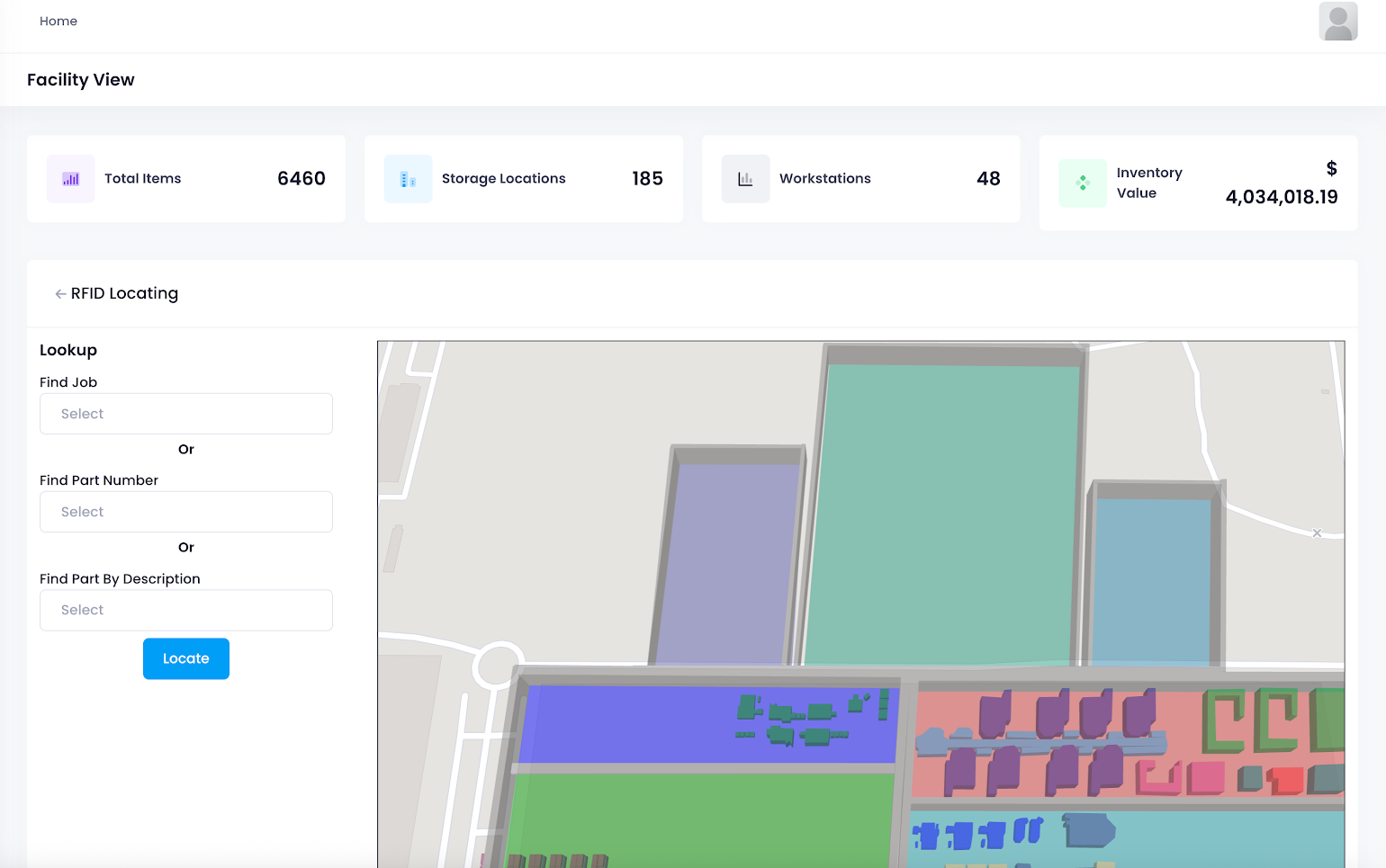
As illustrated in Figure 2, the integration of RFID (Radio Frequency Identification) technology into facility management is a game changer for supply chain transparency. Unlike manual barcode scanning, RFID allows for "non line of sight" tracking. As raw materials move from the receiving dock to the production line, and eventually to the shipping bay, their movement is captured automatically by fixed readers. This eliminates the "information lag" that plagues manual systems. This granular, real time data allows for more precise demand planning and reduces the need for expensive safety stock, which often acts as a "buffer for ignorance" in manual supply chains.
2. Dynamic Logistics & Nodal Optimization
In a volatile world, logistics cannot be a fixed plan. It must be a dynamic, self optimizing orchestration. This involves using real time tracking, AI, and nodal analysis to automatically reroute shipments and adjust inventory levels in response to port congestion, transport delays, or sudden spikes in regional demand.
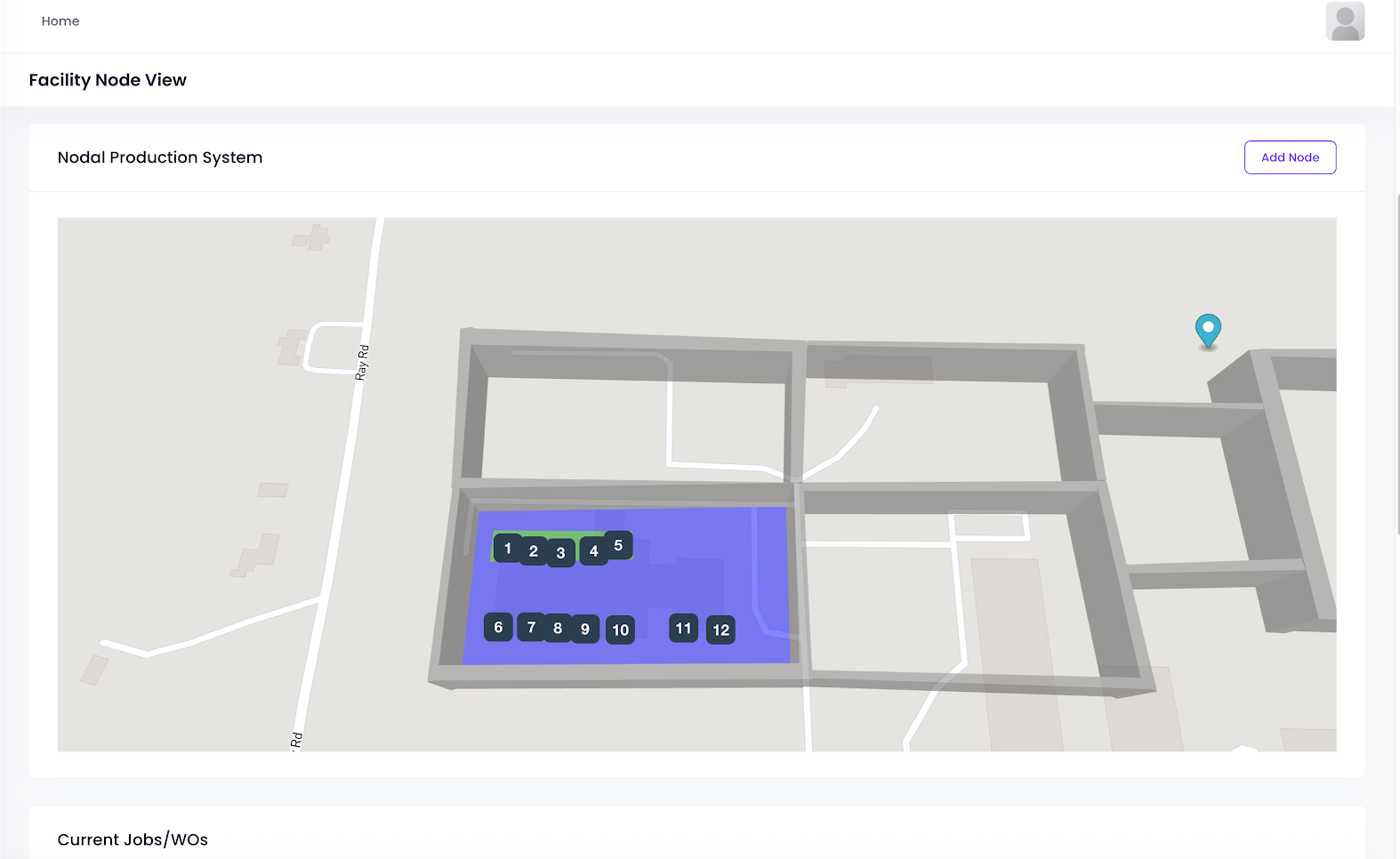
The ability to drill down into a specific node's capacity and performance (as seen in Figure 3) is critical for global logistics orchestration. By monitoring the "Target vs. Actual" production at each node, the system can detect subtle slowdowns before they become major shortages. If one factory in the network is underperforming, the intelligent orchestration layer can automatically identify alternative nodes with available capacity and reroute the necessary components. This dynamic orchestration ensures that the "Global Ecosystem" remains functional even when individual components are stressed, effectively transforming the supply chain from a fragile liability into a powerful competitive advantage.
3. Collaborative Ecosystems & Reverse Logistics
Breaking down the walls between partners is no longer just a "best practice", it is a necessity. Collaborative ecosystems involve sharing demand forecasts, production schedules, and even real time inventory levels with key partners to ensure every node in the chain is perfectly aligned.
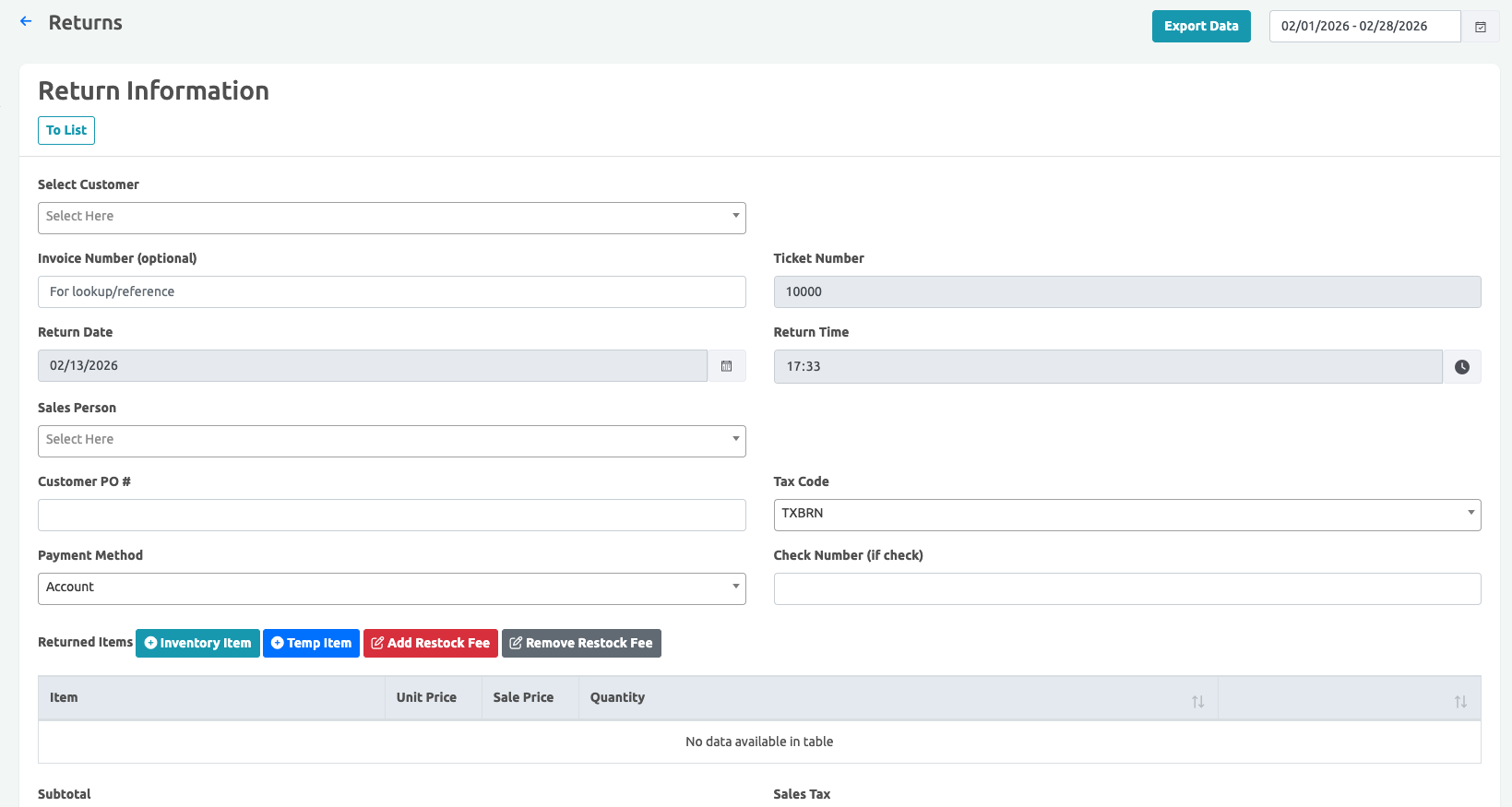
A truly intelligent supply chain must also manage the "reverse flow" of goods. As shown in Figure 4, the "Sales Returns" module is an integral part of the ecosystem, facilitating Reverse Logistics. In the modern circular economy, the ability to efficiently handle returns, repairs, and recycling is just as important as the forward flow of new products. By digitizing the returns process, manufacturers can recover value more quickly (through refurbishment or parts harvesting), improve customer satisfaction, and gather critical data on product quality issues that might otherwise remain hidden in the traditional supply chain "black box."
Risk Management and Predictive Orchestration
Modern supply chain management is evolving from "Descriptive" (what happened?) and "Diagnostic" (why did it happen?) to "Predictive" (what will happen?) and "Prescriptive" (how can we make it happen?).
By layering Machine Learning over the digital thread, enterprises can begin to predict disruptions before they occur. For example, by analyzing historical data alongside real time weather patterns and geopolitical news feeds, the system can assign a "Risk Score" to every shipment and every node in the network. If the risk for a specific shipping lane exceeds a certain threshold, the system can automatically prescribe an alternative route or trigger an early procurement order for critical components, ensuring that production never stops.
The Future: From Supply Chain to Value Web
The transition from a linear supply chain to a dynamic Value Web is the ultimate goal of Supply Chain Intelligence. In this model, every partner, from raw material suppliers to the end consumer, is connected via a shared digital thread. Decisions are no longer made in isolation but are optimized for the health of the entire ecosystem.
As we have seen through the analysis of nodal networks (Figure 1), RFID asset tracking (Figure 2), and reverse logistics (Figure 4), the tools for this transformation are already available. The challenge for modern enterprises is not the lack of data, but the courage to break down internal silos and embrace a culture of transparency and collaboration.
Conclusion: Building the Intelligent Network
Building a resilient supply chain is a continuous journey of digital integration. By leveraging advanced analytics, nodal intelligence, and a unified digital core, manufacturers can transform their logistics from a cost center into a powerful competitive advantage in an increasingly volatile global market.